Molecular Cardiology Research Institute and Division of Cardiology, Department of Medicine, Tufts Medical Center, Boston, MA.
Circulation. 2018 Jul 31;138(5):513-526. doi: 10.1161/CIRCULATIONAHA.117.031635.
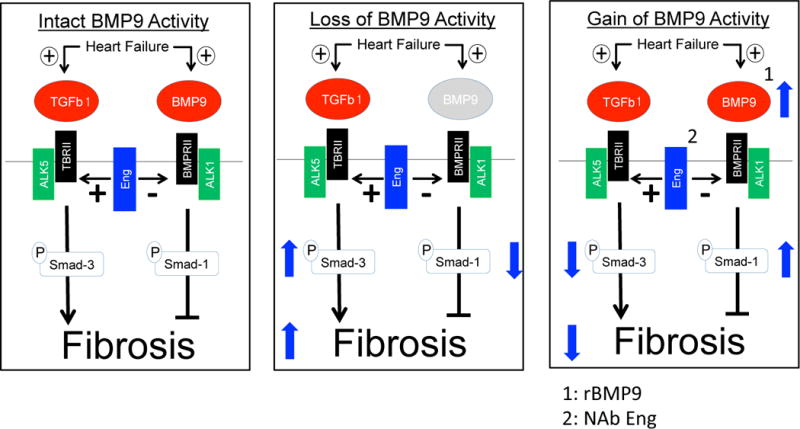
Heart failure is a growing cause of morbidity and mortality worldwide. Transforming growth factor beta (TGF-β1) promotes cardiac fibrosis, but also activates counterregulatory pathways that serve to regulate TGF-β1 activity in heart failure. Bone morphogenetic protein 9 (BMP9) is a member of the TGFβ family of cytokines and signals via the downstream effector protein Smad1. Endoglin is a TGFβ coreceptor that promotes TGF-β1 signaling via Smad3 and binds BMP9 with high affinity. We hypothesized that BMP9 limits cardiac fibrosis by activating Smad1 and attenuating Smad3, and, furthermore, that neutralizing endoglin activity promotes BMP9 activity.
We examined BMP9 expression and signaling in human cardiac fibroblasts and human subjects with heart failure. We used the transverse aortic constriction-induced model of heart failure to evaluate the functional effect of BMP9 signaling on cardiac remodeling.
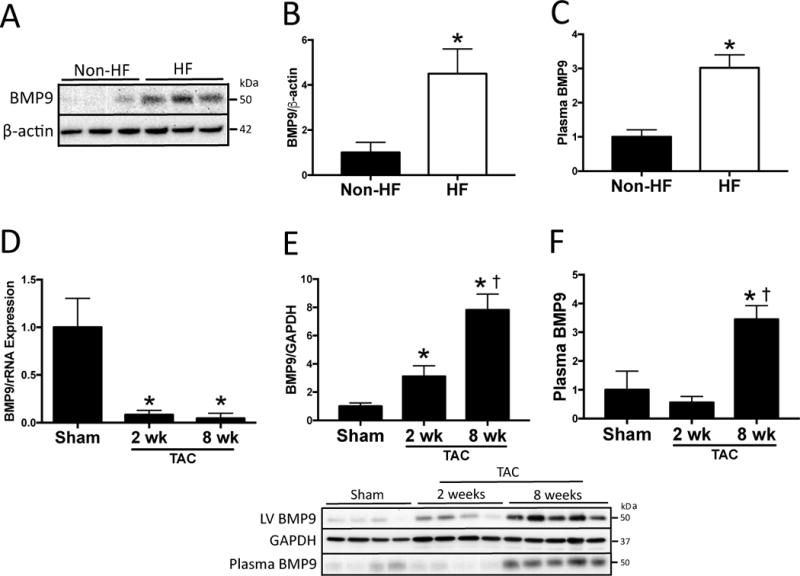
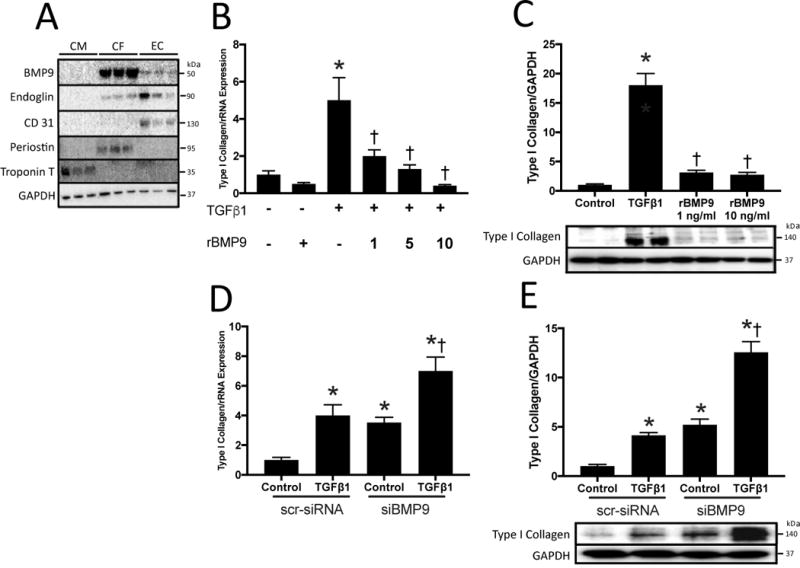
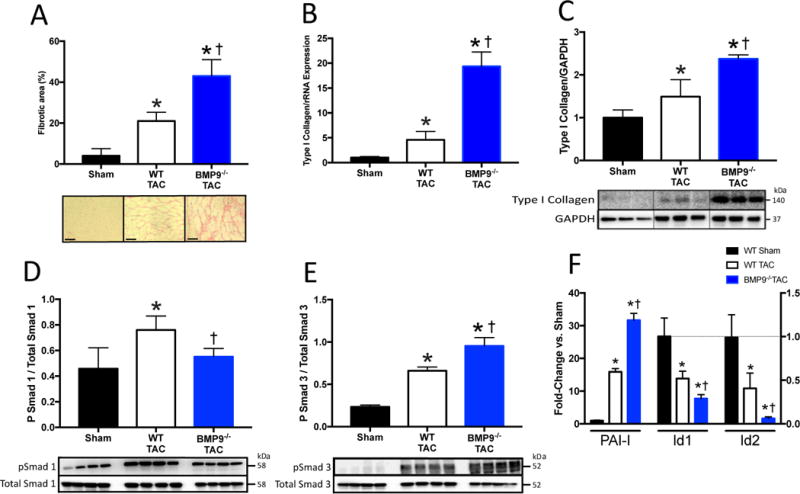
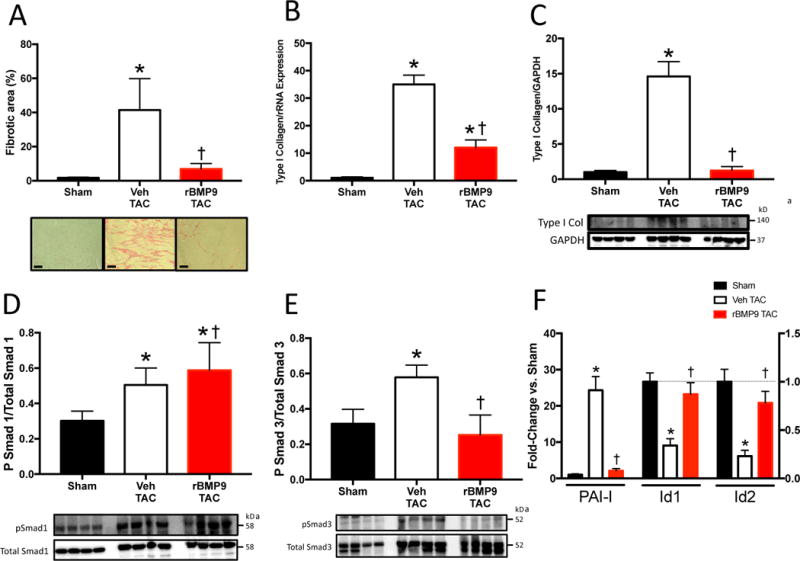
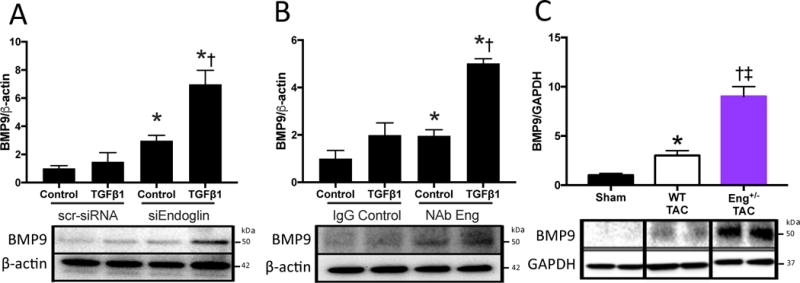
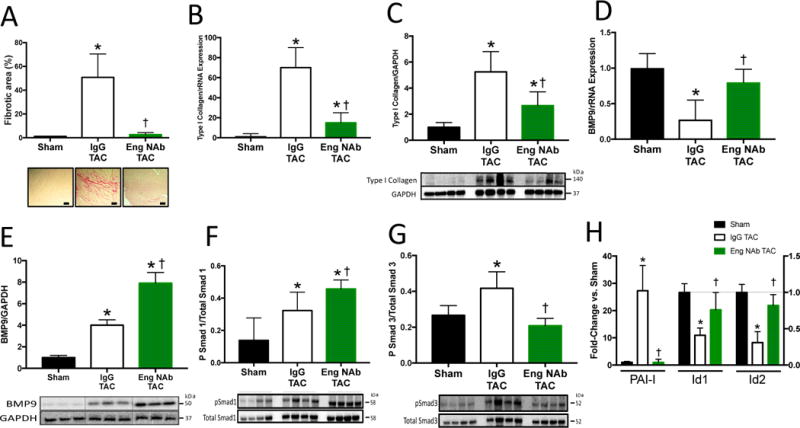
BMP9 expression is increased in the circulation and left ventricle (LV) of human subjects with heart failure and is expressed by cardiac fibroblasts. Next, we observed that BMP9 attenuates type I collagen synthesis in human cardiac fibroblasts using recombinant human BMP9 and a small interfering RNA approach. In BMP9 mice subjected to transverse aortic constriction, loss of BMP9 activity promotes cardiac fibrosis, impairs LV function, and increases LV levels of phosphorylated Smad3 (pSmad3), not pSmad1. In contrast, treatment of wild-type mice subjected to transverse aortic constriction with recombinant BMP9 limits progression of cardiac fibrosis, improves LV function, enhances myocardial capillary density, and increases LV levels of pSmad1, not pSmad3 in comparison with vehicle-treated controls. Because endoglin binds BMP9 with high affinity, we explored the effect of reduced endoglin activity on BMP9 activity. Neutralizing endoglin activity in human cardiac fibroblasts or in wild-type mice subjected to transverse aortic constriction-induced heart failure limits collagen production, increases BMP9 protein levels, and increases levels of pSmad1, not pSmad3.
Our results identify a novel functional role for BMP9 as an endogenous inhibitor of cardiac fibrosis attributable to LV pressure overload and further show that treatment with either recombinant BMP9 or disruption of endoglin activity promotes BMP9 activity and limits cardiac fibrosis in heart failure, thereby providing potentially novel therapeutic approaches for patients with heart failure.
心力衰竭是全球发病率和死亡率不断上升的主要原因。转化生长因子-β(TGF-β1)可促进心肌纤维化,但也会激活代偿性通路,从而调节心力衰竭时的 TGF-β1 活性。骨形态发生蛋白 9(BMP9)是 TGFβ 细胞因子家族的成员,通过下游效应蛋白 Smad1 信号转导。内皮糖蛋白是 TGFβ 的核心受体,通过 Smad3 促进 TGF-β1 信号转导,并与 BMP9 高亲和力结合。我们假设 BMP9 通过激活 Smad1 和抑制 Smad3 来限制心肌纤维化,并且中和内皮糖蛋白的活性可促进 BMP9 的活性。
我们研究了人心脏成纤维细胞和心力衰竭患者中 BMP9 的表达和信号转导。我们使用主动脉缩窄诱导的心力衰竭模型来评估 BMP9 信号对心脏重构的功能影响。
心力衰竭患者的循环和左心室(LV)中 BMP9 的表达增加,并且由心脏成纤维细胞表达。接下来,我们观察到使用重组人 BMP9 和小干扰 RNA 方法,BMP9 可抑制人心肌成纤维细胞中 I 型胶原的合成。在接受主动脉缩窄的 BMP9 小鼠中,BMP9 活性丧失会促进心肌纤维化,损害 LV 功能,并增加 LV 中磷酸化 Smad3(pSmad3)的水平,而不是 pSmad1。相比之下,与对照组相比,用重组 BMP9 治疗接受主动脉缩窄的野生型小鼠可限制心肌纤维化的进展,改善 LV 功能,增加心肌毛细血管密度,并增加 LV 中 pSmad1 的水平,而不是 pSmad3。由于内皮糖蛋白与 BMP9 具有高亲和力,我们探讨了降低内皮糖蛋白活性对 BMP9 活性的影响。在接受主动脉缩窄诱导的心力衰竭的人心脏成纤维细胞或野生型小鼠中,中和内皮糖蛋白活性可抑制胶原产生,增加 BMP9 蛋白水平,并增加 pSmad1 的水平,而不是 pSmad3。
我们的研究结果确定了 BMP9 的新的功能作用,作为 LV 压力超负荷引起的心肌纤维化的内源性抑制剂,并进一步表明,用重组 BMP9 治疗或破坏内皮糖蛋白活性可促进 BMP9 活性并限制心力衰竭中的心肌纤维化,从而为心力衰竭患者提供潜在的新的治疗方法。