Department of Ecology and Animal Biology, Faculty of Marine Sciences, University of Vigo, 6 36310, Vigo, Galicia, Spain.
ECIMAT-CIM, University of Vigo, Illa de Toralla, 36331, Vigo, Galicia, Spain.
Sci Rep. 2020 Dec 17;10(1):22281. doi: 10.1038/s41598-020-79304-z.
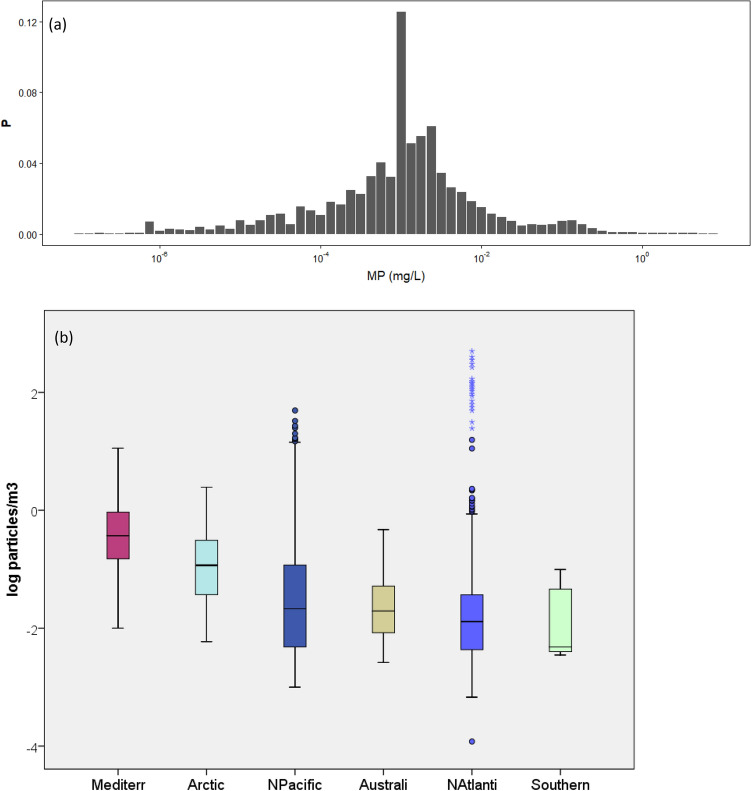
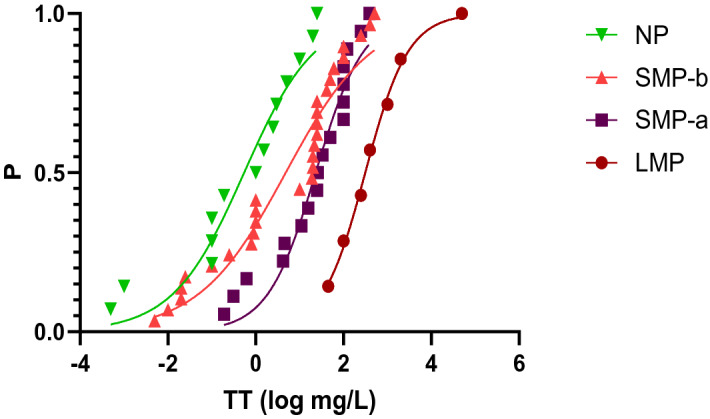
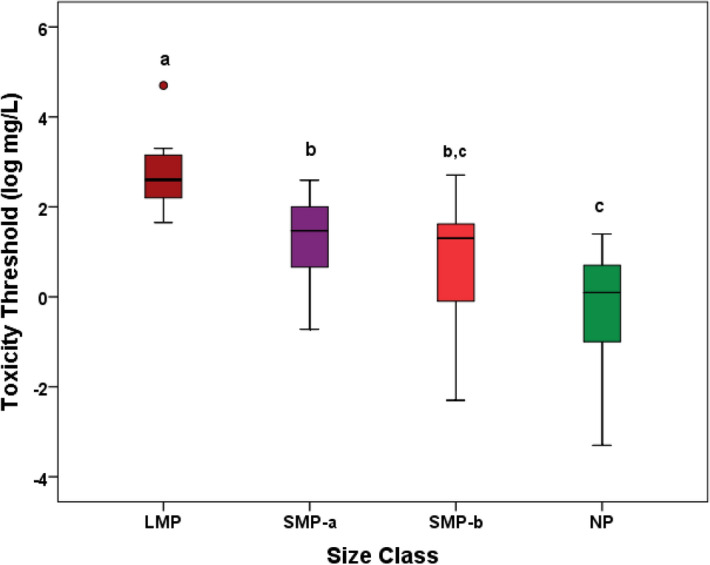
Given the rise in plastic production, microplastics (MP) dominate marine debris, and their impact on marine ecosystems will likely increase. However a global quantitative assessment of this risk is still lacking. We conducted an ecological risk assessment of MP in the global ocean by comparing the thresholds of biological effects with the probability of exposure to those concentrations, according to plastic density data adjusted to a log-normal distribution. Levels of MP from 100 to 5000 µm span from < 0.0001 to 1.89 mg/L, whereas the most conservative safe concentration is 13.8 mg/L, and probability of exposure is p = 0.00004. Therefore large MP pose negligible global risk. However, MP bioavailability, translocation and toxicity increase as size decreases, and particles < 10 µm are not identified by current monitoring methods. Future research should target the lowest size fractions of MP and nanoplastics, and use in toxicity testing environmental plastic particles rather than engineered materials.
鉴于塑料产量的增加,微塑料(MP)在海洋废弃物中占据主导地位,其对海洋生态系统的影响可能会增加。然而,对这种风险进行全球定量评估仍然缺乏。我们通过将生物效应阈值与暴露于这些浓度的概率进行比较,根据调整为对数正态分布的塑料密度数据,对全球海洋中的 MP 进行了生态风险评估。100 至 5000 µm 的 MP 水平范围从<0.0001 至 1.89 mg/L,而最保守的安全浓度为 13.8 mg/L,暴露概率为 p=0.00004。因此,大的 MP 对全球的风险可以忽略不计。然而,随着粒径的减小,MP 的生物利用度、迁移和毒性会增加,而目前的监测方法无法识别粒径<10 µm 的颗粒。未来的研究应该针对 MP 和纳米塑料的最低粒径部分,并在毒性测试中使用环境塑料颗粒而不是工程材料。