GEOMAR Helmholtz Centre for Ocean Research, West shore campus, Kiel, Germany.
GNS Science, Lower Hutt, New Zealand.
Nat Commun. 2021 Apr 21;12(1):2358. doi: 10.1038/s41467-021-22554-w.
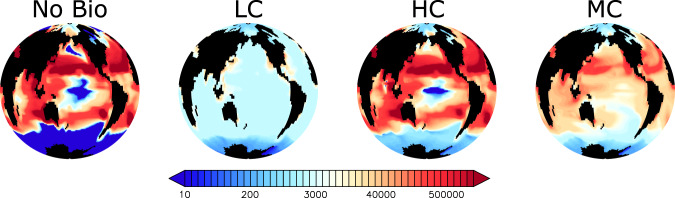
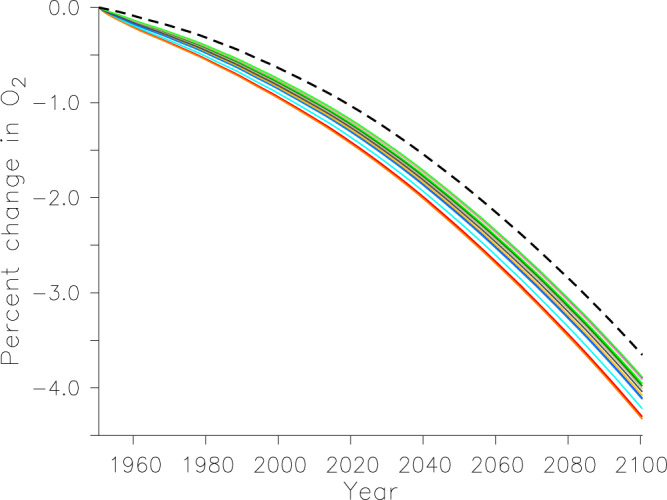
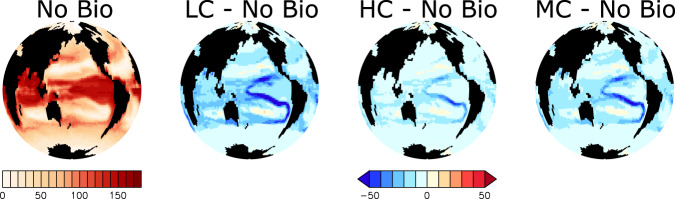
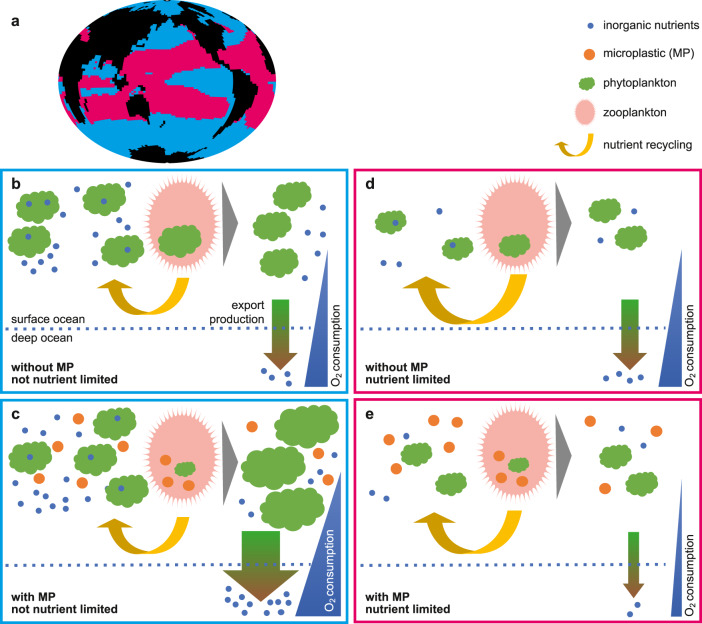
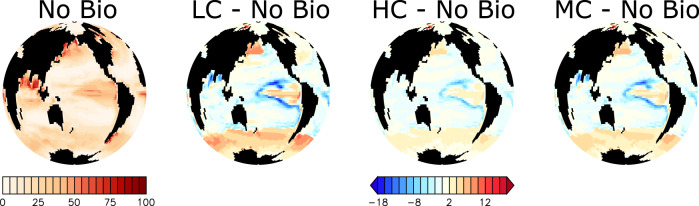
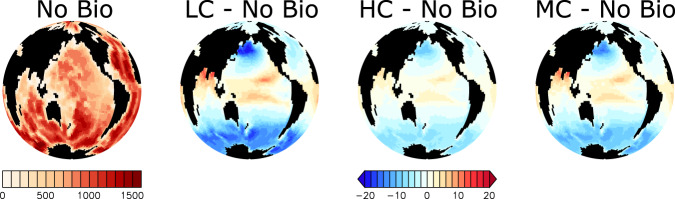
Global warming has driven a loss of dissolved oxygen in the ocean in recent decades. We demonstrate the potential for an additional anthropogenic driver of deoxygenation, in which zooplankton consumption of microplastic reduces the grazing on primary producers. In regions where primary production is not limited by macronutrient availability, the reduction of grazing pressure on primary producers causes export production to increase. Consequently, organic particle remineralisation in these regions increases. Employing a comprehensive Earth system model of intermediate complexity, we estimate this additional remineralisation could decrease water column oxygen inventory by as much as 10% in the North Pacific and accelerate global oxygen inventory loss by an extra 0.2-0.5% relative to 1960 values by the year 2020. Although significant uncertainty accompanies these estimates, the potential for physical pollution to have a globally significant biogeochemical signal that exacerbates the consequences of climate warming is a novel feedback not yet considered in climate research.
近几十年来,全球变暖导致海洋中的溶解氧大量流失。我们证明了人为因素导致脱氧的另一种潜在原因,即浮游动物消耗微塑料减少了对初级生产者的摄食。在初级生产不受大量营养物质供应限制的地区,减少对初级生产者的摄食压力会导致出口生产增加。因此,这些地区的有机颗粒再矿化增加。利用一个中等复杂程度的综合地球系统模型,我们估计这种额外的再矿化作用可能使北太平洋水柱中的氧气含量减少多达 10%,并使全球氧气含量在 2020 年相对于 1960 年的值额外减少 0.2%至 0.5%。尽管这些估计存在很大的不确定性,但物理污染有可能产生具有全球重要生物地球化学信号的作用,从而加剧气候变暖的后果,这是气候研究中尚未考虑到的一种新的反馈。