Department of Earth and Planetary Science, Graduate School of Science, University of Tokyo, Bunkyo-ku, Tokyo, 113-0033, Japan.
Department of Biology, Shenzhen MSU-BIT University, 1 International University Park Road, Dayun New Town, Longgang District, Shenzhen, Guangdong Province, People's Republic of China.
Sci Rep. 2020 Dec 17;10(1):22140. doi: 10.1038/s41598-020-79330-x.
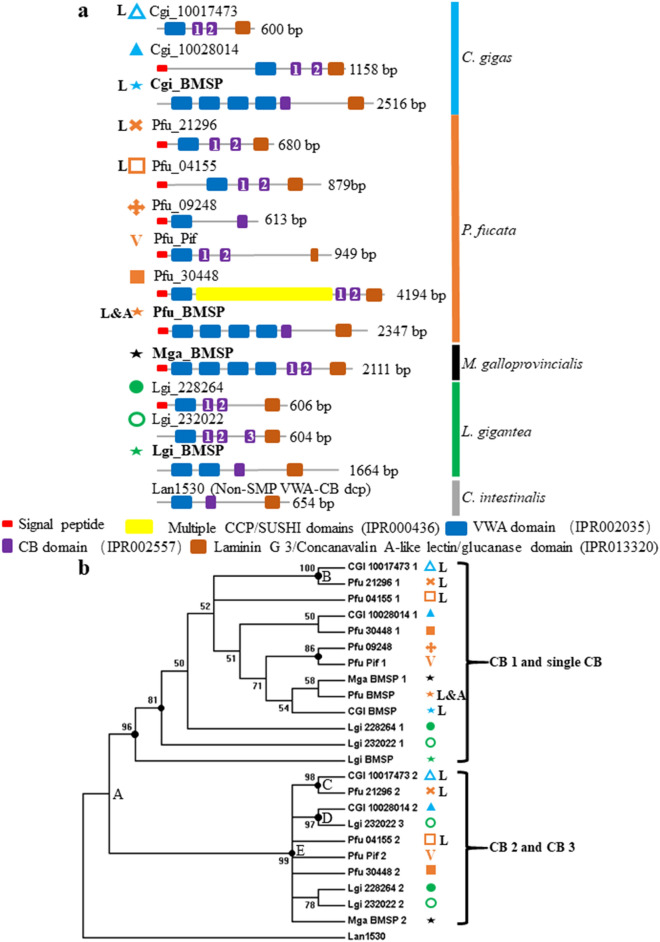
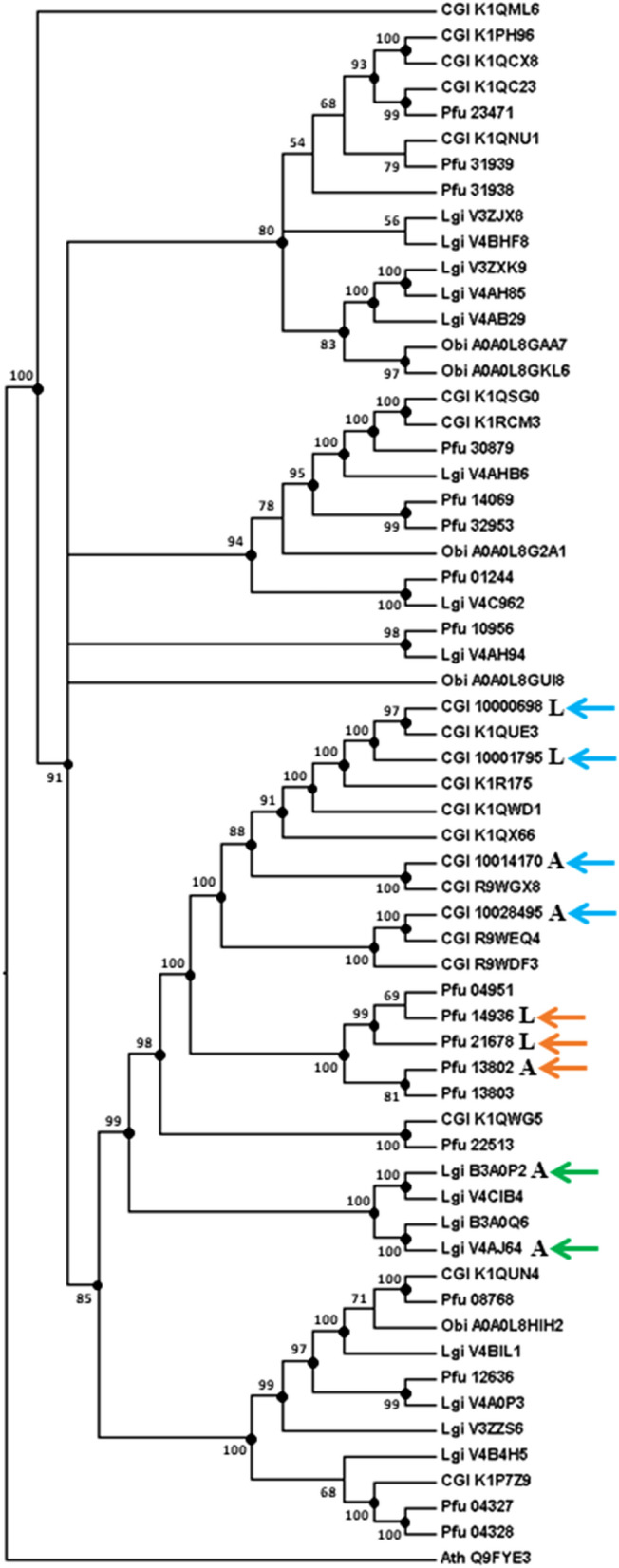
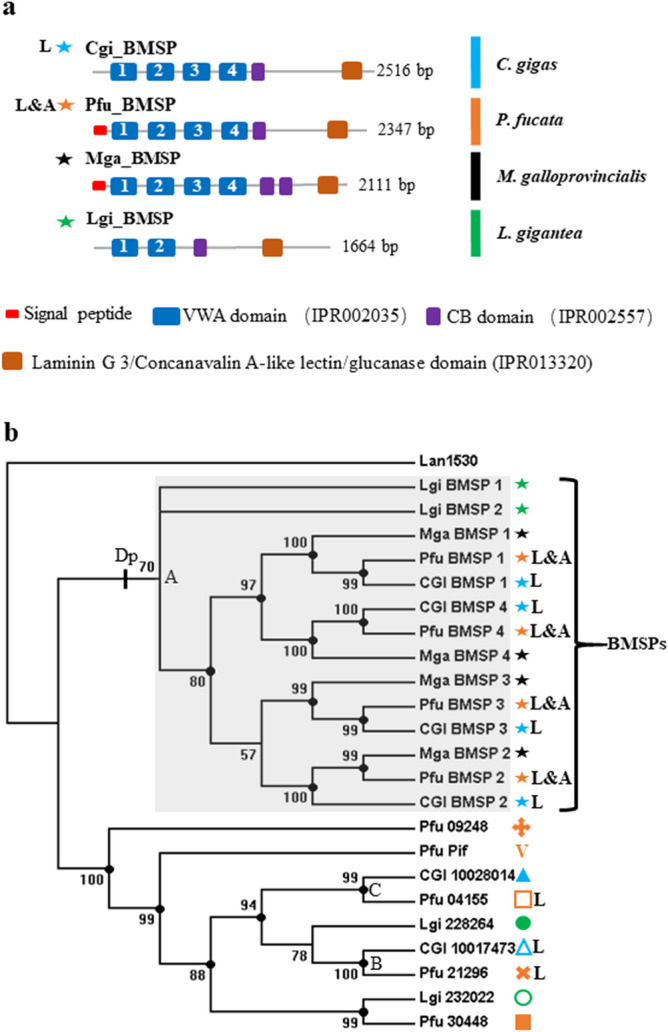
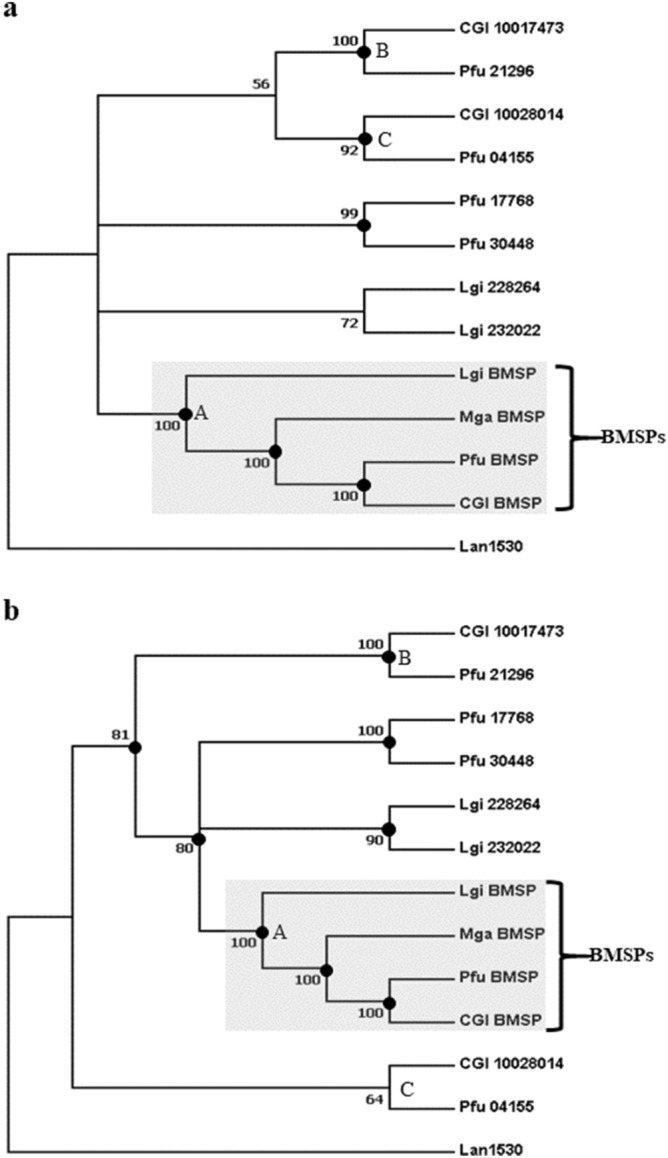
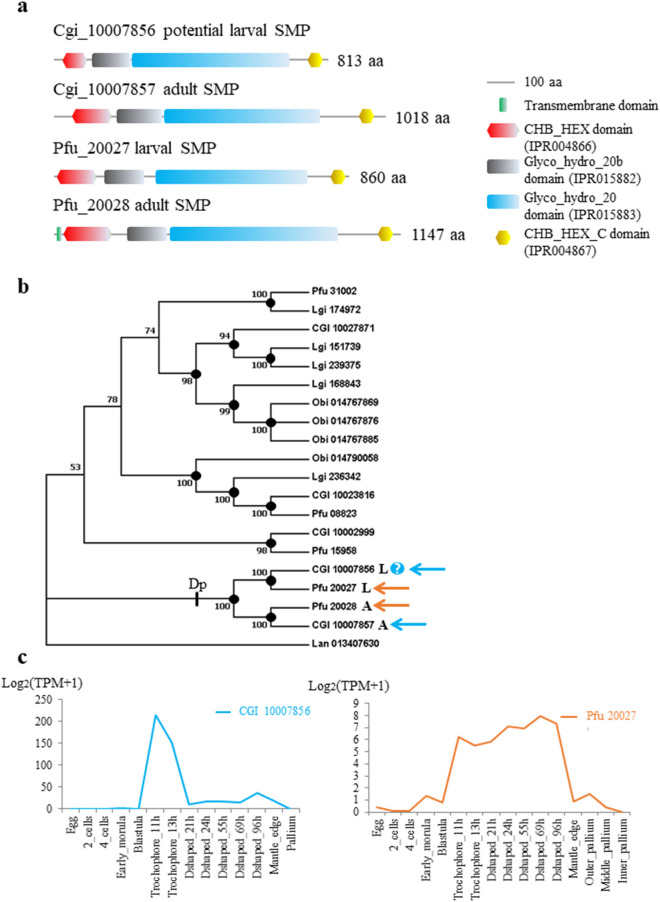
Molluscan shells are organo-mineral composites, in which the dominant calcium carbonate is intimately associated with an organic matrix comprised mainly of proteins and polysaccharides. However, whether the various shell matrix proteins (SMPs) date to the origin of hard skeletons in the Cambrian, or whether they represent later deployment through adaptive evolution, is still debated. In order to address this issue and to better understand the origins and evolution of biomineralization, phylogenetic analyses have been performed on the three SMP families, Von Willebrand factor type A (VWA) and chitin-binding domain-containing protein (VWA-CB dcp), chitobiase, and carbonic anhydrase (CA), which exist in both larval and adult shell proteomes in the bivalves, Crassostrea gigas and Pinctada fucata. In VWA-CB dcp and chitobiase, paralogs for larval and adult SMPs evolved before the divergence of these species. CA-SMPs have been taken as evidence for ancient origins of SMPs by their presumed indispensable function in biomineralization and ubiquitous distribution in molluscs. However, our results indicate gene duplications that gave rise to separate deployments as larval and adult CA-SMPs occurred independently in each lineage after their divergence, which is considerably more recent than hitherto assumed, supporting the "recent heritage and fast evolution" scenario for SMP evolution.
软体动物壳是有机-矿物复合材料,其中主要的碳酸钙与主要由蛋白质和多糖组成的有机基质密切相关。然而,各种壳基质蛋白(SMP)是起源于寒武纪硬骨骼的起源,还是代表后来通过适应性进化的部署,仍在争论中。为了解决这个问题,并更好地了解生物矿化的起源和进化,对存在于双壳类动物贻贝和珠母贝幼虫和成年壳蛋白组中的三种 SMP 家族,即 von Willebrand 因子 A(VWA)和几丁质结合域蛋白(VWA-CB dcp)、壳聚糖酶和碳酸酐酶(CA)进行了系统发育分析。在 VWA-CB dcp 和壳聚糖酶中,幼虫和成年 SMP 的直系同源基因在这些物种分化之前就已经进化了。CA-SMP 被认为是 SMP 起源古老的证据,因为它们在生物矿化中的假定不可或缺的功能和在软体动物中的普遍分布。然而,我们的结果表明,导致幼虫和成年 CA-SMP 分别部署的基因复制是在它们分化后各自的谱系中独立发生的,这比迄今为止假设的要晚得多,支持 SMP 进化的“最近遗产和快速进化”情景。