Department of Biotechnology, Faculty of Biological Science and Technology, University of Isfahan, Isfahan 73441-81746, Iran.
Department of Animal Biotechnology, Cell Science Research Center, Royan Institute for Biotechnology, ACECR, Isfahan, Iran.
Int J Nanomedicine. 2020 Dec 9;15:10029-10043. doi: 10.2147/IJN.S269169. eCollection 2020.
Despite the significant advances in modeling of biomechanical aspects of cell microenvironment, it remains a major challenge to precisely mimic the physiological condition of the particular cell niche. Here, the metal-organic frameworks (MOFs) have been introduced as a feasible platform for multifactorial control of cell-substrate interaction, given the wide range of physical and mechanical properties of MOF materials and their structural flexibility.
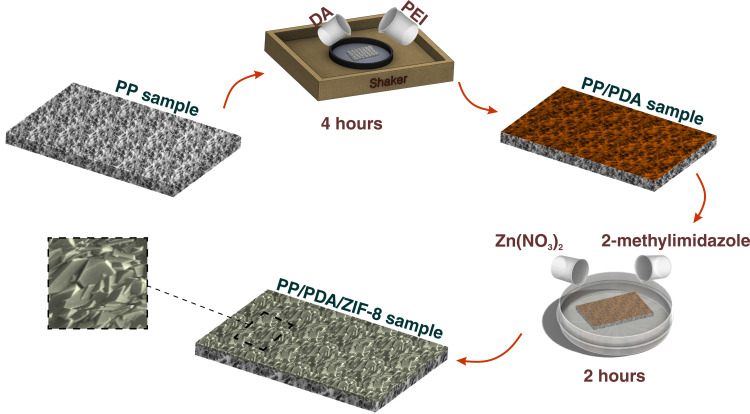
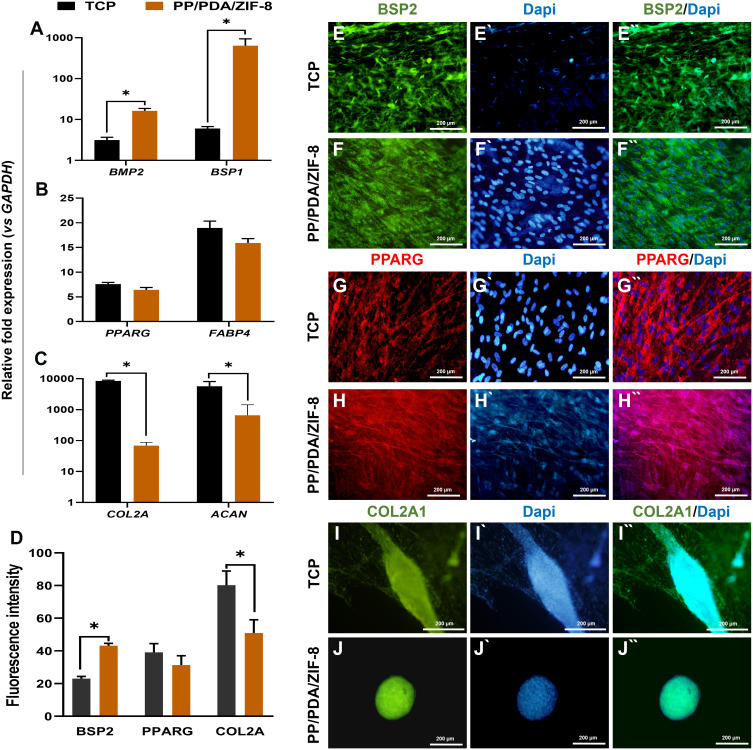
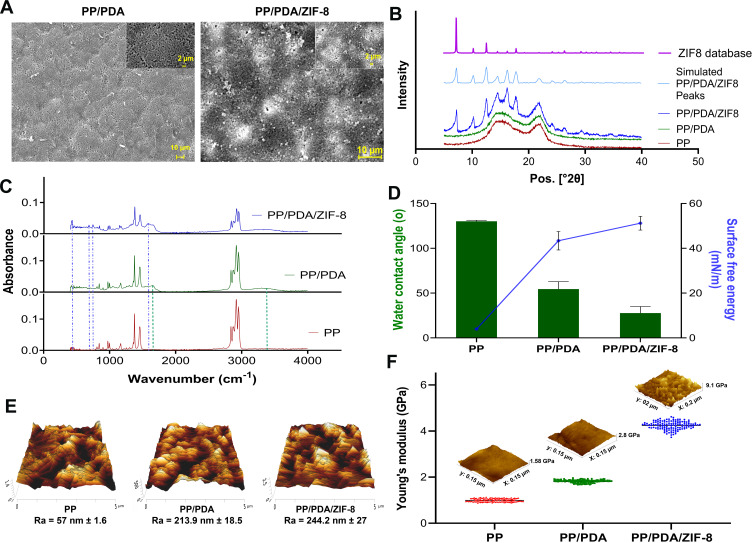
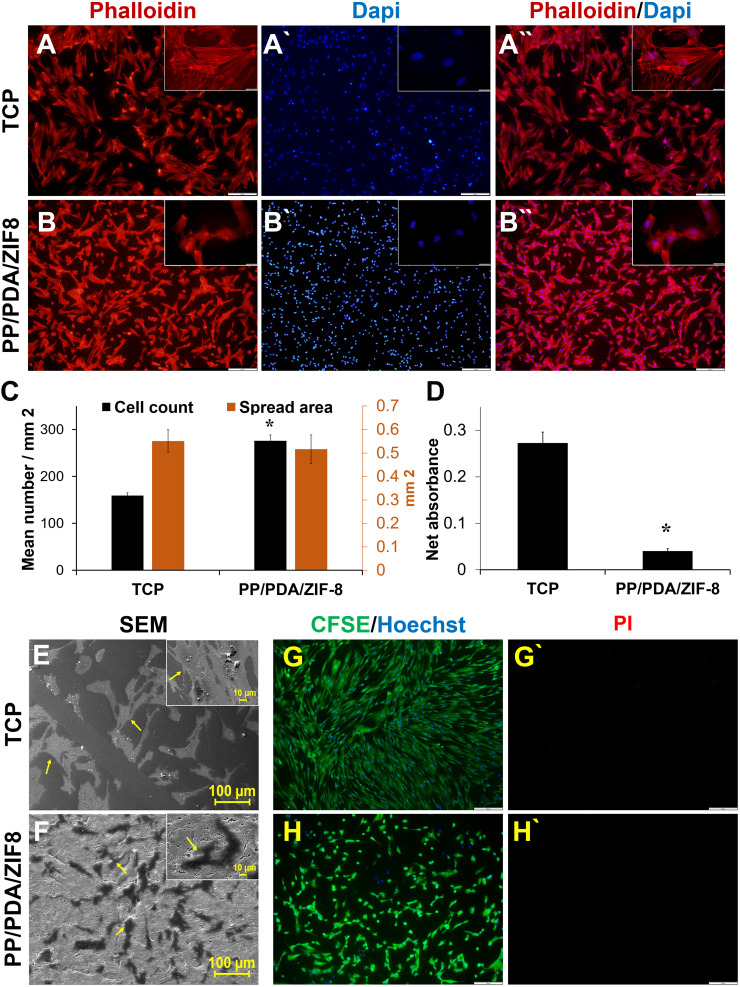
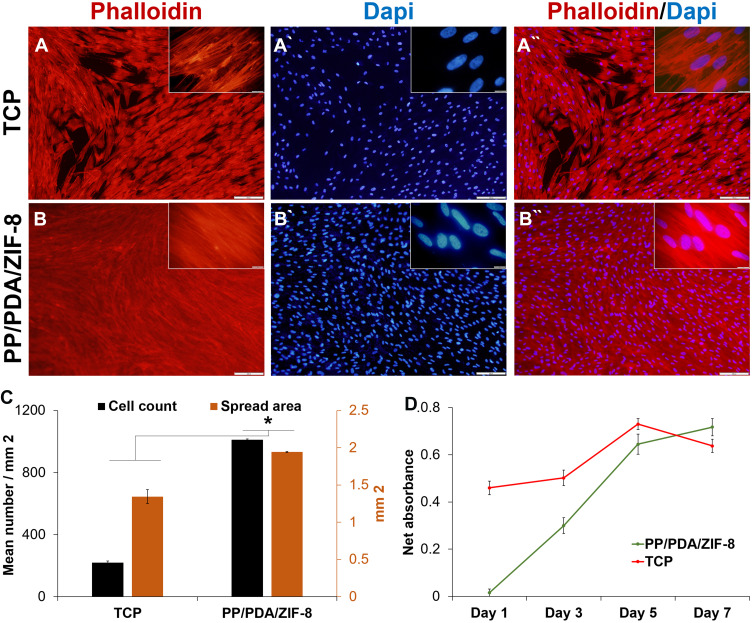
In situ crystallization of zeolitic imidazolate framework-8 (ZIF-8) on the polydopamine (PDA)-modified membrane significantly raised surface energy, wettability, roughness, and stiffness of the substrate. This modulation led to an almost twofold increment in the primary attachment of dental pulp stem cells (DPSCs) compare to conventional plastic culture dishes. The findings indicate that polypropylene (PP) membrane modified by PDA/ZIF-8 coating effectively supports the growth and proliferation of DPSCs at a substantial rate. Further analysis also displayed the exaggerated multilineage differentiation of DPSCs with amplified level of autocrine cell fate determination signals, like , and . Notably, osteogenic markers were dramatically overexpressed (more than 100-folds rather than tissue culture plate) in response to biomechanical characteristics of the ZIF-8 layer.
Hence, surface modification of cell culture platforms with MOF nanostructures proposed as a powerful nanomedical approach for selectively guiding stem cells for tissue regeneration. In particular, PP/PDA/ZIF-8 membrane presented ideal characteristics for using as a barrier membrane for guided bone regeneration (GBR) in periodontal tissue engineering.
尽管在细胞微环境生物力学方面的建模取得了重大进展,但精确模拟特定细胞生态位的生理条件仍然是一个主要挑战。在这里,鉴于金属有机骨架(MOF)材料的广泛物理和机械性能及其结构灵活性,MOF 已被引入作为细胞-底物相互作用的多因素控制的可行平台。
ZIF-8 在聚多巴胺(PDA)修饰膜上的原位结晶显著提高了基底的表面能、润湿性、粗糙度和刚性。与传统的塑料培养皿相比,这种调制使牙髓干细胞(DPSC)的初始附着增加了近两倍。研究结果表明,PDA/ZIF-8 涂层修饰的聚丙烯(PP)膜有效地以较高的速率支持 DPSCs 的生长和增殖。进一步的分析还显示,DPSCs 的多能分化明显增强,自分泌细胞命运决定信号(如 、 和 )的水平放大。值得注意的是,骨形成标志物的表达显著上调(比组织培养板高 100 倍以上),以响应 ZIF-8 层的生物力学特性。
因此,用 MOF 纳米结构对细胞培养平台进行表面修饰被提出作为一种用于选择性地引导干细胞进行组织再生的强大的纳米医学方法。特别是,PP/PDA/ZIF-8 膜具有作为牙周组织工程中引导骨再生(GBR)的屏障膜的理想特性。