Reichert Christoph, Tellez Ceja Igor Fabian, Sweeney-Reed Catherine M, Heinze Hans-Jochen, Hinrichs Hermann, Dürschmid Stefan
Department of Behavioral Neurology, Leibniz Institute for Neurobiology, Magdeburg, Germany.
Center for Behavioral Brain Sciences, Magdeburg, Germany.
Front Neurosci. 2020 Dec 1;14:591777. doi: 10.3389/fnins.2020.591777. eCollection 2020.
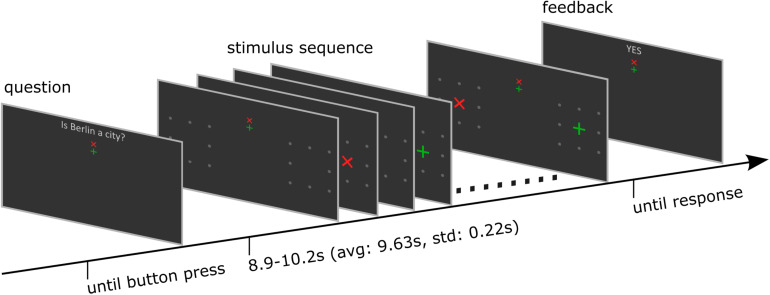
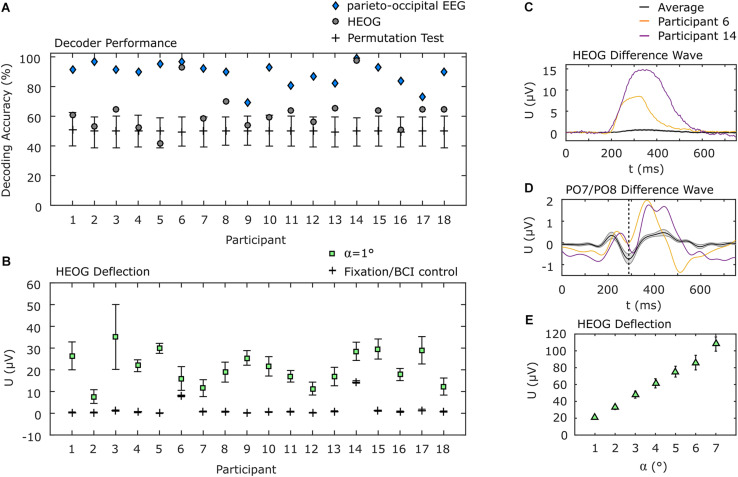
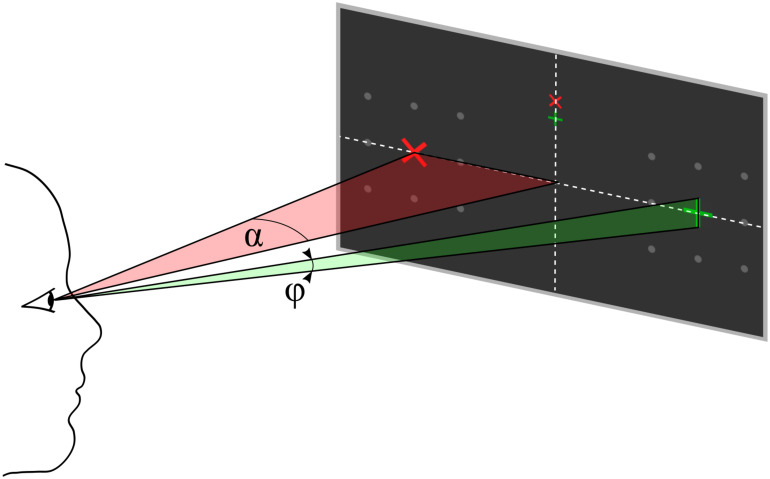
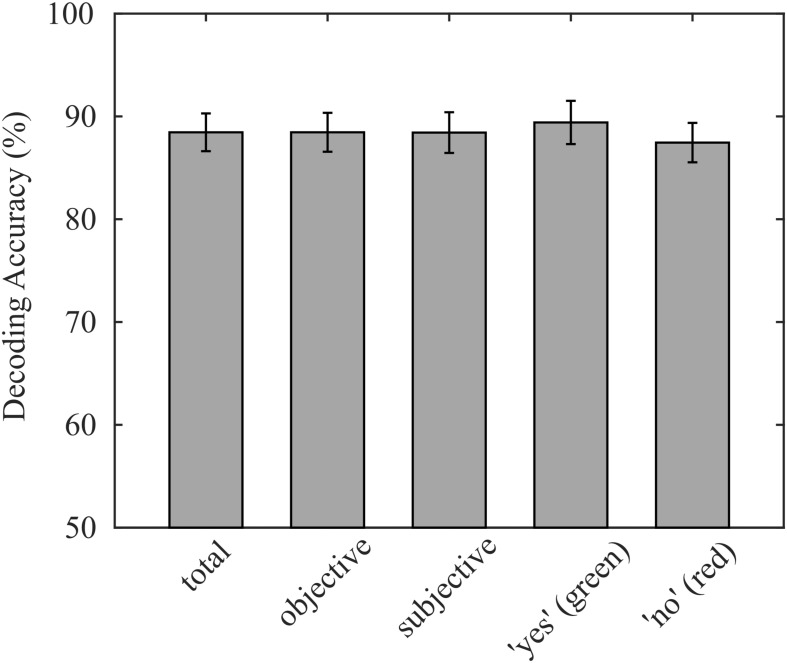
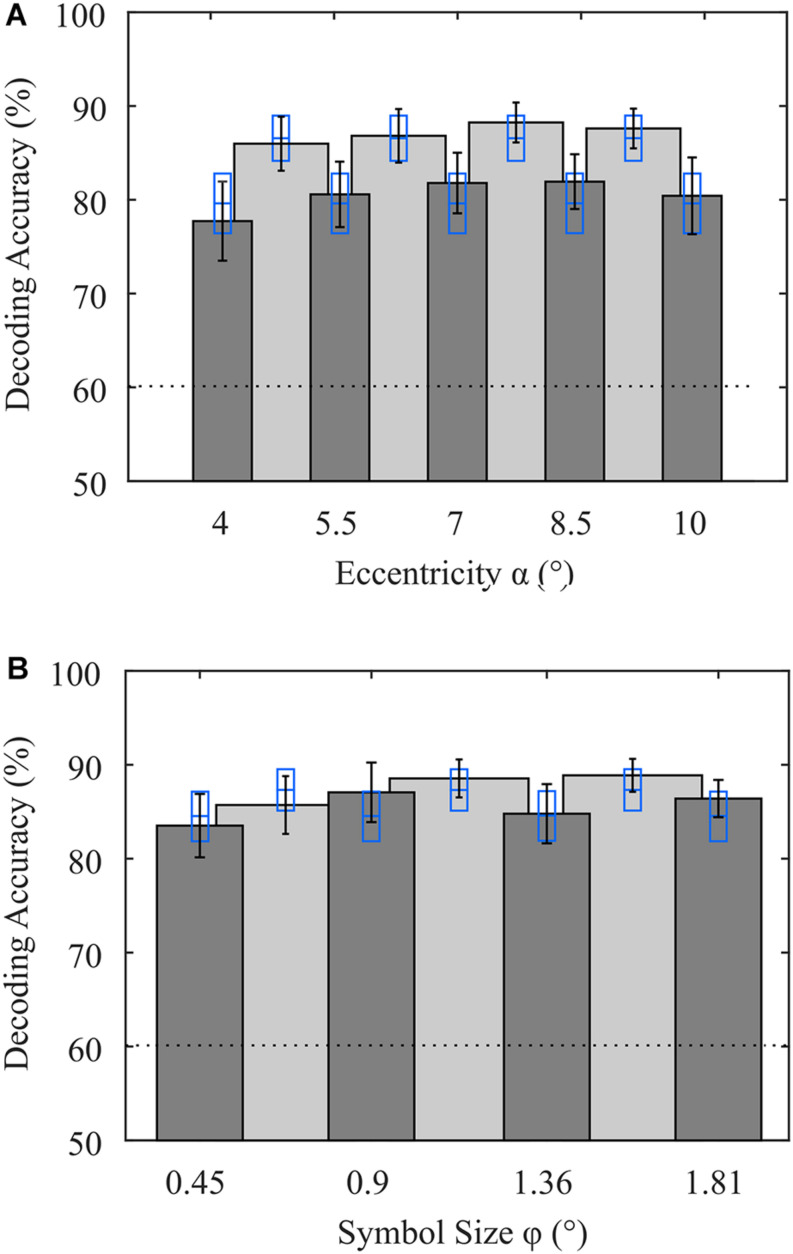
Regaining communication abilities in patients who are unable to speak or move is one of the main goals in decoding brain waves for brain-computer interface (BCI) control. Many BCI approaches designed for communication rely on attention to visual stimuli, commonly applying an oddball paradigm, and require both eye movements and adequate visual acuity. These abilities may, however, be absent in patients who depend on BCI communication. We have therefore developed a response-based communication BCI, which is independent of gaze shifts but utilizes covert shifts of attention to the left or right visual field. We recorded the electroencephalogram (EEG) from 29 channels and coregistered the vertical and horizontal electrooculogram. Data-driven decoding of small attention-based differences between the hemispheres, also known as N2pc, was performed using 14 posterior channels, which are expected to reflect correlates of visual spatial attention. Eighteen healthy participants responded to 120 statements by covertly directing attention to one of two colored symbols (green and red crosses for "yes" and "no," respectively), presented in the user's left and right visual field, respectively, while maintaining central gaze fixation. On average across participants, 88.5% (std: 7.8%) of responses were correctly decoded online. In order to investigate the potential influence of stimulus features on accuracy, we presented the symbols with different visual angles, by altering symbol size and eccentricity. The offline analysis revealed that stimulus features have a minimal impact on the controllability of the BCI. Hence, we show with our novel approach that spatial attention to a colored symbol is a robust method with which to control a BCI, which has the potential to support severely paralyzed people with impaired eye movements and low visual acuity in communicating with their environment.
让无法说话或行动的患者恢复沟通能力是脑机接口(BCI)控制中解码脑电波的主要目标之一。许多为沟通设计的BCI方法依赖于对视觉刺激的注意力,通常采用oddball范式,并且需要眼球运动和足够的视力。然而,依赖BCI沟通的患者可能不具备这些能力。因此,我们开发了一种基于反应的沟通BCI,它不依赖于目光转移,而是利用对左或右视野的隐蔽注意力转移。我们从29个通道记录脑电图(EEG),并同时记录垂直和水平眼电图。使用14个后通道对半球之间基于注意力的微小差异(也称为N2pc)进行数据驱动解码,这些通道预计能反映视觉空间注意力的相关性。18名健康参与者通过将注意力隐蔽地导向分别出现在用户左、右视野的两个彩色符号(绿色和红色十字分别代表“是”和“否”)之一,对120条陈述做出反应,同时保持中央注视。在所有参与者中,平均有88.5%(标准差:7.8%)的反应能够在线正确解码。为了研究刺激特征对准确性的潜在影响,我们通过改变符号大小和离心率,以不同视角呈现符号。离线分析表明,刺激特征对BCI的可控性影响极小。因此,我们用我们的新方法表明,对彩色符号的空间注意力是一种控制BCI的可靠方法,它有可能支持严重瘫痪且眼球运动受损和视力低下的人与其环境进行沟通。