Tirendi Sara, Saccà Sergio Claudio, Vernazza Stefania, Traverso Carlo, Bassi Anna Maria, Izzotti Alberto
Department of Experimental Medicine (DIMES), University of Genoa, Genoa, Italy.
Inter-University Center for the Promotion of the 3Rs Principles in Teaching & Research (Centro 3R), Pisa, Italy.
Front Neurol. 2020 Dec 1;11:591776. doi: 10.3389/fneur.2020.591776. eCollection 2020.
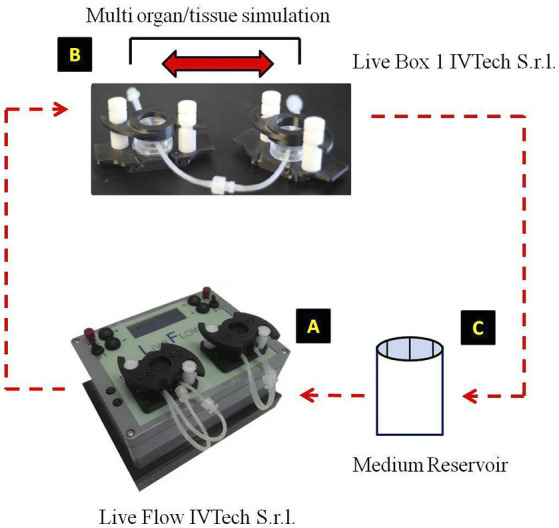
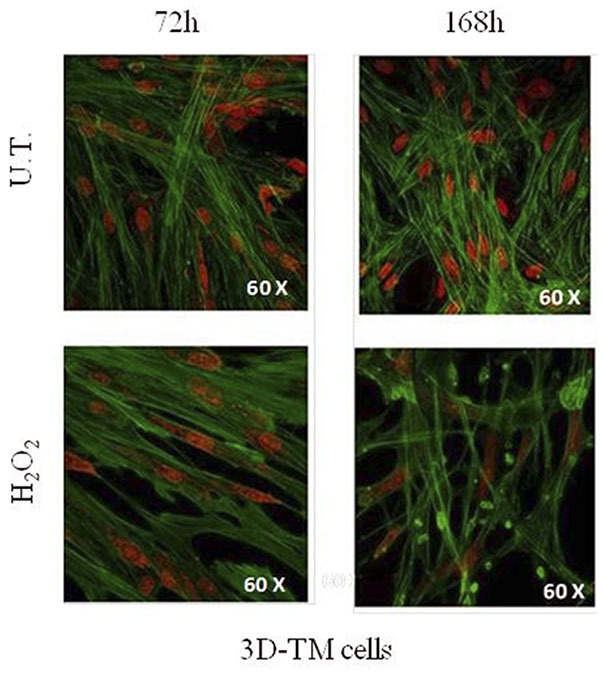
Glaucoma is a multifactorial syndrome in which the development of pro-apoptotic signals are the causes for retinal ganglion cell (RGC) loss. Most of the research progress in the glaucoma field have been based on experimentally inducible glaucoma animal models, which provided results about RGC loss after either the crash of the optic nerve or IOP elevation. In addition, there are genetically modified mouse models (DBA/2J), which make the study of hereditary forms of glaucoma possible. However, these approaches have not been able to identify all the molecular mechanisms characterizing glaucoma, possibly due to the disadvantages and limits related to the use of animals. In fact, the results obtained with small animals (i.e., rodents), which are the most commonly used, are often not aligned with human conditions due to their low degree of similarity with the human eye anatomy. Although the results obtained from non-human primates are in line with human conditions, they are little used for the study of glaucoma and its outcomes at cellular level due to their costs and their poor ease of handling. In this regard, according to at least two of the 3Rs principles, there is a need for reliable human-based models to better clarify the mechanisms involved in disease progression, and possibly to broaden the scope of the results so far obtained with animal models. The proper selection of an model with a "closer to " microenvironment and structure, for instance, allows for the identification of the biomarkers involved in the early stages of glaucoma and contributes to the development of new therapeutic approaches. This review summarizes the most recent findings in the glaucoma field through the use of human two- and three-dimensional cultures. In particular, it focuses on the role of the scaffold and the use of bioreactors in preserving the physiological relevance of conditions of the human trabecular meshwork cells in three-dimensional cultures. Moreover, data from these studies also highlight the pivotal role of oxidative stress in promoting the production of trabecular meshwork-derived pro-apoptotic signals, which are one of the first marks of trabecular meshwork damage. The resulting loss of barrier function, increase of intraocular pressure, as well the promotion of neuroinflammation and neurodegeneration are listed as the main features of glaucoma. Therefore, a better understanding of the first molecular events, which trigger the glaucoma cascade, allows the identification of new targets for an early neuroprotective therapeutic approach.
青光眼是一种多因素综合征,其中促凋亡信号的产生是视网膜神经节细胞(RGC)丢失的原因。青光眼领域的大多数研究进展都基于实验诱导的青光眼动物模型,这些模型提供了视神经损伤或眼压升高后RGC丢失的结果。此外,还有转基因小鼠模型(DBA/2J),这使得遗传性青光眼的研究成为可能。然而,这些方法未能识别出青光眼的所有分子机制,这可能是由于与动物使用相关的缺点和局限性。事实上,最常用的小动物(即啮齿动物)所获得的结果,由于其与人类眼部解剖结构的相似度较低,往往与人类情况不一致。尽管从非人类灵长类动物获得的结果与人类情况相符,但由于成本和操作难度大,它们很少用于青光眼及其细胞水平结果的研究。在这方面,根据3R原则中的至少两条,需要可靠的基于人类的模型,以更好地阐明疾病进展所涉及的机制,并可能扩大目前从动物模型获得的结果范围。例如,正确选择具有“更接近”微环境和结构的模型,有助于识别青光眼早期阶段涉及的生物标志物,并有助于开发新的治疗方法。本综述通过使用人类二维和三维培养物总结了青光眼领域的最新发现。特别是,它关注支架的作用以及生物反应器在维持三维培养中人类小梁网细胞条件的生理相关性方面的应用。此外,这些研究的数据还突出了氧化应激在促进小梁网衍生的促凋亡信号产生中的关键作用,这些信号是小梁网损伤的首批标志之一。由此导致的屏障功能丧失、眼压升高以及神经炎症和神经变性加剧被列为青光眼的主要特征。因此,更好地理解引发青光眼级联反应的首个分子事件,有助于识别早期神经保护治疗方法的新靶点。