Chong Wei, Wang Zhe, Shang Liang, Jia Shengtao, Liu Jin, Fang Zhen, Du Fengying, Wu Hao, Liu Yang, Chen Yang, Chen Hao
Department of Gastrointestinal Surgery, Shandong Provincial Hospital Affiliated to Shandong First Medical University, Jinan, Shandong 250021, China.
Department of Gastrointestinal Surgery, Shandong Provincial Hospital, Cheeloo College of Medicine, Shandong University, Jinan, Shandong 250021, China.
Mol Ther Nucleic Acids. 2020 Oct 27;23:89-100. doi: 10.1016/j.omtn.2020.10.033. eCollection 2021 Mar 5.
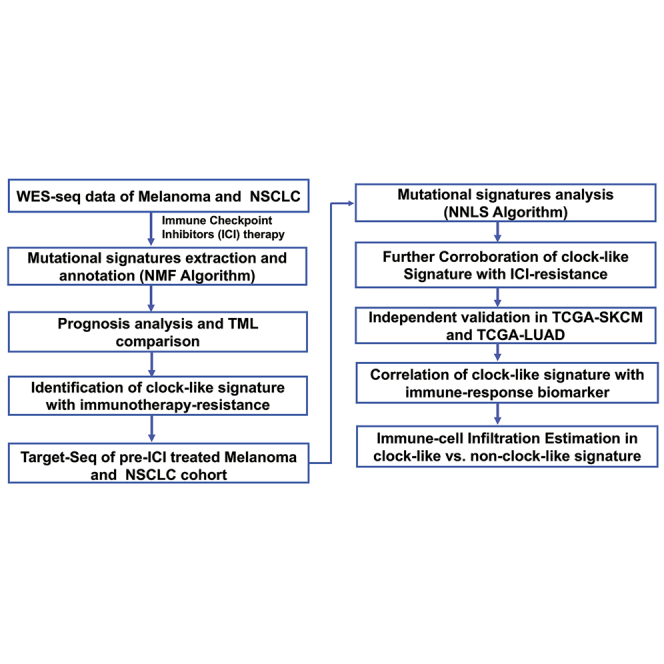
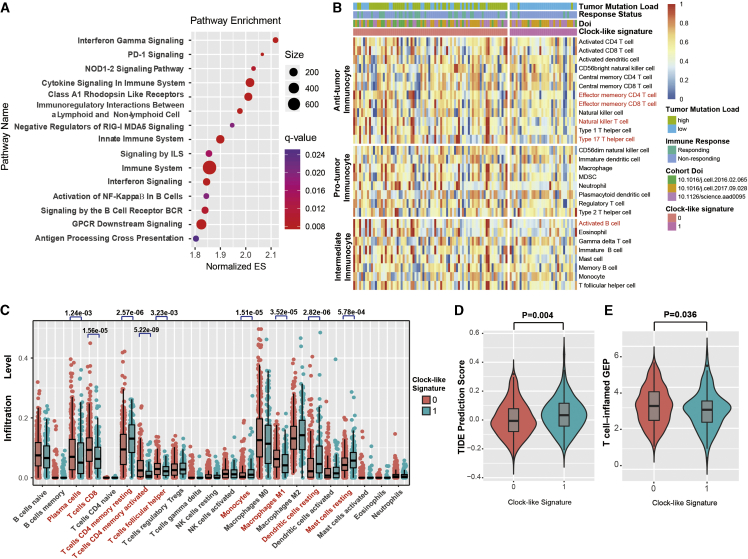
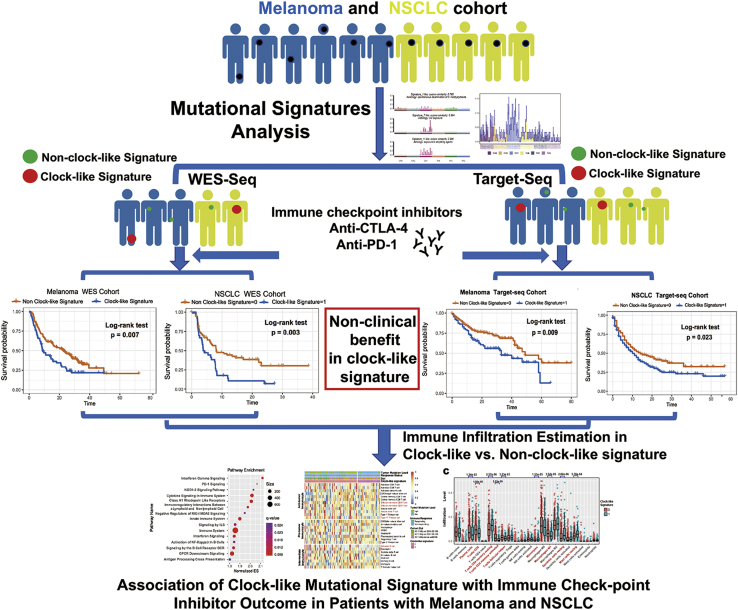
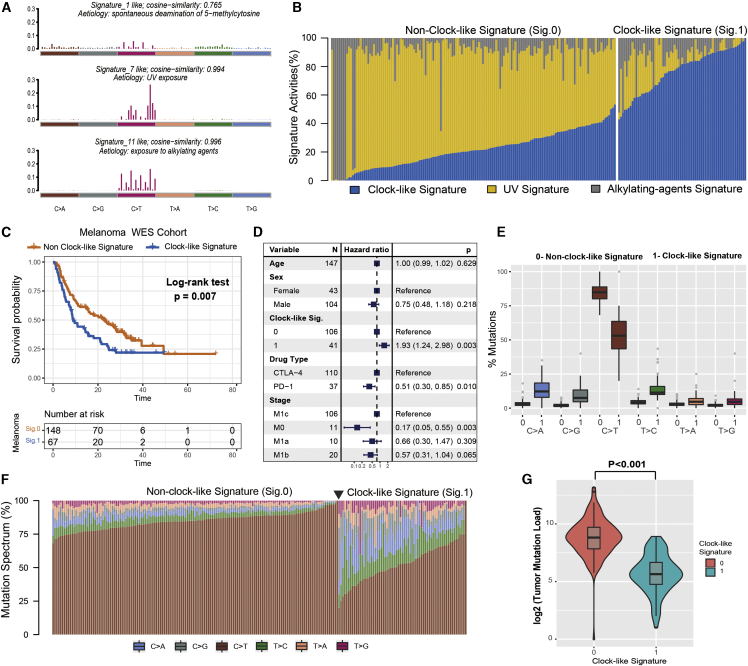
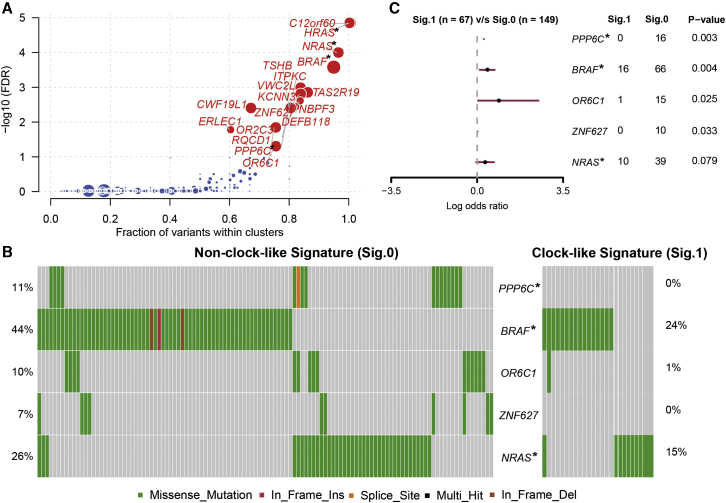
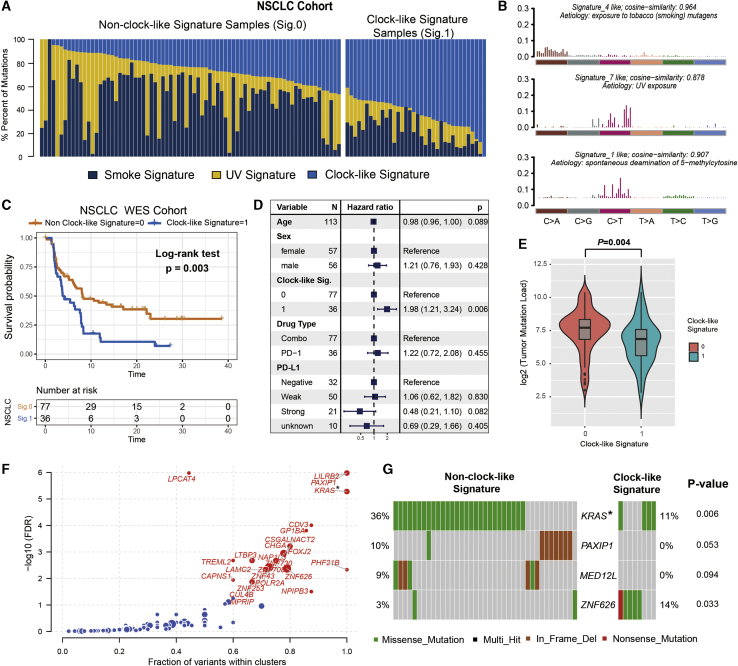
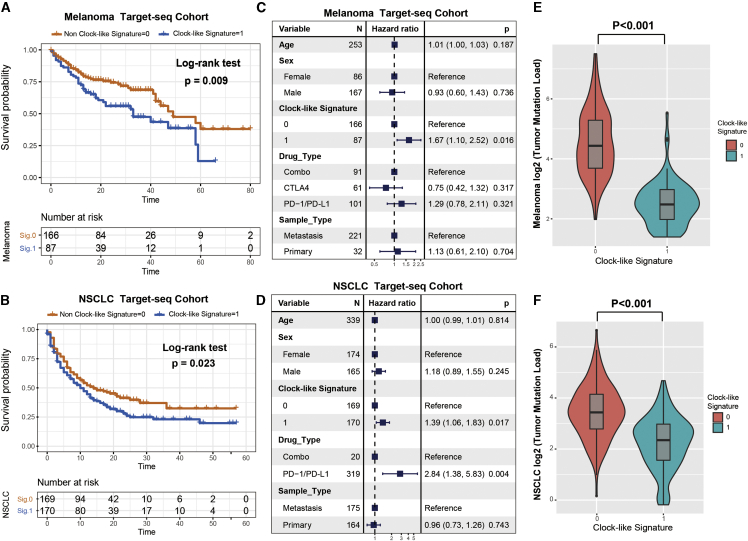
Immune checkpoint inhibitor (ICI) therapy has achieved remarkable clinical benefit in melanoma and non-small cell lung cancer (NSCLC). Tumor mutational signatures are the fingerprints of endogenous and exogenous factors that have acted throughout tumorigenesis and heterogeneity; however, their association with immune response in ICI-treated samples remains unclear. Here, we leveraged whole-exome sequencing (WES)-based mutational profiles combined with clinicopathologic characteristics from melanoma and NSCLC datasets to examine whether tumor genomic features contribute to clinical benefit of ICI treatment. Mutational data acquired from targeted next-generation sequencing (NGS) assays (MSK-IMPACT panels) were also employed for further corroboration. A mutational signature (known as age-related clock-like processing) characterized by enrichment of C>T mutations at NpCpG trinucleotides were identified to be associated with a worse prognosis and lower tumor mutation load (TML) in both WES and targeted NGS immunotherapy cohorts. We also analyzed gene transcriptomic profiles and identified immune regulation-related gene pathways that were significantly altered in samples with different clock-like signature grouping. Leucocyte subset analysis further revealed that clock-like signature was associated with the reduction of cytotoxic cell infiltration and elevation of regulatory T cells. Overall, our work re-annotated that the age-related clock-like signature was associated with worse prognosis and lower immune activity, offering opportunities to stratify patients into optimal immunotherapy plans based on genomic subtyping.
免疫检查点抑制剂(ICI)疗法在黑色素瘤和非小细胞肺癌(NSCLC)中取得了显著的临床疗效。肿瘤突变特征是在肿瘤发生和异质性过程中起作用的内源性和外源性因素的指纹;然而,它们与ICI治疗样本中免疫反应的关联仍不清楚。在这里,我们利用基于全外显子测序(WES)的突变谱结合黑色素瘤和NSCLC数据集的临床病理特征,来研究肿瘤基因组特征是否有助于ICI治疗的临床疗效。从靶向二代测序(NGS)检测(MSK-IMPACT面板)获得的突变数据也被用于进一步验证。在WES和靶向NGS免疫治疗队列中,均鉴定出一种以NpCpG三核苷酸处C>T突变富集为特征的突变特征(称为年龄相关的时钟样过程),其与较差的预后和较低的肿瘤突变负荷(TML)相关。我们还分析了基因转录组谱,并确定了在具有不同时钟样特征分组的样本中显著改变的免疫调节相关基因途径。白细胞亚群分析进一步表明,时钟样特征与细胞毒性细胞浸润减少和调节性T细胞升高有关。总体而言,我们的工作重新表明,年龄相关的时钟样特征与较差的预后和较低的免疫活性相关,为根据基因组亚型将患者分层到最佳免疫治疗方案提供了机会。