Pinto Catarina I G, Bucar Sara, Alves Vítor, Fonseca Alexandra, Abrunhosa Antero J, da Silva Cláudia L, Guerreiro Joana F, Mendes Filipa
Centro de Ciências e Tecnologias Nucleares, Instituto Superior Técnico, Universidade de Lisboa, Lisbon, Portugal.
Departamento de Bioengenharia, iBB - Institute for Bioengineering and Biosciences, Instituto Superior Técnico, Universidade de Lisboa, Lisbon, Portugal.
Front Mol Biosci. 2020 Dec 1;7:609172. doi: 10.3389/fmolb.2020.609172. eCollection 2020.
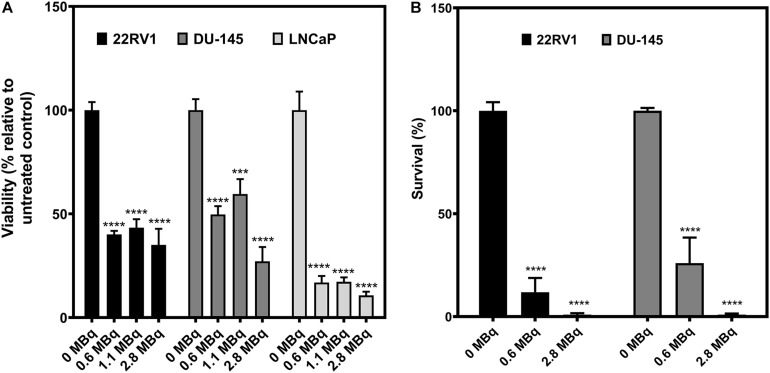
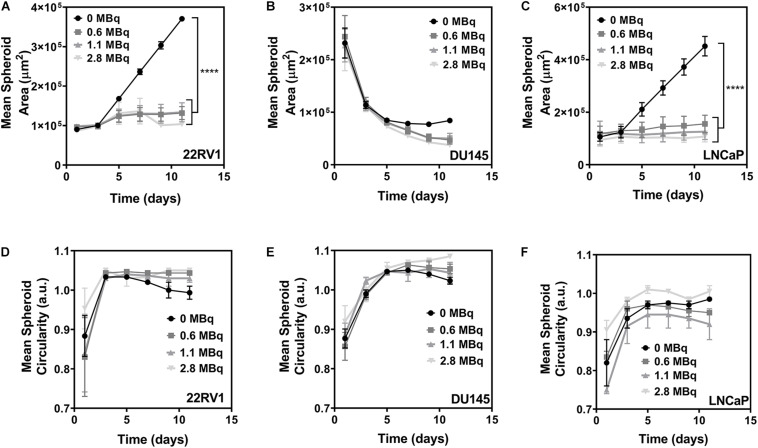
Prostate cancer (PCa) is the second most common cancer type in men, and in advanced metastatic stages is considerable incurable. This justifies the need for efficient early diagnostic methods and novel therapies, particularly radiopharmaceuticals with the potential for simultaneous diagnosis and therapy (theranostics). We have previously demonstrated, using monolayer-cultured cells, that copper-64 chloride, a promising theranostic agent for PCa, has the potential to induce significant damage in cancer cells while having minimal side effects in healthy tissues. Here, we further explored this compound for its theranostic applications using more advanced PCa cellular models, specifically multicellular spheroids. Namely, we evaluated the cellular uptake of CuCl in three human PCa spheroids (derived from 22RV1, DU145, and LNCaP cells), and characterized the growth profile and viability of those spheroids as well as the clonogenic capacity of spheroid-derived cells after exposure to CuCl. Furthermore, the populations of cancer stem cells (CSCs), known to be important for cancer resistance and recurrence, present in the spheroid models were also evaluated using two different markers (CD44 and CD117). CuCl was found to have significant detrimental effects in spheroids and spheroid-derived cells, being able to reduce their growth and impair the viability and reproductive ability of spheroids from both castration-resistant (22RV1 and DU145) and hormone-naïve PCa (LNCaP). Interestingly, resistance to CuCl treatment seemed to be related with the presence of a CSC population, since the most resistant spheroids, derived from the DU145 cell line, had the highest initial percentage of CSCs among the three cell lines under study. Altogether, these results clearly highlight the theranostic potential of CuCl.
前列腺癌(PCa)是男性中第二常见的癌症类型,在晚期转移阶段相当难以治愈。这证明了需要高效的早期诊断方法和新型疗法,特别是具有同时诊断和治疗潜力的放射性药物(诊疗药物)。我们之前使用单层培养细胞证明,氯化铜-64作为一种有前景的PCa诊疗药物,有可能在癌细胞中诱导显著损伤,同时对健康组织的副作用最小。在这里,我们使用更先进的PCa细胞模型,特别是多细胞球体,进一步探索这种化合物的诊疗应用。具体来说,我们评估了CuCl在三种人PCa球体(源自22RV1、DU145和LNCaP细胞)中的细胞摄取,并表征了这些球体的生长曲线和活力,以及暴露于CuCl后球体衍生细胞的克隆形成能力。此外,还使用两种不同的标志物(CD44和CD117)评估了球体模型中已知对癌症耐药性和复发很重要的癌症干细胞(CSC)群体。发现CuCl对球体和球体衍生细胞有显著的有害影响,能够降低它们的生长,并损害去势抵抗性(22RV1和DU145)和激素初治PCa(LNCaP)球体的活力和繁殖能力。有趣的是,对CuCl治疗的抗性似乎与CSC群体的存在有关,因为来自DU145细胞系的最抗性球体在研究的三种细胞系中初始CSC百分比最高。总之,这些结果清楚地突出了CuCl的诊疗潜力。