Department of Plastic Surgery, Zhongnan Hospital of Wuhan University, Donghu Road 169, Wuhan, 430071, China.
Department of Thyroid and Breast Surgery, Zhongnan Hospital of Wuhan University, Wuhan, China.
ESC Heart Fail. 2021 Feb;8(1):644-651. doi: 10.1002/ehf2.13151. Epub 2020 Dec 17.
Many studies have explored the clinical characteristics of patients with coronavirus disease (COVID-19), especially patients with cardiovascular disease. However, associated mechanisms and markers remain to be further investigated. This study aimed to investigate the effect of α-hydroxybutyrate dehydrogenase (α-HBDH) levels on disease progression and prognosis of patients with COVID-19.
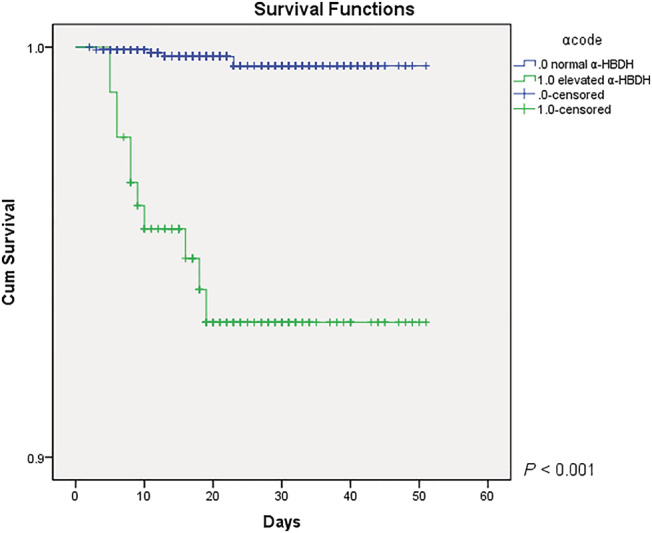
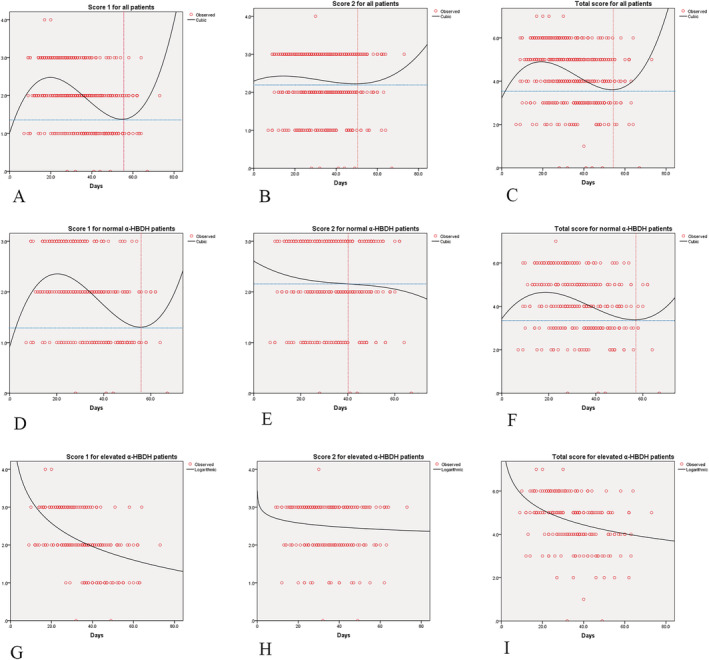
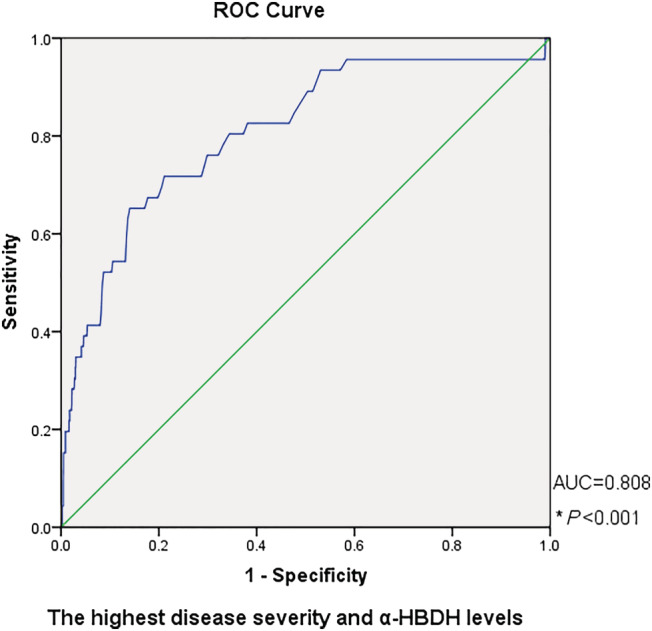
One thousand seven hundred and fifty-one patients from the Leishenshan hospital in Wuhan were divided into elevated and normal groups by α-HBDH level, and the clinical information between the two groups was compared retrospectively. The main outcome evaluation criteria included in-hospital death and disease severity. Univariate and multivariate regression analyses, survival curves, logistic regression, and receiver operating characteristic curve models were performed to explore the relationship between elevated α-HBDH and the two outcomes. Besides, curve fitting analyses were conducted to analyse the relationship between computed tomography score and survival. Among 1751 patients with confirmed COVID-19, 15 patients (0.87%) died. The mean (SD) age of patients was 58 years in normal α-HBDH group and 66 years in elevated α-HBDH group (P < 0.001). The mortality during hospitalization was 0.26% (4 of 1559) for patients with normal α-HBDH levels and 5.73% (11 of 192) for those with elevated α-HBDH levels (P < 0.001). Multivariate Cox analysis confirmed an association between elevated α-HBDH levels and higher risk of in-hospital mortality [hazard ratio: 4.411, 95% confidence interval (95% CI), 1.127-17.260; P = 0.033]. Multivariate logistic regression for disease severity and α-HBDH levels showed significant difference between both groups (odds ratio = 3.759; 95% CI, 1.895-7.455; P < 0.001). Kaplan-Meier curves also illustrated the survival difference between normal and elevated α-HBDH patients (P < 0.001).
Our study found that serum α-HBDH is an independent risk factor for in-hospital mortality and disease severity among COVID-19 patients. α-HBDH assessment may aid clinicians in identifying high-risk individuals among COVID-19 patients.
许多研究探讨了冠状病毒病(COVID-19)患者的临床特征,尤其是患有心血管疾病的患者。然而,相关机制和标志物仍有待进一步研究。本研究旨在探讨α-羟丁酸脱氢酶(α-HBDH)水平对 COVID-19 患者疾病进展和预后的影响。
本研究回顾性比较了武汉雷神山医院 1751 例患者的α-HBDH 水平升高组和正常组的临床资料。主要结局评估标准包括住院期间死亡和疾病严重程度。进行单因素和多因素回归分析、生存曲线、逻辑回归和受试者工作特征曲线模型,以探讨升高的α-HBDH 与这两个结局之间的关系。此外,还进行了曲线拟合分析,以分析 CT 评分与生存之间的关系。在 1751 例确诊 COVID-19 的患者中,有 15 例(0.87%)死亡。正常α-HBDH 组患者的平均(SD)年龄为 58 岁,升高α-HBDH 组为 66 岁(P<0.001)。正常α-HBDH 组患者的住院期间死亡率为 0.26%(4/1559),升高α-HBDH 组为 5.73%(11/192)(P<0.001)。多因素 Cox 分析证实,升高的α-HBDH 水平与住院期间死亡率升高相关[风险比:4.411,95%置信区间(95%CI)为 1.127-17.260;P=0.033]。用于疾病严重程度和α-HBDH 水平的多因素逻辑回归显示两组之间存在显著差异(比值比=3.759;95%CI,1.895-7.455;P<0.001)。Kaplan-Meier 曲线也说明了正常和升高的α-HBDH 患者之间的生存差异(P<0.001)。
本研究发现血清α-HBDH 是 COVID-19 患者住院期间死亡率和疾病严重程度的独立危险因素。α-HBDH 评估可能有助于临床医生识别 COVID-19 患者中的高危个体。