The Sainsbury Laboratory, University of Cambridge, Cambridge CB2 1LR, U.K.
Biochem Soc Trans. 2020 Dec 18;48(6):2743-2752. doi: 10.1042/BST20200529.
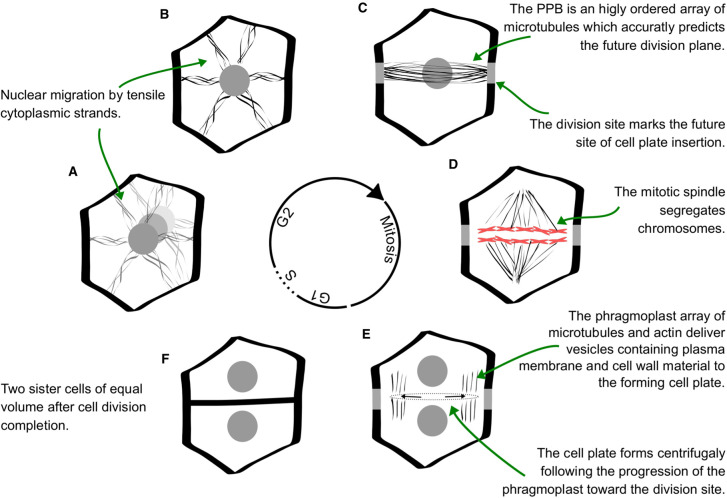
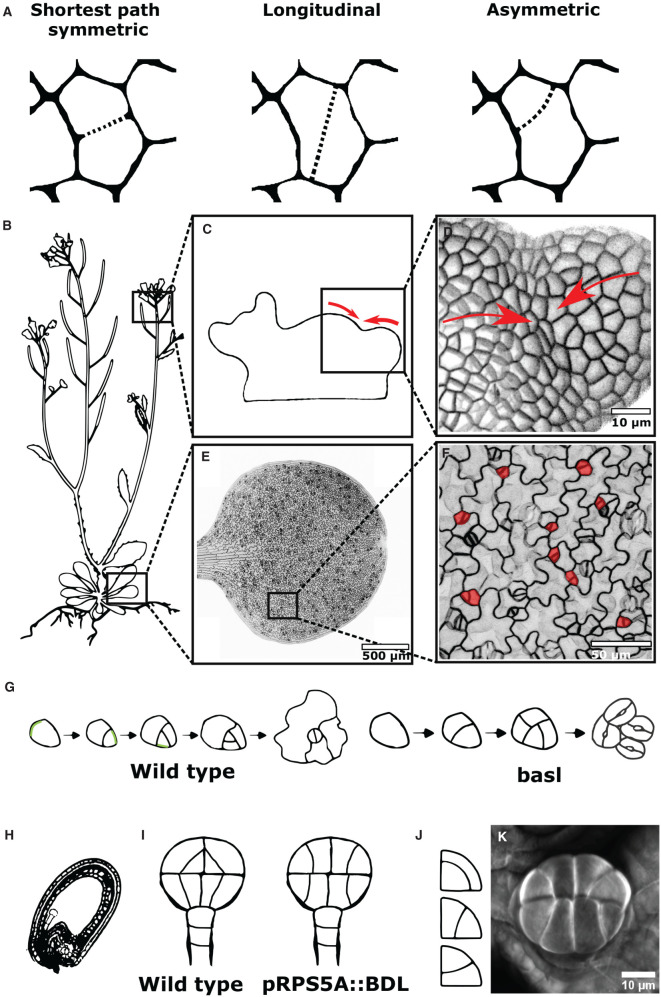
In plants, the spatial arrangement of cells within tissues and organs is a direct consequence of the positioning of the new cell walls during cell division. Since the nineteenth century, scientists have proposed rules to explain the orientation of plant cell divisions. Most of these rules predict the new wall will follow the shortest path passing through the cell centroid halving the cell into two equal volumes. However, in some developmental contexts, divisions deviate significantly from this rule. In these situations, mechanical stress, hormonal signalling, or cell polarity have been described to influence the division path. Here we discuss the mechanism and subcellular structure required to define the cell division placement then we provide an overview of the situations where division deviates from the shortest symmetric path.
在植物中,组织和器官内细胞的空间排列是新细胞壁在细胞分裂过程中定位的直接结果。自 19 世纪以来,科学家们提出了一些规则来解释植物细胞分裂的方向。这些规则大多预测新的细胞壁将沿着通过细胞质心的最短路径延伸,将细胞分成两个相等的体积。然而,在某些发育环境中,细胞分裂明显偏离这一规则。在这些情况下,机械应力、激素信号或细胞极性被描述为影响分裂路径。在这里,我们讨论了定义细胞分裂位置所需的机制和亚细胞结构,然后概述了分裂偏离最短对称路径的情况。