MHeNS School for Mental Health and Neuroscience, Department of Health, Ethics and Society, Maastricht University, Maastricht, The Netherlands.
Alzheimer Centre Limburg, School for Mental Health and Neuroscience, Maastricht University, Maastricht, the Netherlands.
J Alzheimers Dis. 2021;79(2):467-476. doi: 10.3233/JAD-201104.
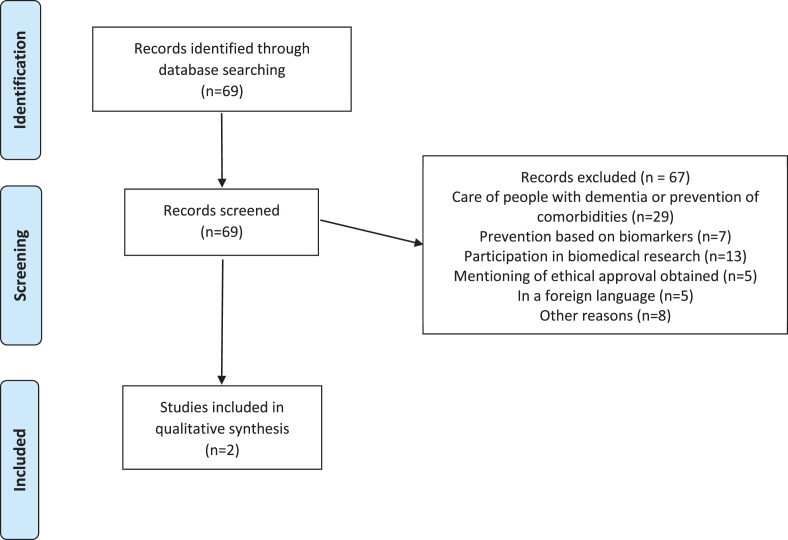
Dementia poses important medical and societal challenges, and of all health risks people face in life, dementia is one of the most feared. Recent research indicates that up to about 40% of all cases of dementia might be preventable. A series of environmental, social, and medical risk-factors have been identified that should be targeted from midlife onwards when people are still cognitively healthy. At first glance, this seems not merely advisable, but even imperative. However, these new developments trigger a series of new ethical questions and concerns which have hardly been addressed to date. Pro-active ethical reflection, however, is crucial to ensure that the interests and well-being of those affected, ultimately all of us, are adequately respected. This is the goal of the current contribution. Against the background of a concrete case in primary dementia prevention, it provides a systematic overview of the current ethical literature and sketches an ethical research agenda. First, possible benefits of increased well-being must be balanced with the burdens of being engaged in particularly long-term interventions for which it is unclear whether they will ever pay out on a personal level. Second, while knowledge about one's options to maintain brain health might empower people, it might also undermine autonomy, put high social pressure on people, medicalize healthy adults, and stigmatize those who still develop dementia. Third, while synergistic effects might occur, the ideals of dementia prevention might also conflict with other health and non-health related values people hold in life.
痴呆症带来了重要的医学和社会挑战,在人们一生中面临的所有健康风险中,痴呆症是最令人恐惧的之一。最近的研究表明,多达约 40%的痴呆症病例可能是可以预防的。已经确定了一系列环境、社会和医疗风险因素,这些因素应该从中年开始针对那些仍然认知健康的人进行干预。乍一看,这不仅是明智的,甚至是必要的。然而,这些新的发展引发了一系列新的伦理问题和关注点,这些问题迄今几乎没有得到解决。然而,前瞻性的伦理反思对于确保受影响者(最终是我们所有人)的利益和福祉得到充分尊重至关重要。这就是当前研究的目标。在初级痴呆症预防的具体案例背景下,本文对当前的伦理文献进行了系统综述,并勾勒出了一个伦理研究议程。首先,必须权衡增加幸福感的可能好处与参与特别长期干预的负担,因为尚不清楚这些干预是否会在个人层面上得到回报。其次,虽然了解保持大脑健康的选择可能会赋予人们权力,但这也可能会破坏自主性,给人们带来巨大的社会压力,将健康的成年人医学化,并对仍然患上痴呆症的人进行污名化。第三,虽然可能会产生协同效应,但痴呆症预防的理想可能会与人们在生活中持有的其他健康和非健康相关的价值观发生冲突。