Keyster Marshall, Niekerk Lee-Ann, Basson Gerhard, Carelse Mogamat, Bakare Olalekan, Ludidi Ndiko, Klein Ashwil, Mekuto Lukhanyo, Gokul Arun
Environmental Biotechnology Laboratory, Department of Biotechnology, University of the Western Cape, Bellville 7535, South Africa.
DST-NRF Centre of Excellence in Food Security, University of the Western Cape, Bellville 7530, South Africa.
Plants (Basel). 2020 Dec 16;9(12):1781. doi: 10.3390/plants9121781.
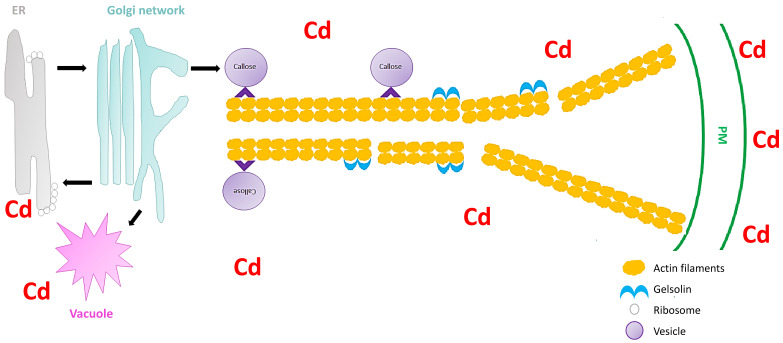
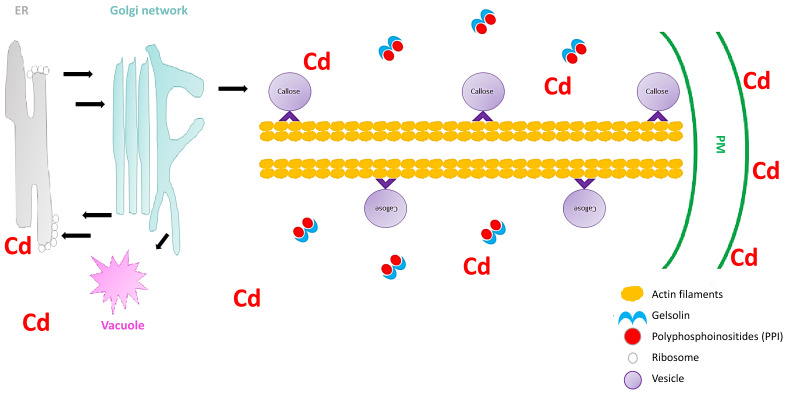
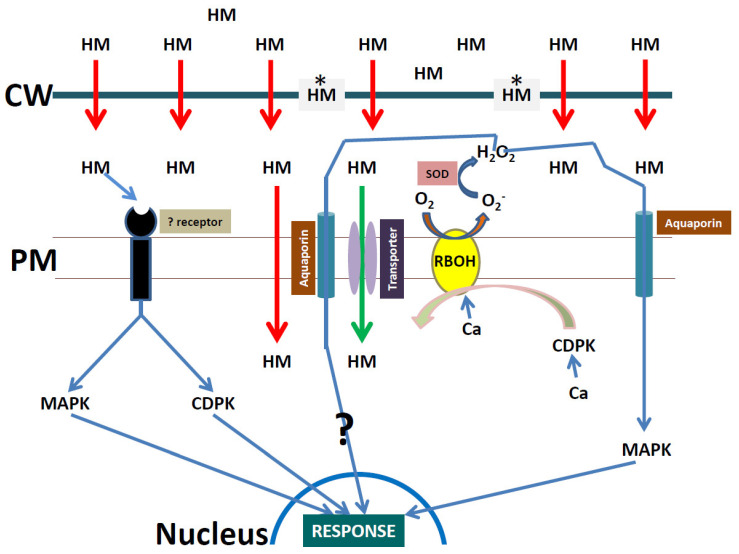
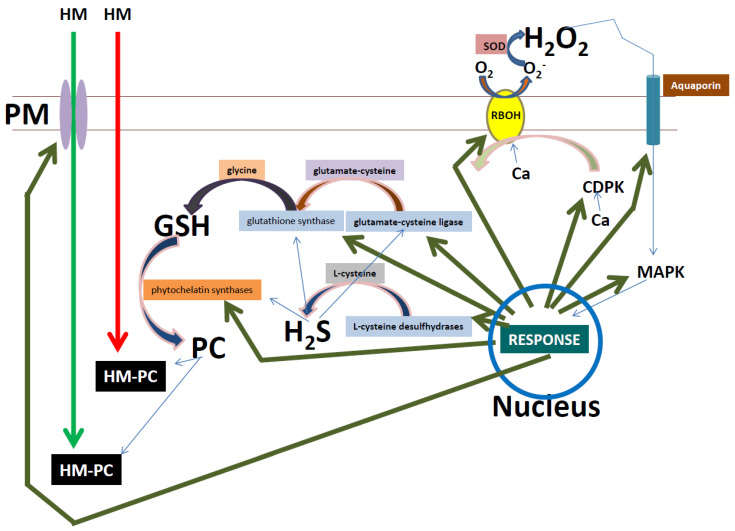
The mining of heavy metals from the environment leads to an increase in soil pollution, leading to the uptake of heavy metals into plant tissue. The build-up of toxic metals in plant cells often leads to cellular damage and senescence. Therefore, it is of utmost importance to produce plants with improved tolerance to heavy metals for food security, as well as to limit heavy metal uptake for improved food safety purposes. To achieve this goal, our understanding of the signaling mechanisms which regulate toxic heavy metal uptake and tolerance in plants requires extensive improvement. In this review, we summarize recent literature and data on heavy metal toxicity (oral reference doses) and the impact of the metals on food safety and food security. Furthermore, we discuss some of the key events (reception, transduction, and response) in the heavy metal signaling cascades in the cell wall, plasma membrane, and cytoplasm. Our future perspectives provide an outlook of the exciting advances that will shape the plant heavy metal signaling field in the near future.
从环境中开采重金属会导致土壤污染加剧,进而使重金属被植物组织吸收。植物细胞中有毒金属的积累常常导致细胞损伤和衰老。因此,培育对重金属耐受性更强的植物对于粮食安全至关重要,同时为提高食品安全水平限制重金属吸收也很重要。为实现这一目标,我们对植物中调节有毒重金属吸收和耐受性的信号传导机制的理解需要大幅提升。在本综述中,我们总结了近期有关重金属毒性(口服参考剂量)以及这些金属对食品安全和粮食安全影响的文献和数据。此外,我们还讨论了细胞壁、质膜和细胞质中重金属信号级联反应中的一些关键事件(接收、转导和响应)。我们对未来的展望呈现了即将在不久的将来塑造植物重金属信号领域的令人兴奋的进展。