MEDCIDS - Department of Community Medicine Information and Decision Sciences Faculty of Medicine, University of Porto Rua Dr. Plácido da Costa, 4200-450, Porto, Portugal
Med Oral Patol Oral Cir Bucal. 2021 Mar 1;26(2):e172-e180. doi: 10.4317/medoral.24101.
Drooling is a major morbidity in several neurological diseases. Intraglandular botulinum neurotoxin (BoNT) injections have been used to manage this condition. However, by decreasing salivary flow, BoNT injections may result in an increased risk of caries and other oral adverse effects. In this study, we aimed to assess whether, in patients with drooling, intraglandular BoNT injections are associated with increased dental caries development, modifications on salivary composition (oral pH, buffering capacity and osmolality) and cariogenic bacterial load.
We performed a systematic review, searching PubMed, CENTRAL, Web of Science, and Scopus for all experimental and observational studies reporting on adverse effects of intraglandular BoNT injections in patients with drooling. Primary study selection, quality assessment, and data extraction were independently performed by two researchers. No studies were excluded based on their language, publication status or date of publication. Studies' quality was based on revised Cochrane Risk of Bias tools. Meta-analysis was not performed.
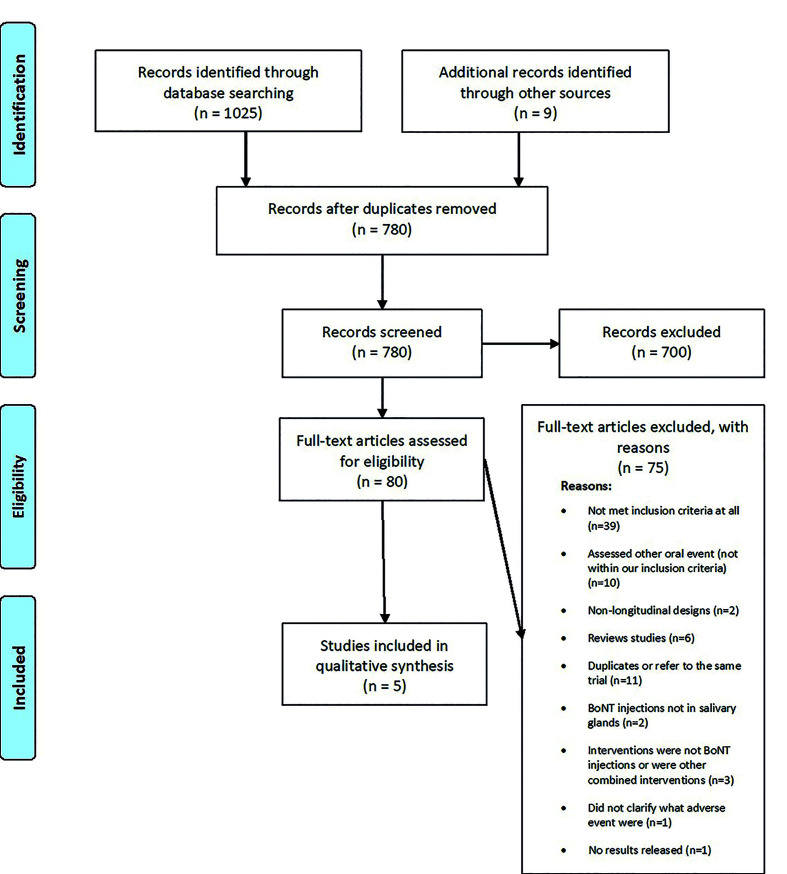
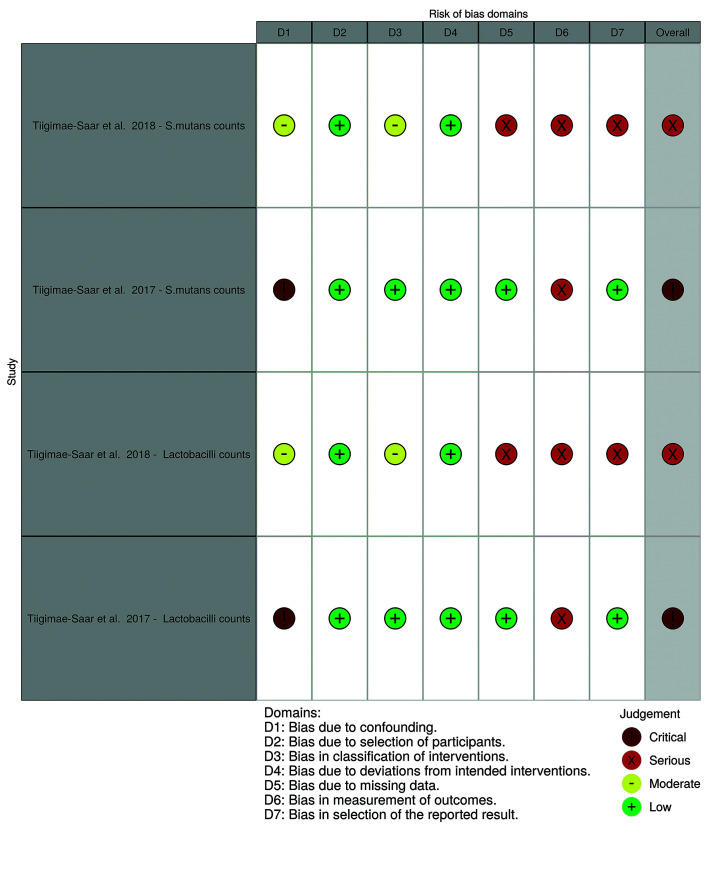
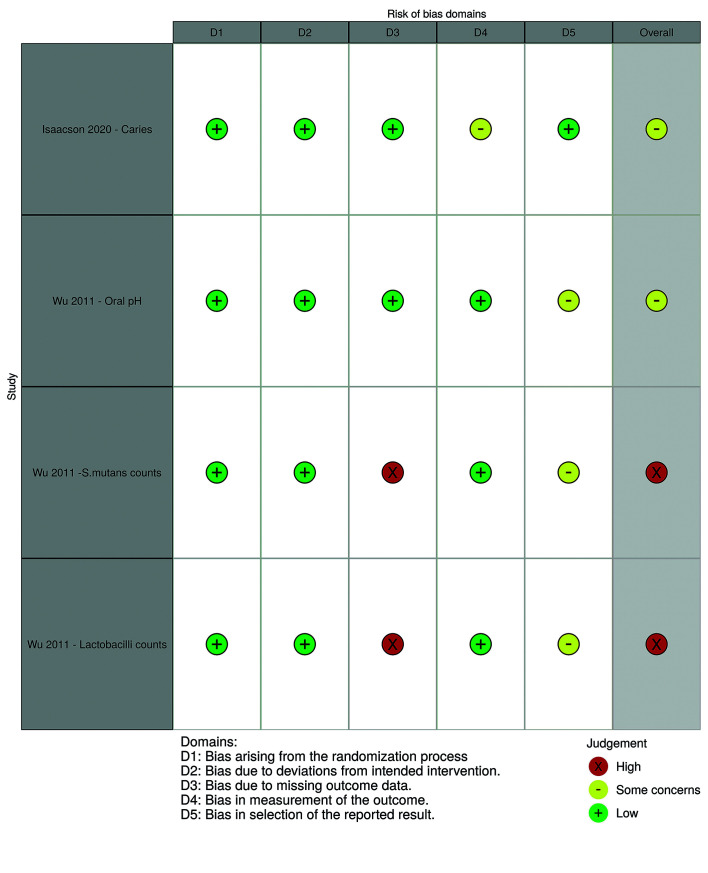
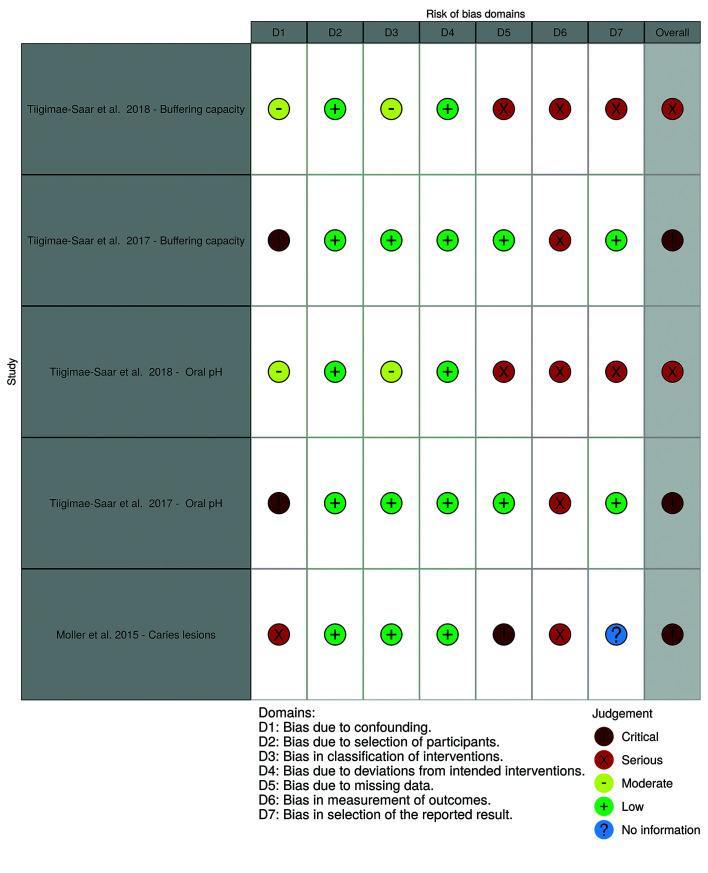
We retrieved 1025 studies, of which 5 were included. Two studies were two randomized controlled trials and three quasi-experimental studies. None of the included studies found BoNT injections to be associated with dental caries development or with significant reductions in oral pH. One of the included primary studies even observed an increase in salivary buffer capacity. One study found an increase in Lactobacilli counts. As for the risk of bias, two studies were classified as having a critical risk, two as high risk and one as having some concerns.
Currently, there is no evidence that, in patients with drooling, BoNT injections associate with increased risk of dental caries or disturbances in oral pH or salivary buffering capacity. However, the included primary studies had important limitations and differences in their methodologies.
流涎是几种神经疾病的主要发病症状。腺体注射肉毒杆菌神经毒素(BoNT)已被用于治疗这种疾病。然而,BoNT 注射会减少唾液流量,从而增加龋齿和其他口腔不良反应的风险。本研究旨在评估腺体注射 BoNT 是否会增加流涎患者的龋齿发展风险,是否会改变唾液成分(口腔 pH 值、缓冲能力和渗透压)和致龋细菌负荷。
我们对 PubMed、CENTRAL、Web of Science 和 Scopus 进行了系统检索,以查找所有报告腺体注射 BoNT 治疗流涎患者不良反应的实验和观察性研究。由两名研究人员独立进行主要研究选择、质量评估和数据提取。未根据语言、发表状态或发表日期排除任何研究。研究质量基于修订后的 Cochrane 偏倚风险工具。未进行荟萃分析。
我们检索到 1025 篇研究,其中 5 篇被纳入。其中两项为随机对照试验,三项为准实验研究。纳入的研究均未发现 BoNT 注射与龋齿发展或口腔 pH 值显著降低相关。其中一项纳入的主要研究甚至观察到唾液缓冲能力增加。一项研究发现乳杆菌计数增加。关于偏倚风险,两项研究被归类为有临界风险,两项研究被归类为高风险,一项研究存在一些关注。
目前,没有证据表明腺体注射 BoNT 会增加流涎患者的龋齿风险或破坏口腔 pH 值或唾液缓冲能力。然而,纳入的主要研究存在重要的局限性和方法学差异。