Leon H Charney Division of Cardiology (M.P.-H., A.L.-M., J.-C.K., E.A.-P., S.V., M.Z., M.D.), NYU Grossman School of Medicine, NY.
Institute for Systems Genetics and Department of Biochemistry and Molecular Pharmacology (S.K., D.F., E.R.), NYU Grossman School of Medicine, NY.
Circ Res. 2021 Feb 5;128(3):419-432. doi: 10.1161/CIRCRESAHA.120.318239. Epub 2020 Dec 21.
The cardiac sodium channel Na1.5 has a fundamental role in excitability and conduction. Previous studies have shown that sodium channels cluster together in specific cellular subdomains. Their association with intracellular organelles in defined regions of the myocytes, and the functional consequences of that association, remain to be defined.
To characterize a subcellular domain formed by sodium channel clusters in the crest region of the myocytes and the subjacent subsarcolemmal mitochondria.
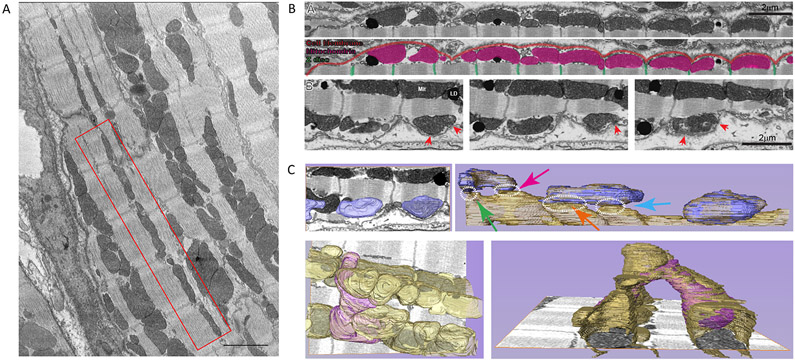
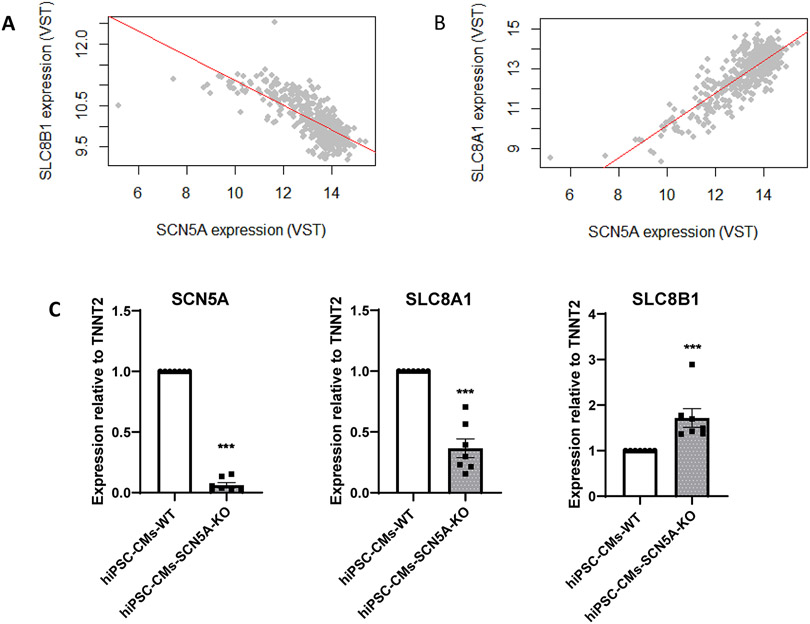
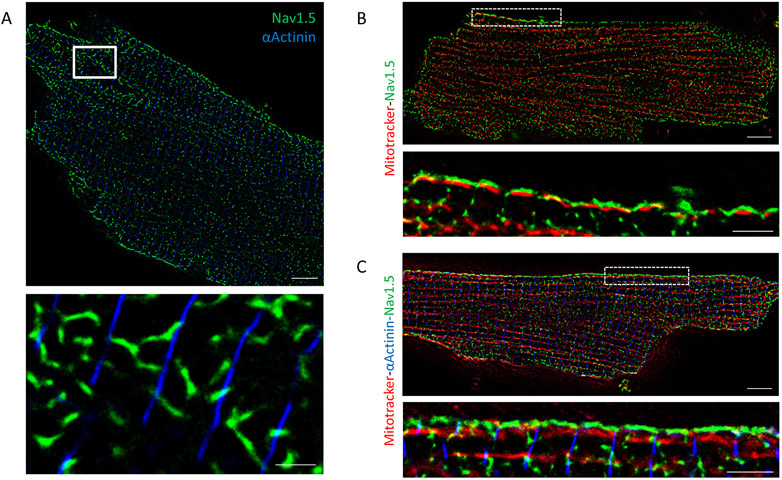
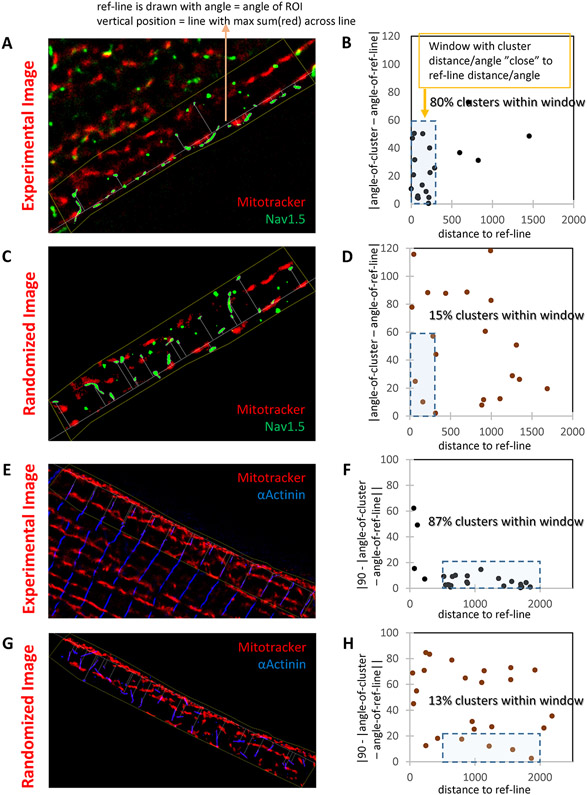
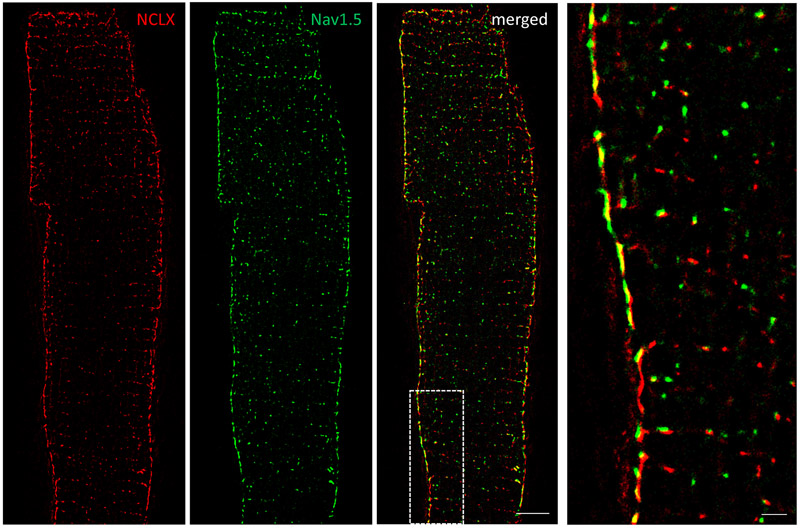
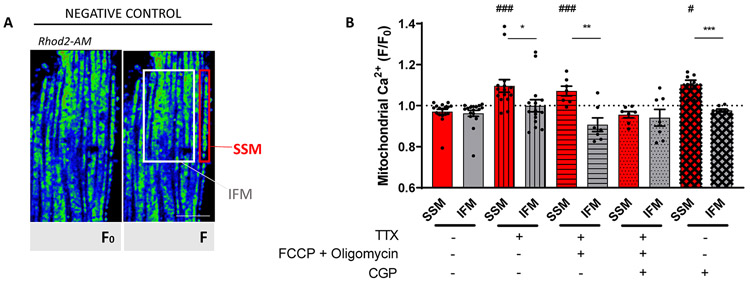
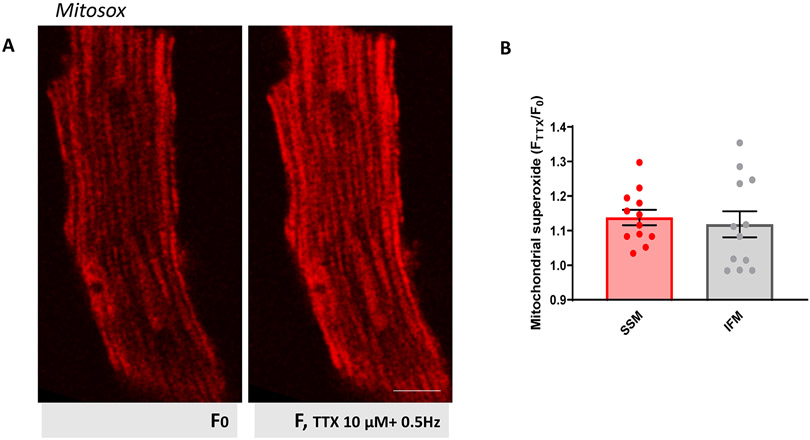
Through a combination of imaging approaches including super-resolution microscopy and electron microscopy we identified, in adult cardiac myocytes, a Na1.5 subpopulation in close proximity to subjacent subsarcolemmal mitochondria; we further found that subjacent subsarcolemmal mitochondria preferentially host the mitochondrial NCLX (Na/Ca exchanger). This anatomic proximity led us to investigate functional changes in mitochondria resulting from sodium channel activity. Upon TTX (tetrodotoxin) exposure, mitochondria near Na1.5 channels accumulated more Ca and showed increased reactive oxygen species production when compared with interfibrillar mitochondria. Finally, crosstalk between Na1.5 channels and mitochondria was analyzed at a transcriptional level. We found that (encoding Na1.5) and (which encode Na1.5 and NCLX, respectively) are negatively correlated both in a human transcriptome data set (Genotype-Tissue Expression) and in human-induced pluripotent stem cell-derived cardiac myocytes deficient in .
We describe an anatomic hub (a couplon) formed by sodium channel clusters and subjacent subsarcolemmal mitochondria. Preferential localization of NCLX to this domain allows for functional coupling where the extrusion of Ca from the mitochondria is powered, at least in part, by the entry of sodium through Na1.5 channels. These results provide a novel entry-point into a mechanistic understanding of the intersection between electrical and structural functions of the heart.
心肌钠通道 Na1.5 在兴奋性和传导中起着至关重要的作用。先前的研究表明,钠通道在特定的细胞亚域中聚集在一起。它们在心肌细胞特定区域与细胞内细胞器的关联及其功能后果仍有待确定。
描述心肌嵴区域形成的钠通道簇和相邻的亚细胞下肌质网线粒体的亚细胞结构域。
通过包括超分辨率显微镜和电子显微镜在内的成像方法的组合,我们在成年心肌细胞中鉴定出 Na1.5 亚群,该亚群与相邻的亚细胞下肌质网线粒体紧密相邻;我们进一步发现,相邻的亚细胞下肌质网线粒体优先容纳线粒体 NCLX(钠/钙交换器)。这种解剖学上的接近使我们研究了钠通道活性引起的线粒体功能变化。在 TTX(河豚毒素)暴露后,与纤维间线粒体相比,Na1.5 通道附近的线粒体积累了更多的 Ca,并表现出更高的活性氧产生。最后,我们在转录水平上分析了 Na1.5 通道和线粒体之间的串扰。我们发现,(编码 Na1.5)和(分别编码 Na1.5 和 NCLX)在人类转录组数据集(基因型组织表达)和缺乏 的人诱导多能干细胞衍生的心肌细胞中呈负相关。
我们描述了由钠通道簇和相邻的亚细胞下肌质网线粒体组成的解剖学中心(偶联体)。NCLX 优先定位于该区域允许功能偶联,即通过 Na1.5 通道进入的钠至少部分驱动 Ca 从线粒体中排出。这些结果为理解心脏电和结构功能的交叉点提供了一个新的切入点。