Watanabe Chizuko, Komiyama Asami, Yoshizumi Masaru, Sakurada Shinobu, Mizoguchi Hirokazu
Department of Physiology and Anatomy, Faculty of Pharmaceutical Sciences, Tohoku Medical and Pharmaceutical University, Sendai, Japan.
Front Pharmacol. 2020 Dec 4;11:593647. doi: 10.3389/fphar.2020.593647. eCollection 2020.
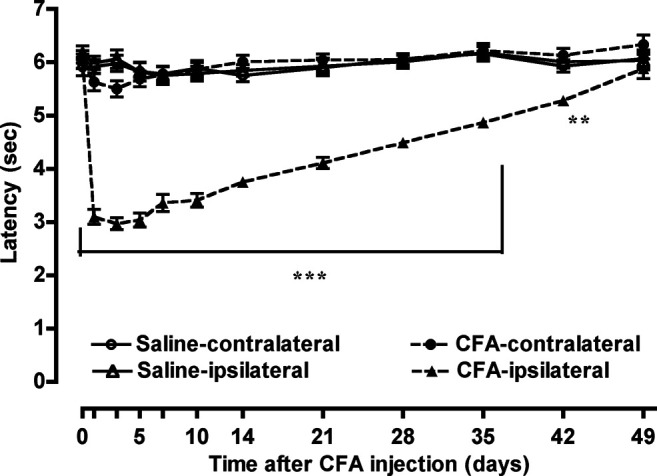
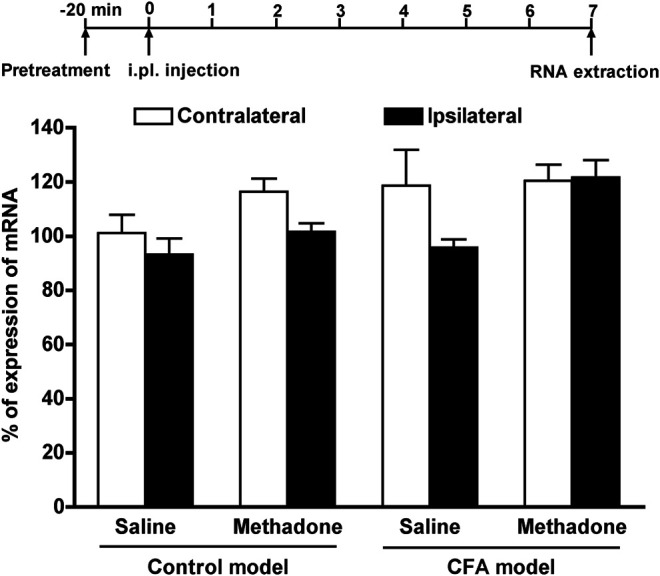
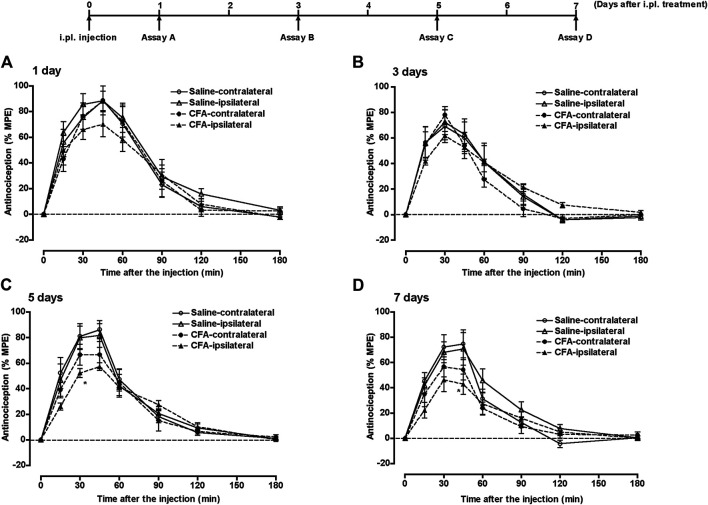
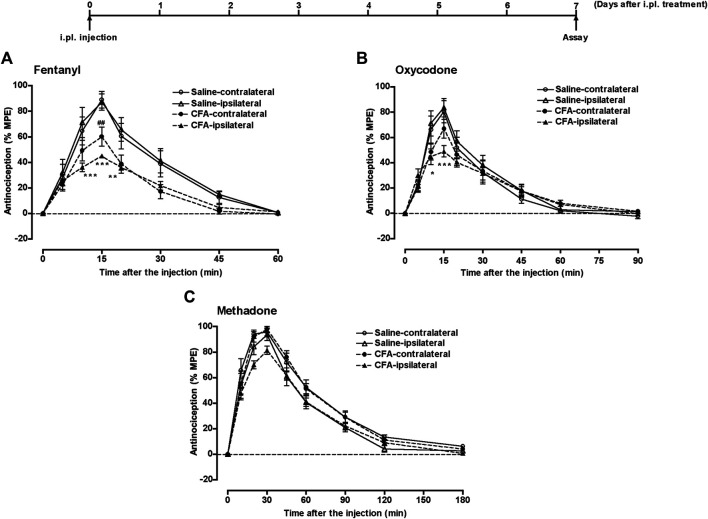
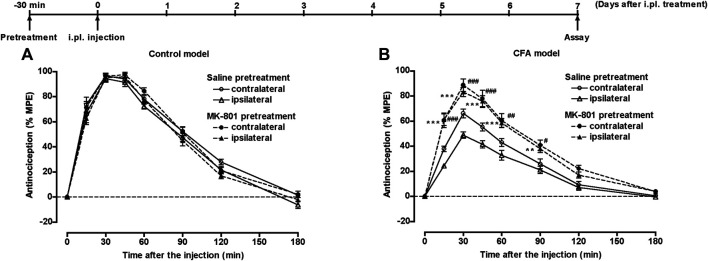
The antinociceptive effect of methadone in the morphine-resistant inflammatory pain state was described in the paw-withdrawal test using the complete Freund's adjuvant (CFA)-induced mouse inflammatory pain model. After intraplantar (i.pl.) injection of CFA, thermal hyperalgesia was observed in the ipsilateral paw. The antinociceptive effects of subcutaneous (s.c.) injection of morphine, fentanyl, and oxycodone against thermal hyperalgesia in the inflammatory pain state were reduced in the ipsilateral paw 7 days after CFA pretreatment. On the contrary, the antinociceptive effect of s.c. injection of methadone was maintained in the ipsilateral paw 7 days after CFA pretreatment. The suppressed morphine antinociception in the CFA model mice was bilaterally restored following s.c. treatment with methadone 20 min prior to or 3 days after CFA pretreatment. The suppressed morphine antinociception was also bilaterally restored by intraperitoneal treatment with MK-801 30 min prior to CFA pretreatment; however, the s.c. injection of morphine 30 min prior to CFA pretreatment failed to restore the suppressed morphine antinociception in the CFA model mice. The expression level of mRNA for µ-opioid receptors 7 days after i.pl. pretreatment was not significantly changed by i.pl. pretreatment with CFA or s.c. pretreatment with methadone. In conclusion, methadone is extremely effective against thermal hyperalgesia in the morphine-resistant inflammatory pain state, and restores suppressed morphine antinociception in the inflammatory pain state without altering the expression level of mRNA for µ-opioid receptors.
在使用完全弗氏佐剂(CFA)诱导的小鼠炎性疼痛模型的足趾撤离试验中,描述了美沙酮在吗啡耐受的炎性疼痛状态下的抗伤害感受作用。在足底注射CFA后,在同侧足爪观察到热痛觉过敏。在CFA预处理7天后,皮下注射吗啡、芬太尼和羟考酮对炎性疼痛状态下热痛觉过敏的抗伤害感受作用在同侧足爪中降低。相反,在CFA预处理7天后,皮下注射美沙酮的抗伤害感受作用在同侧足爪中得以维持。在CFA预处理前20分钟或预处理后3天皮下给予美沙酮治疗后,CFA模型小鼠中被抑制的吗啡抗伤害感受作用在双侧恢复。在CFA预处理前30分钟腹腔注射MK-801也能使被抑制的吗啡抗伤害感受作用在双侧恢复;然而,在CFA预处理前30分钟皮下注射吗啡未能恢复CFA模型小鼠中被抑制的吗啡抗伤害感受作用。足底预处理7天后μ-阿片受体的mRNA表达水平,未因足底给予CFA预处理或皮下给予美沙酮预处理而发生显著改变。总之,美沙酮在吗啡耐受的炎性疼痛状态下对热痛觉过敏极为有效,并且在不改变μ-阿片受体mRNA表达水平的情况下,恢复炎性疼痛状态下被抑制的吗啡抗伤害感受作用。