Truu Marika, Nõlvak Hiie, Ostonen Ivika, Oopkaup Kristjan, Maddison Martin, Ligi Teele, Espenberg Mikk, Uri Veiko, Mander Ülo, Truu Jaak
Institute of Molecular and Cell Biology, University of Tartu, Tartu, Estonia.
Institute of Ecology and Earth Sciences, University of Tartu, Tartu, Estonia.
Front Microbiol. 2020 Dec 3;11:591358. doi: 10.3389/fmicb.2020.591358. eCollection 2020.
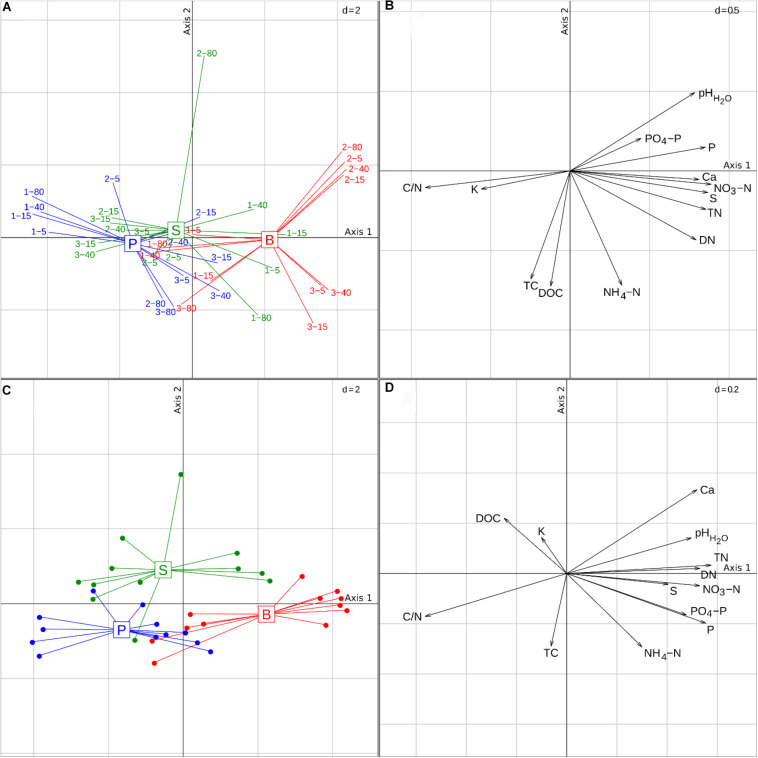
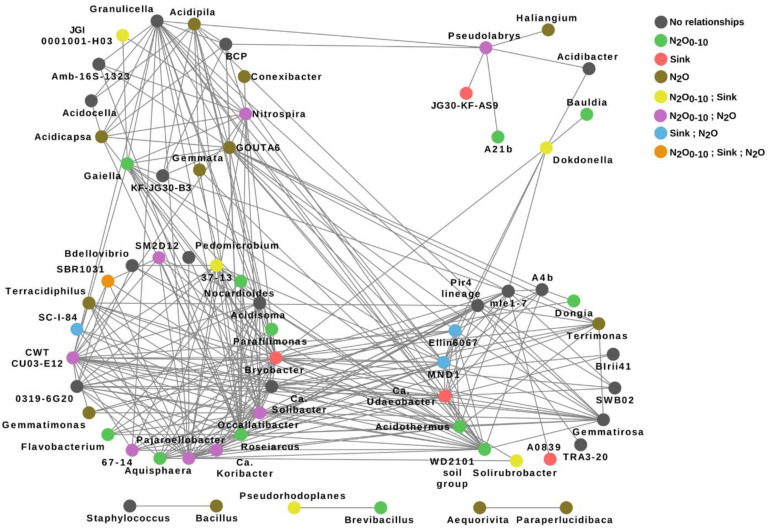
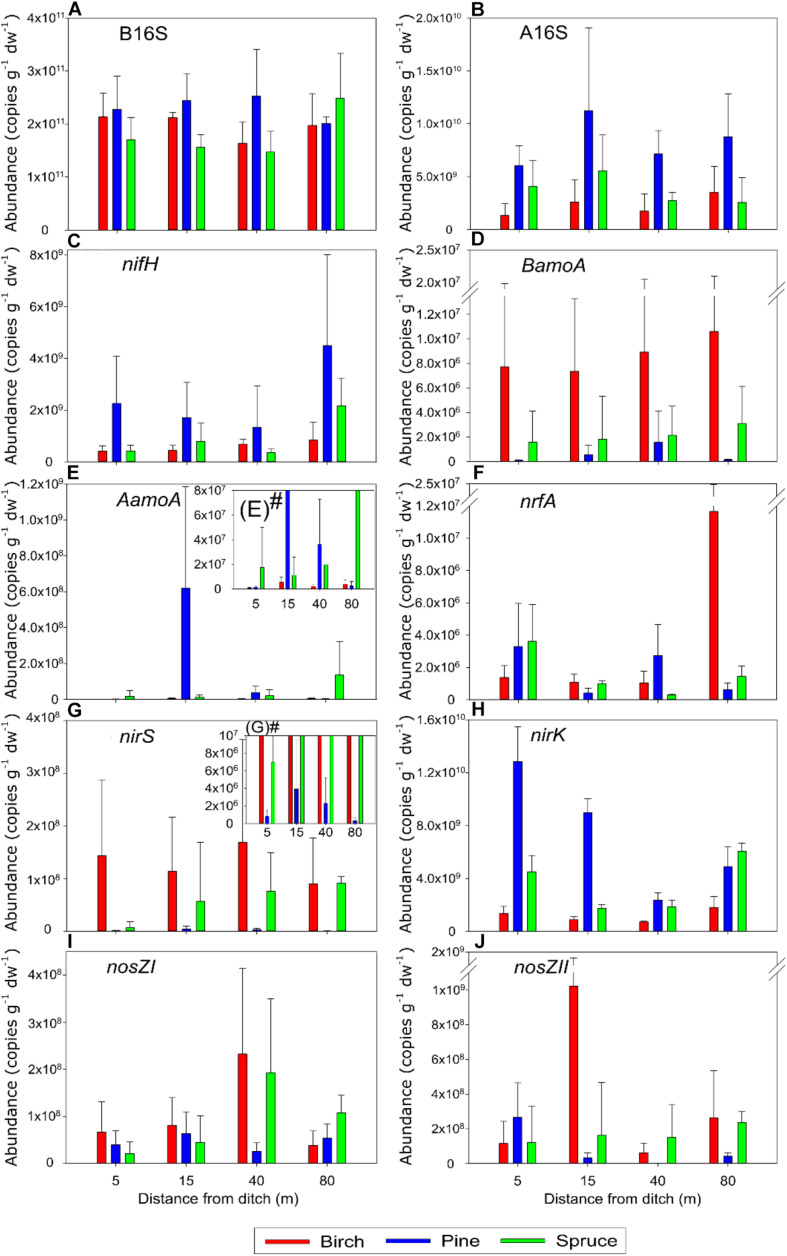
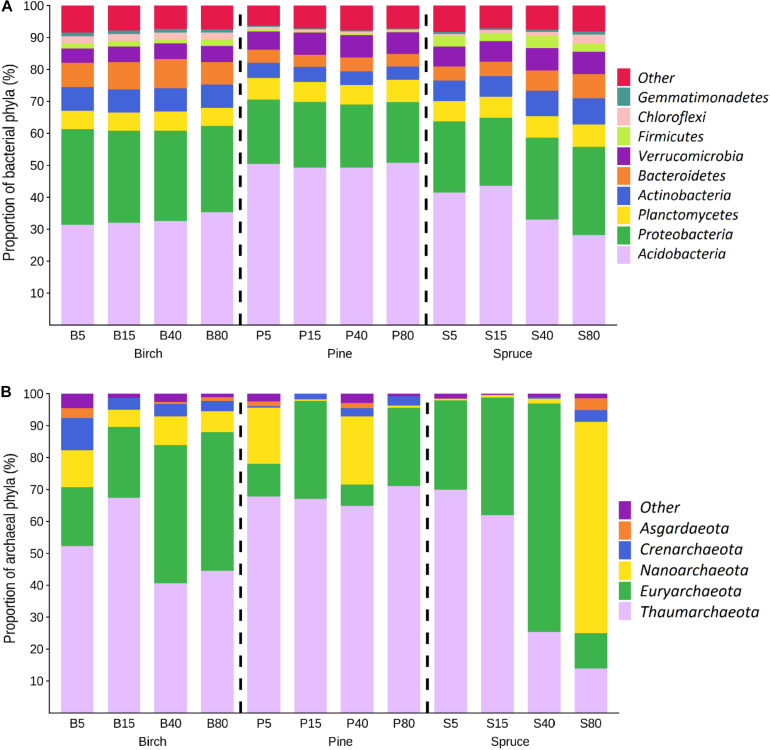
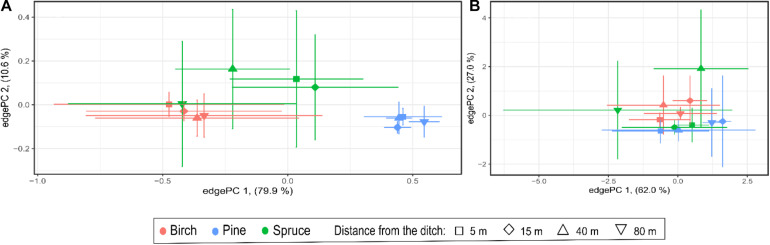
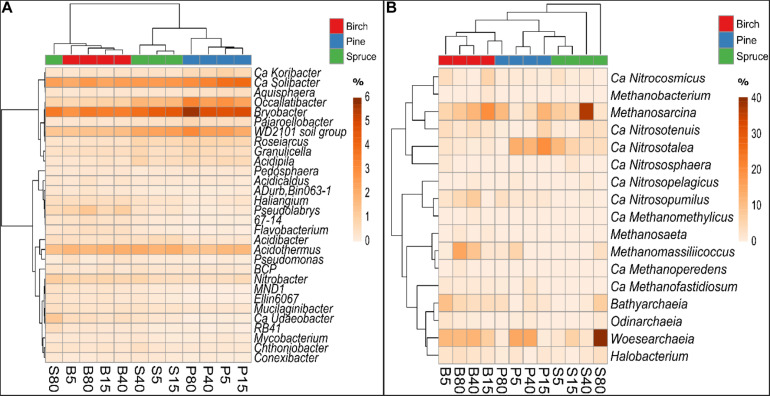
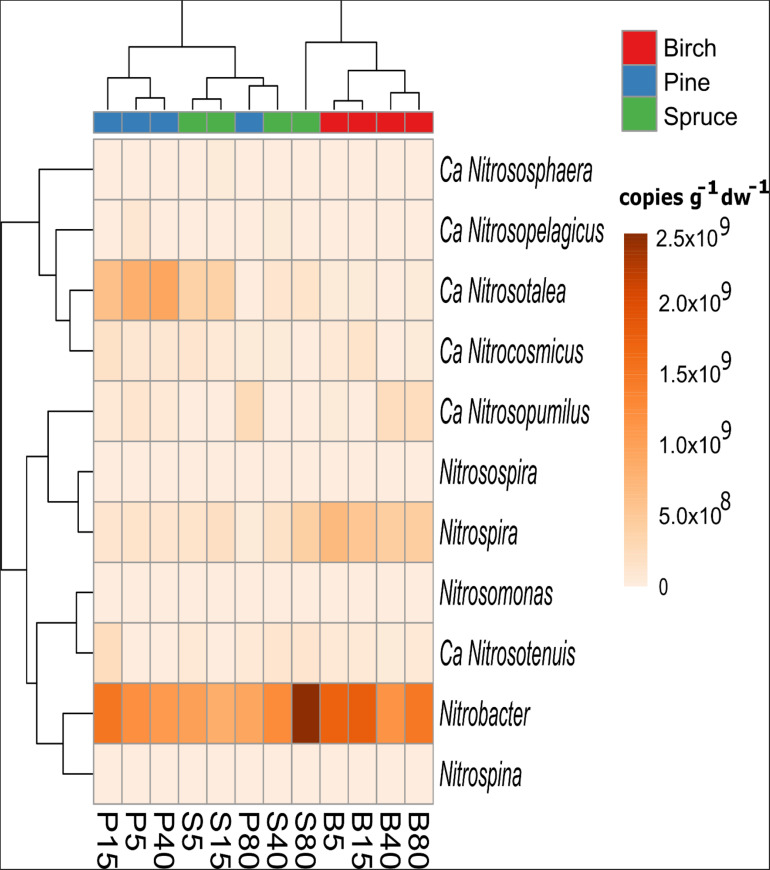
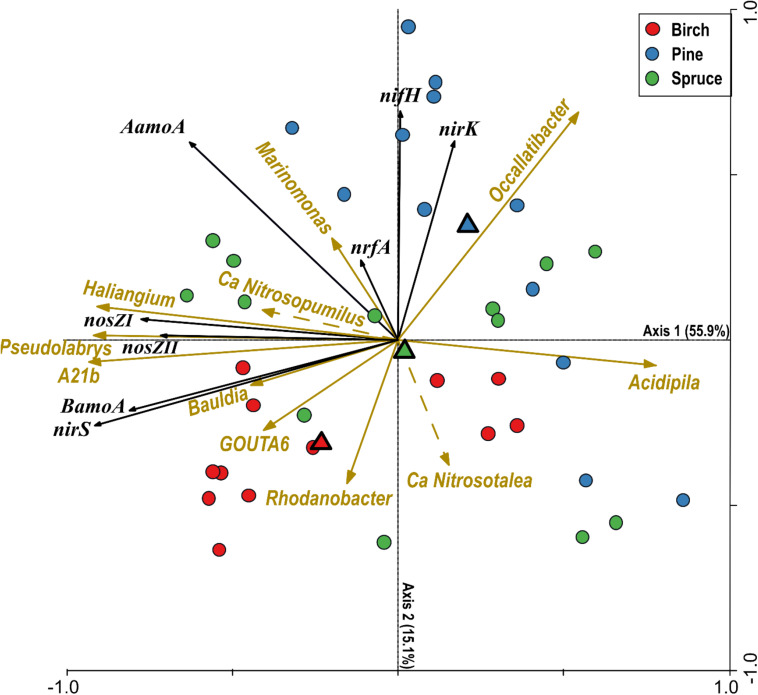
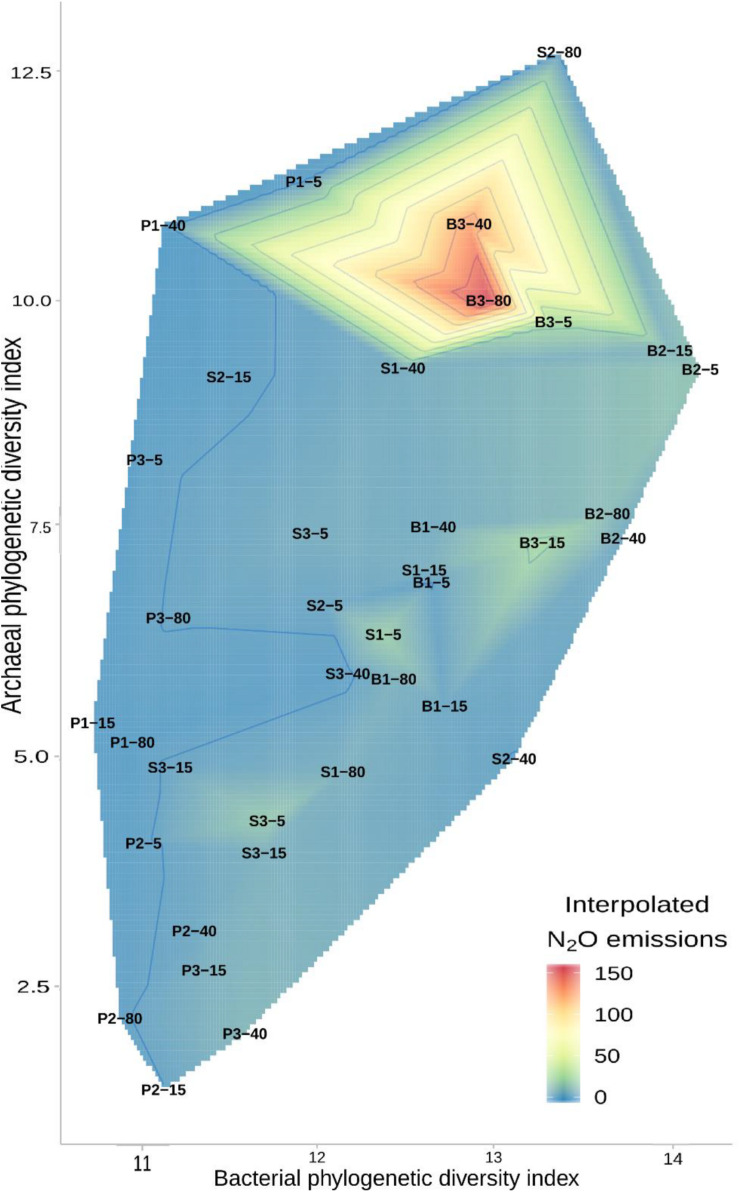
Peatlands are unique wetland ecosystems that cover approximately 3% of the world's land area and are mostly located in boreal and temperate regions. Around 15 Mha of these peatlands have been drained for forestry during the last century. This study investigated soil archaeal and bacterial community structure and abundance, as well as the abundance of marker genes of nitrogen transformation processes (nitrogen fixation, nitrification, denitrification, and dissimilatory nitrate reduction to ammonia) across distance gradients from drainage ditches in nine full-drained, middle-aged peatland forests dominated by Scots pine, Norway spruce, or Downy birch. The dominating tree species had a strong effect on the chemical properties (pH, N and C/N status) of initially similar Histosols and affected the bacterial and archaeal community structure and abundance of microbial groups involved in the soil nitrogen cycle. The pine forests were distinguished by having the lowest fine root biomass of trees, pH, and N content and the highest potential for N fixation. The distance from drainage ditches affected the spatial distribution of bacterial and archaeal communities (especially N-fixers, nitrifiers, and denitrifiers possessing clade II), but this effect was often dependent on the conditions created by the dominance of certain tree species. The composition of the nitrifying microbial community was dependent on the soil pH, and comammox bacteria contributed significantly to nitrate formation in the birch and spruce soils where the pH was higher than 4.6. The highest NO emission was recorded from soils with higher bacterial and archaeal phylogenetic diversity such as birch forest soils. This study demonstrates that the long-term growth of forests dominated by birch, pine, and spruce on initially similar organic soil has resulted in tree-species-specific changes in the soil properties and the development of forest-type-specific soil prokaryotic communities with characteristic functional properties and relationships within microbial communities.
泥炭地是独特的湿地生态系统,覆盖了约3%的全球陆地面积,主要位于寒带和温带地区。在上个世纪,约1500万公顷的这些泥炭地因林业开发而被排水疏干。本研究调查了9片完全排水的中年泥炭地森林中,从排水沟起不同距离梯度上的土壤古菌和细菌群落结构与丰度,以及氮转化过程(固氮、硝化、反硝化和异化硝酸盐还原为氨)的标记基因丰度。这些泥炭地森林主要由苏格兰松、挪威云杉或柔毛桦主导。优势树种对最初相似的有机土的化学性质(pH值、氮和碳氮比状况)有强烈影响,并影响了参与土壤氮循环的细菌和古菌群落结构以及微生物类群的丰度。松树林的特点是树木细根生物量、pH值和氮含量最低,固氮潜力最高。与排水沟的距离影响了细菌和古菌群落(特别是具有进化枝II的固氮菌、硝化菌和反硝化菌)的空间分布,但这种影响通常取决于某些树种占主导地位所形成的条件。硝化微生物群落的组成取决于土壤pH值,在pH值高于4.6的桦树和云杉土壤中,完全氨氧化细菌对硝酸盐形成有显著贡献。在细菌和古菌系统发育多样性较高的土壤(如桦树林土壤)中记录到最高的一氧化氮排放。本研究表明,在最初相似的有机土壤上,由桦树、松树和云杉主导的森林长期生长,导致了土壤性质出现树种特异性变化,并形成了具有特定功能特性以及微生物群落内部关系的森林类型特异性土壤原核生物群落。