Dai Siqi, Xu Shuang, Ye Yao, Ding Kefeng
Department of Colorectal Surgery and Oncology, Key Laboratory of Cancer Prevention and Intervention, Ministry of Education, The Second Affiliated Hospital, Zhejiang University School of Medicine, Hangzhou, China.
Zhejiang University Cancer Center, Hangzhou, China.
Front Genet. 2020 Dec 4;11:607009. doi: 10.3389/fgene.2020.607009. eCollection 2020.
Despite recent advance in immune therapy, great heterogeneity exists in the outcomes of colorectal cancer (CRC) patients. In this study, we aimed to analyze the immune-related gene (IRG) expression profiles from three independent public databases and develop an effective signature to forecast patient's prognosis.
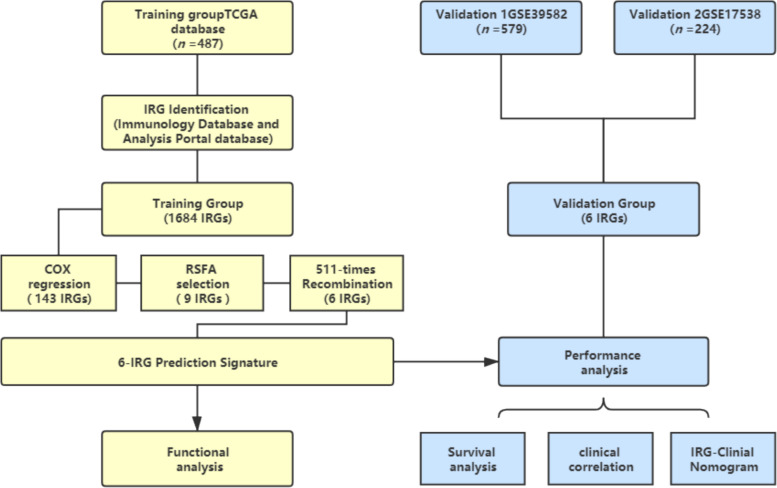
IRGs were collected from the ImmPort database. The CRC dataset from The Cancer Genome Atlas (TCGA) database was used to identify a prognostic gene signature, which was verified in another two CRC datasets from the Gene Expression Omnibus (GEO). Gene function enrichment analysis was conducted. A prognostic nomogram was built incorporating the IRG signature with clinical risk factors.
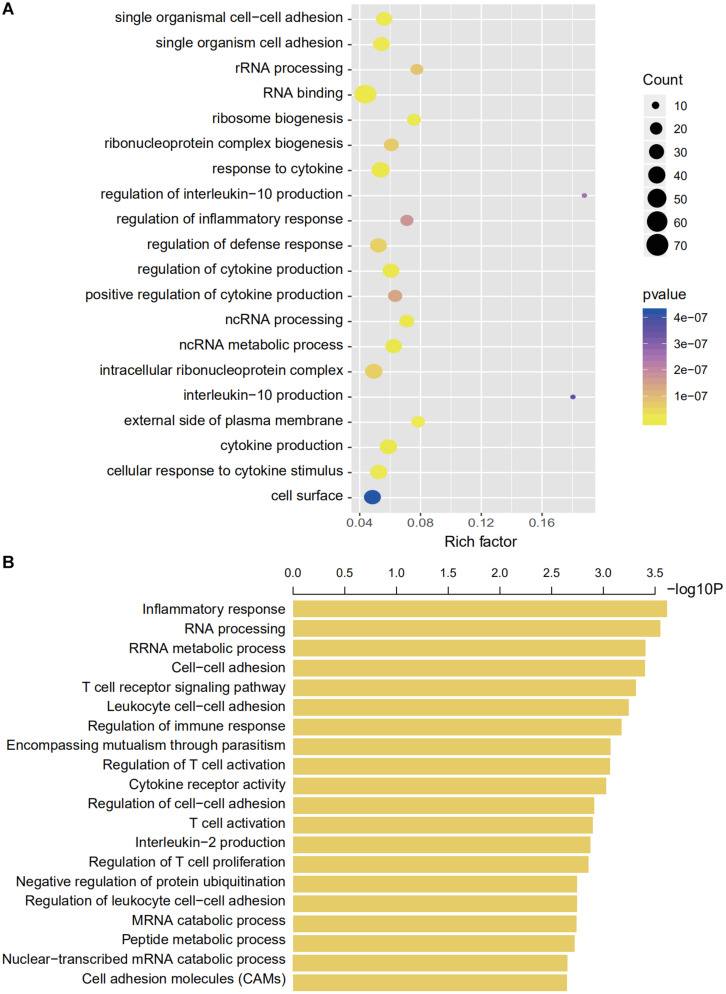
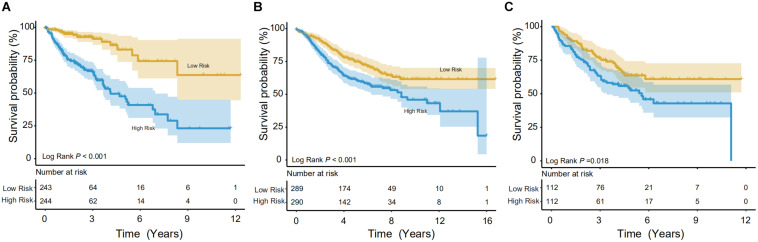
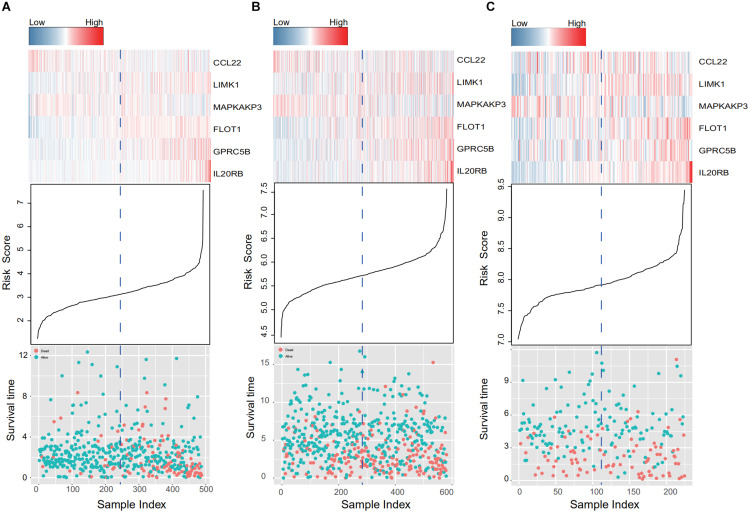
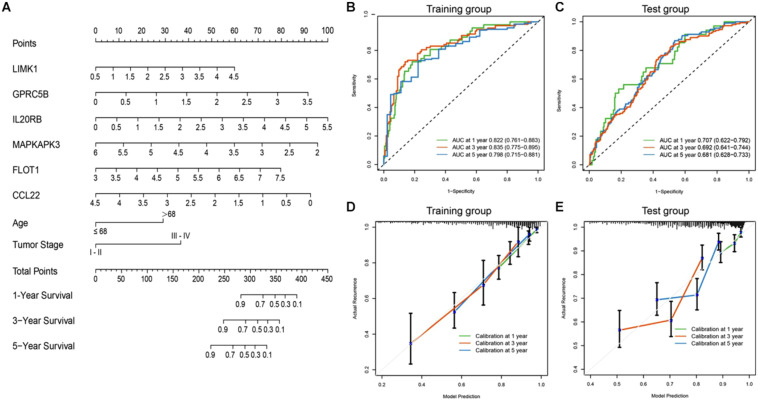
The three datasets had 487, 579, and 224 patients, respectively. A prognostic six-gene-signature (CCL22, LIMK1, MAPKAPK3, FLOT1, GPRC5B, and IL20RB) was developed through feature selection that showed good differentiation between the low- and high-risk groups in the training set ( < 0.001), which was later confirmed in the two validation groups (log-rank < 0.05). The signature outperformed tumor TNM staging for survival prediction. GO and KEGG functional annotation analysis suggested that the signature was significantly enriched in metabolic processes and regulation of immunity ( < 0.05). When combined with clinical risk factors, the model showed robust prediction capability.
The immune-related six-gene signature is a reliable prognostic indicator for CRC patients and could provide insight for personalized cancer management.
尽管免疫治疗最近取得了进展,但结直肠癌(CRC)患者的预后存在很大异质性。在本研究中,我们旨在分析来自三个独立公共数据库的免疫相关基因(IRG)表达谱,并开发一种有效的特征来预测患者的预后。
从ImmPort数据库收集IRG。使用来自癌症基因组图谱(TCGA)数据库的CRC数据集来识别预后基因特征,并在来自基因表达综合数据库(GEO)的另外两个CRC数据集中进行验证。进行基因功能富集分析。构建了一个预后列线图,将IRG特征与临床风险因素相结合。
这三个数据集分别有487、579和224名患者。通过特征选择开发了一种预后六基因特征(CCL22、LIMK1、MAPKAPK3、FLOT1、GPRC5B和IL20RB),该特征在训练集中显示出低风险组和高风险组之间的良好区分(<0.001),随后在两个验证组中得到证实(对数秩<0.05)。该特征在生存预测方面优于肿瘤TNM分期。GO和KEGG功能注释分析表明,该特征在代谢过程和免疫调节方面显著富集(<0.05)。当与临床风险因素相结合时,该模型显示出强大的预测能力。
免疫相关的六基因特征是CRC患者可靠的预后指标,可为个性化癌症管理提供见解。