Yu Kristin E, Alder Kareme D, Morris Montana T, Munger Alana M, Lee Inkyu, Cahill Sean V, Kwon Hyuk-Kwon, Back JungHo, Lee Francis Y
Department of Orthopaedics and Rehabilitation, Yale University School of Medicine, 330 Cedar St, TMP 523 PO Box 208071, New Haven, CT 06520-8071, USA.
Department of Orthopædics & Rehabilitation, Yale University, School of Medicine, New Haven, CT, USA.
Ther Adv Musculoskelet Dis. 2020 Dec 8;12:1759720X20966135. doi: 10.1177/1759720X20966135. eCollection 2020.
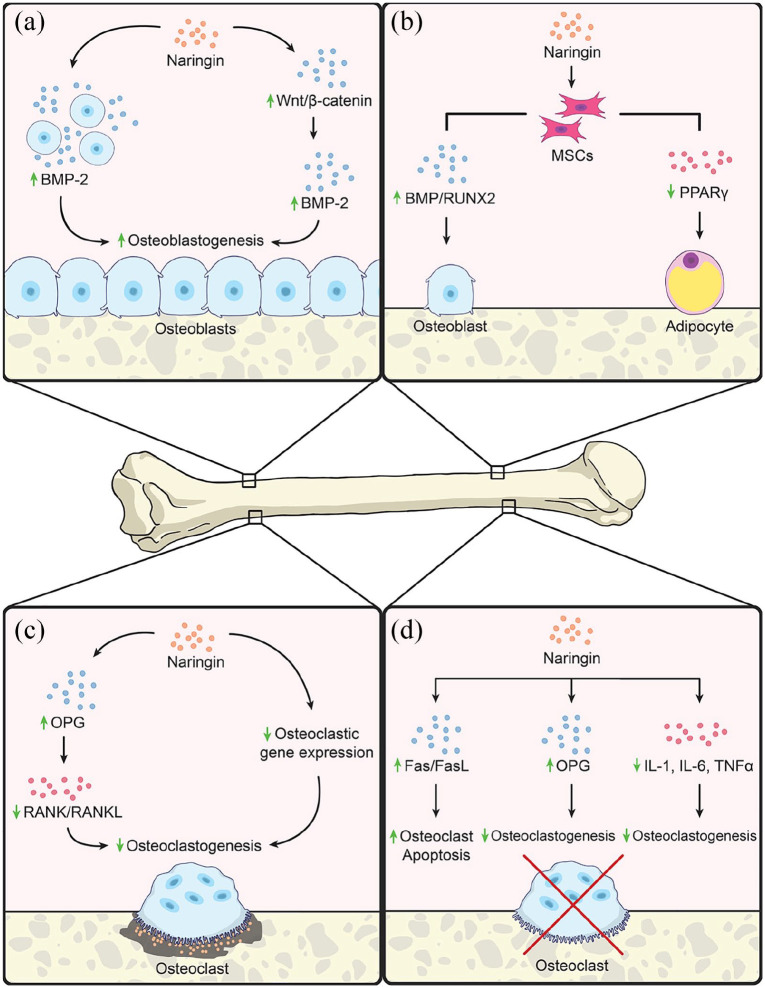
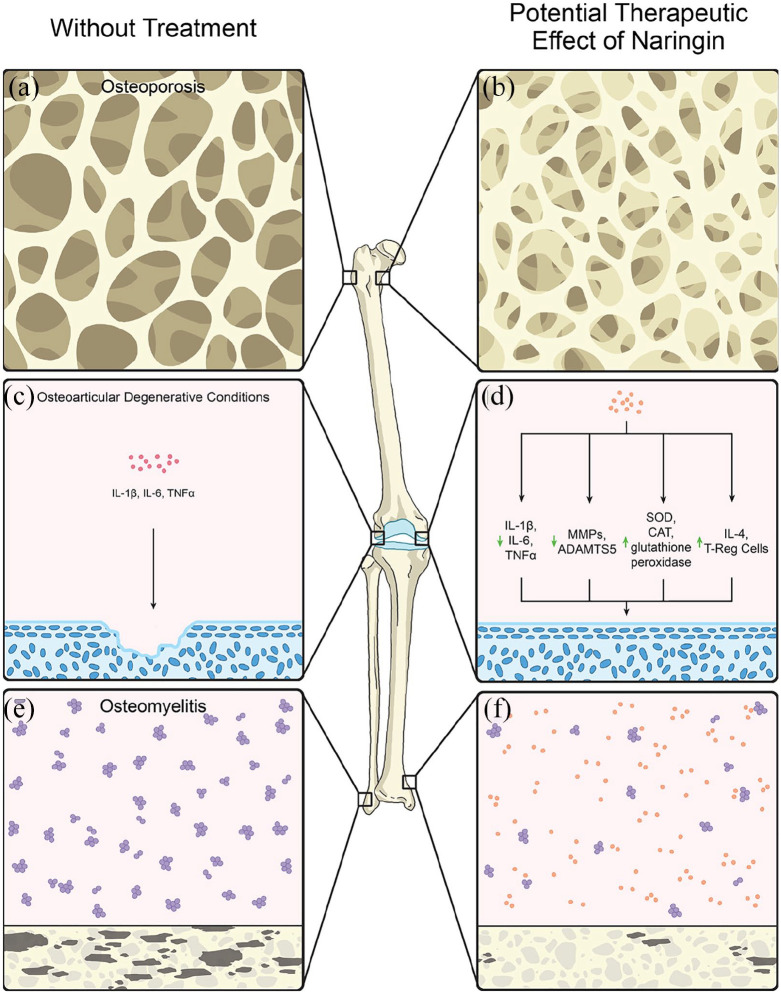
Naringin is a naturally occurring flavonoid found in plants of the genus that has historically been used in traditional Chinese medical regimens for the treatment of osteoporosis. Naringin modulates signaling through numerous molecular pathways critical to musculoskeletal development, cellular differentiation, and inflammation. Administration of naringin increases expression of bone morphogenetic proteins (BMPs) and activation of the Wnt/β-catenin and extracellular signal-related kinase (Erk) pathways, thereby promoting osteoblastic proliferation and differentiation from stem cell precursors for bone formation. Naringin also inhibits osteoclastogenesis by both modifying RANK/RANKL interactions and inducing apoptosis in osteoclasts . In addition, naringin acts on the estrogen receptor in bone to mimic the native bone-preserving effects of estrogen, with few systemic side effects on other estrogen-sensitive tissues. The efficacy of naringin therapy in reducing the osteolysis characteristic of common musculoskeletal pathologies such as osteoporosis, degenerative joint disease, and osteomyelitis, as well as inflammatory conditions affecting bone such as diabetes mellitus, has been extensively demonstrated and in animal models. Naringin thus represents a naturally abundant, cost-efficient agent whose potential for use in novel musculoskeletal biotherapies warrants re-visiting and further exploration through human studies. Here, we review the cellular mechanisms of action that have been elucidated regarding the action of naringin on bone resident cells and the bone microenvironment, evidence of naringin's osteostimulative and chondroprotective properties in the setting of osteolytic bone disease, and current limitations in the development of naringin-containing translational therapies for common musculoskeletal conditions.
柚皮苷是一种天然存在的黄酮类化合物,存在于该属植物中,在传统中医方剂中,其历史上一直被用于治疗骨质疏松症。柚皮苷通过众多对肌肉骨骼发育、细胞分化和炎症至关重要的分子途径调节信号传导。给予柚皮苷可增加骨形态发生蛋白(BMPs)的表达,并激活Wnt/β-连环蛋白和细胞外信号调节激酶(Erk)途径,从而促进成骨细胞从干细胞前体增殖和分化以形成骨。柚皮苷还通过改变RANK/RANKL相互作用和诱导破骨细胞凋亡来抑制破骨细胞生成。此外,柚皮苷作用于骨中的雌激素受体,以模拟雌激素的天然保骨作用,对其他雌激素敏感组织几乎没有全身副作用。柚皮苷疗法在减少常见肌肉骨骼疾病(如骨质疏松症、退行性关节病和骨髓炎)以及影响骨的炎症性疾病(如糖尿病)所特有的骨溶解方面的疗效,已在动物模型中得到广泛证实。因此,柚皮苷是一种天然丰富、成本效益高的药物,其在新型肌肉骨骼生物疗法中的应用潜力值得通过人体研究重新审视和进一步探索。在这里,我们综述了已阐明的柚皮苷对骨驻留细胞和骨微环境作用的细胞作用机制、柚皮苷在溶骨性骨病背景下的骨刺激和软骨保护特性的证据,以及目前针对常见肌肉骨骼疾病开发含柚皮苷的转化疗法的局限性。