Hill Rachel Anne, Grech Adrienne Mary, Notaras Michael J, Sepulveda Mauricio, van den Buuse Maarten
Department of Psychiatry, School of Clinical Sciences, Monash University, Monash Medical Centre, Clayton, VIC, Australia.
The Florey Institute of Neuroscience and Mental Health, University of Melbourne, Parkville, VIC, Australia.
Neurobiol Stress. 2020 Sep 28;13:100253. doi: 10.1016/j.ynstr.2020.100253. eCollection 2020 Nov.
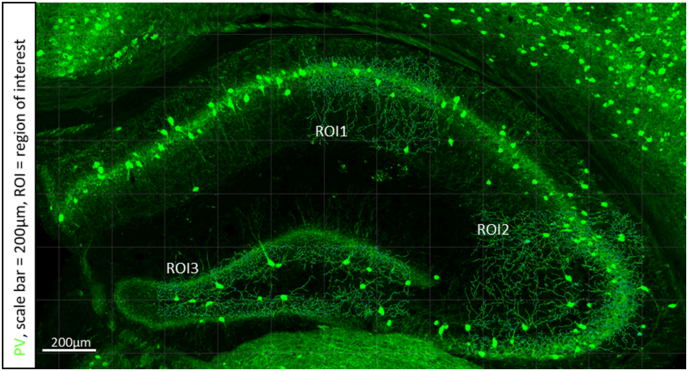
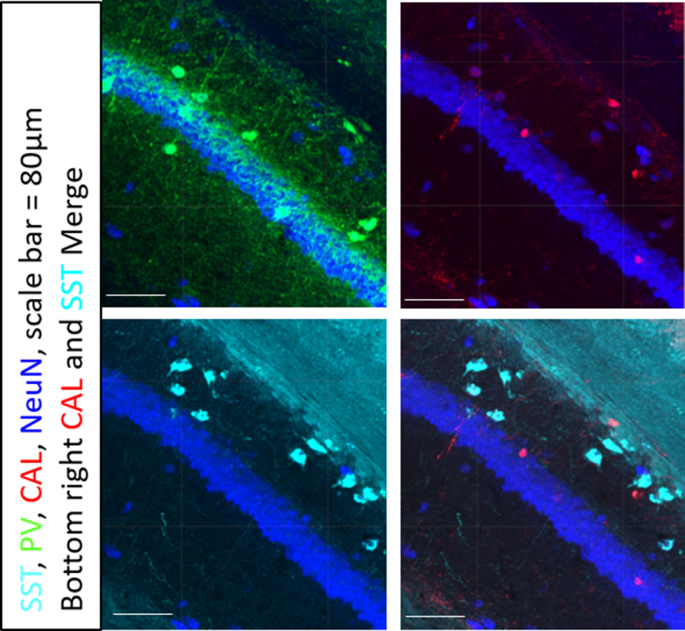
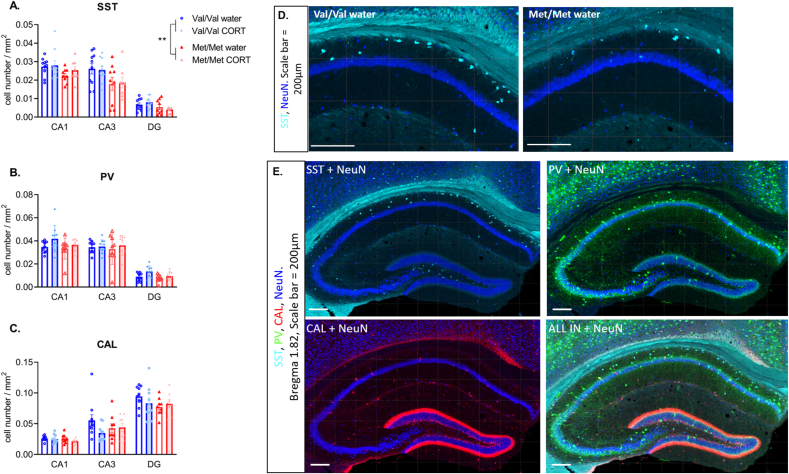
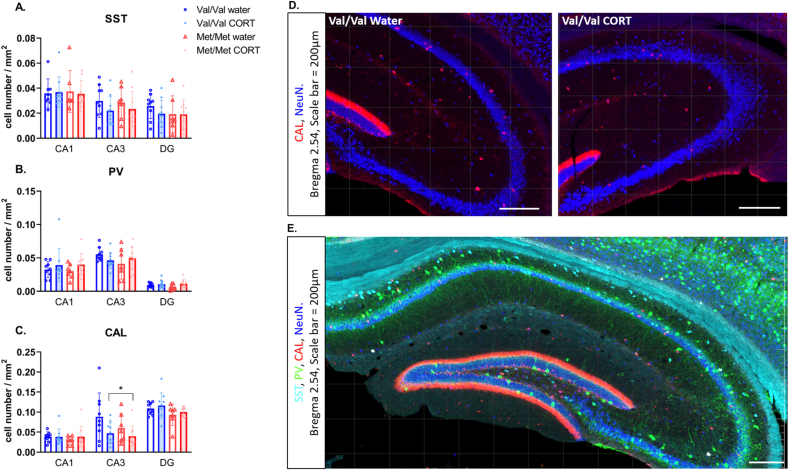
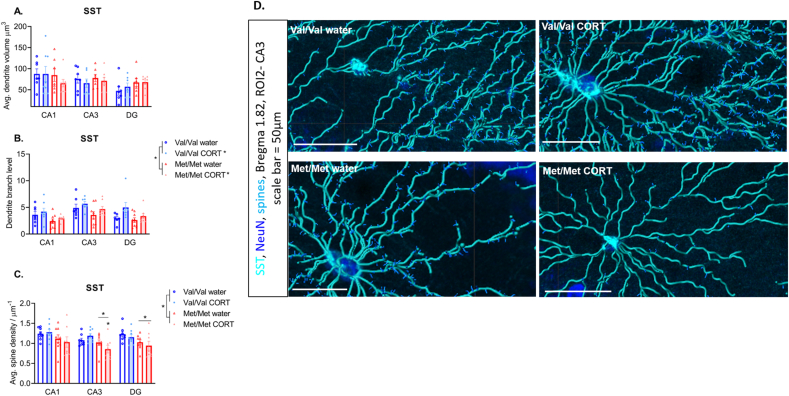
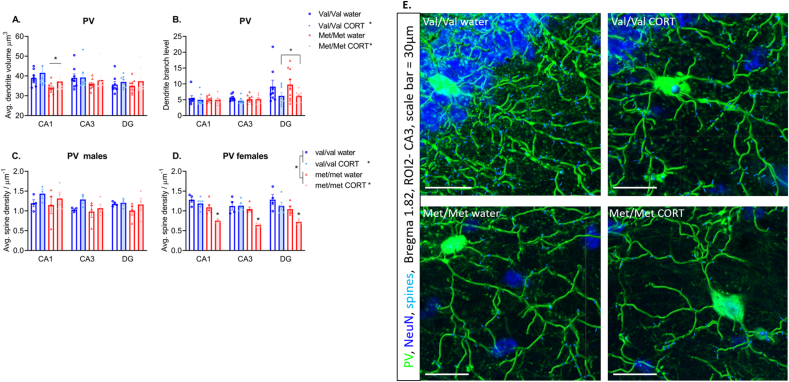
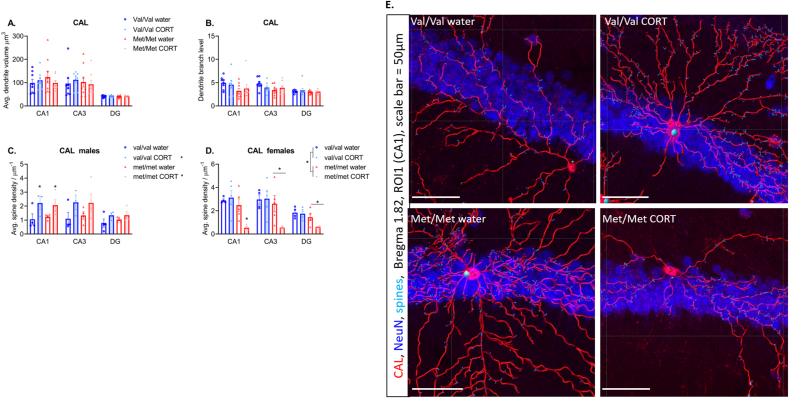
Brain-derived neurotrophic factor (BDNF) plays essential roles in GABAergic interneuron development. The common BDNF val66met polymorphism, leads to decreased activity-dependent release of BDNF. The current study used a humanized mouse model of the BDNF val66met polymorphism to determine how reduced activity-dependent release of BDNF, both on its own, and in combination with chronic adolescent stress hormone, impact hippocampal GABAergic interneuron cell density and dendrite morphology. Male and female Val/Val and Met/Met mice were exposed to corticosterone (CORT) or placebo in their drinking water from weeks 6-8, before brains were perfuse-fixed at 15 weeks. Cell density and dendrite morphology of immunofluorescent labelled inhibitory interneurons; somatostatin, parvalbumin and calretinin in the CA1, and 3 and dentate gyrus (DG) across the dorsal (DHP) and ventral hippocampus (VHP) were assessed by confocal z-stack imaging, and IMARIS dendritic mapping software. Mice with the Met/Met genotype showed significantly lower somatostatin cell density compared to Val/Val controls in the DHP, and altered somatostatin interneuron dendrite morphology including branch depth, and spine density. Parvalbumin-positive interneurons were unchanged between genotype groups, however BDNF val66met genotype influenced the dendritic volume, branch level and spine density of parvalbumin interneurons differentially across hippocampal subregions. Contrary to this, no such effects were observed for calretinin-positive interneurons. Adolescent exposure to CORT treatment also significantly altered somatostatin and parvalbumin dendrite branch level and the combined effect of Met/Met genotype and CORT treatment significantly reduced somatostatin and parvalbumin dendrite spine density. In sum, the BDNF polymorphism significantly alters somatostatin and parvalbumin-positive interneuron cell development and dendrite morphology. Additionally, we also report a compounding effect of the Met/Met genotype and chronic adolescent CORT treatment on dendrite spine density, indicating that adolescence is a sensitive period of risk for Val66Met polymorphism carriers.
脑源性神经营养因子(BDNF)在γ-氨基丁酸(GABA)能中间神经元发育中起重要作用。常见的BDNF val66met多态性导致BDNF活性依赖释放减少。本研究使用BDNF val66met多态性的人源化小鼠模型,以确定BDNF活性依赖释放减少本身以及与慢性青春期应激激素联合作用时,如何影响海马GABA能中间神经元的细胞密度和树突形态。在第6至8周期间,将雄性和雌性Val/Val和Met/Met小鼠的饮用水中添加皮质酮(CORT)或安慰剂,在15周时对其进行灌注固定。通过共聚焦z-stack成像和IMARIS树突映射软件评估免疫荧光标记的抑制性中间神经元(包括生长抑素、小白蛋白和钙视网膜蛋白)在CA1、CA3和齿状回(DG)背侧海马(DHP)和腹侧海马(VHP)中的细胞密度和树突形态。与DHP中的Val/Val对照组相比,Met/Met基因型小鼠的生长抑素细胞密度显著降低,并且生长抑素中间神经元的树突形态发生改变,包括分支深度和棘密度。不同基因型组之间小白蛋白阳性中间神经元没有变化,但是BDNF val66met基因型在不同海马亚区域对小白蛋白中间神经元的树突体积、分支水平和棘密度有不同影响。与此相反,钙视网膜蛋白阳性中间神经元未观察到此类影响。青春期暴露于CORT治疗也显著改变了生长抑素和小白蛋白的树突分支水平,并且Met/Met基因型和CORT治疗的联合作用显著降低了生长抑素和小白蛋白的树突棘密度。总之,BDNF多态性显著改变生长抑素和小白蛋白阳性中间神经元的细胞发育和树突形态。此外,我们还报告了Met/Met基因型和慢性青春期CORT治疗对树突棘密度的复合效应,表明青春期是Val66Met多态性携带者的一个敏感风险期。