Bienias P, Subhankar S, Wang Y, Tsui T-C, Jendrzejewski F, Tiecke T, Juzeliūnas G, Jiang L, Rolston S L, Porto J V, Gorshkov A V
Joint Quantum Institute, NIST/University of Maryland, College Park, Maryland 20742, USA.
Joint Center for Quantum Information and Computer Science, NIST/University of Maryland, College Park, Maryland 20742, USA.
Phys Rev A (Coll Park). 2020;102. doi: 10.1103/PhysRevA.102.013306.
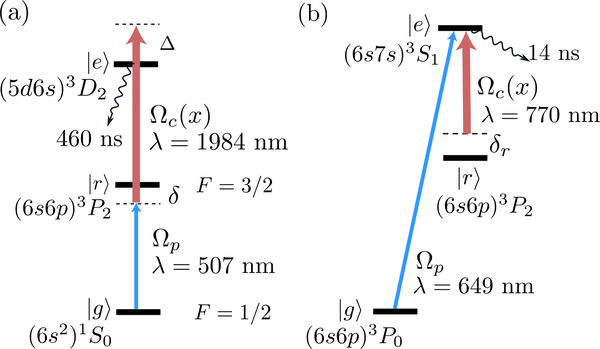
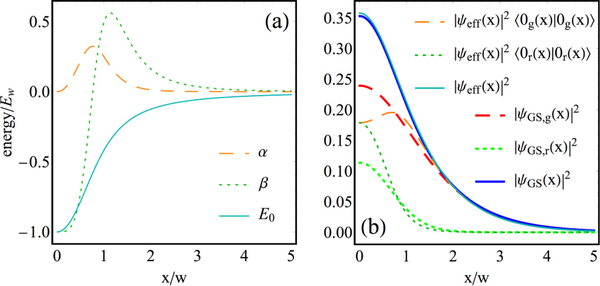
There has been a recent surge of interest and progress in creating subwavelength free-space optical potentials for ultracold atoms. A key open question is whether geometric potentials, which are repulsive and ubiquitous in the creation of subwavelength free-space potentials, forbid the creation of narrow traps with long lifetimes. Here, we show that it is possible to create such traps. We propose two schemes for realizing subwavelength traps and demonstrate their superiority over existing proposals. We analyze the lifetime of atoms in such traps and show that long-lived bound states are possible. This work allows for subwavelength control and manipulation of ultracold matter, with applications in quantum chemistry and quantum simulation.
最近,在为超冷原子创造亚波长自由空间光学势方面,人们的兴趣激增且取得了进展。一个关键的开放性问题是,在亚波长自由空间势的创造中普遍存在的排斥性几何势是否会阻碍长寿命窄阱的形成。在此,我们表明可以创造出这样的阱。我们提出了两种实现亚波长阱的方案,并证明了它们相对于现有方案的优越性。我们分析了原子在这种阱中的寿命,并表明长寿命束缚态是可能的。这项工作实现了对超冷物质的亚波长控制和操纵,在量子化学和量子模拟中有应用。