Li Yawei, Wang Xiaojie, Zeng Yunliu, Liu Pu
Anhui Engineering Laboratory for Horticultural Crop Breeding College of Horticulture Anhui Agricultural University Hefei China.
Key Laboratory of Horticultural Plant Biology of Ministry of Education College of Horticulture and Forestry Sciences Huazhong Agricultural University Wuhan China.
Plant Direct. 2020 Dec 16;4(12):e00297. doi: 10.1002/pld3.297. eCollection 2020 Dec.
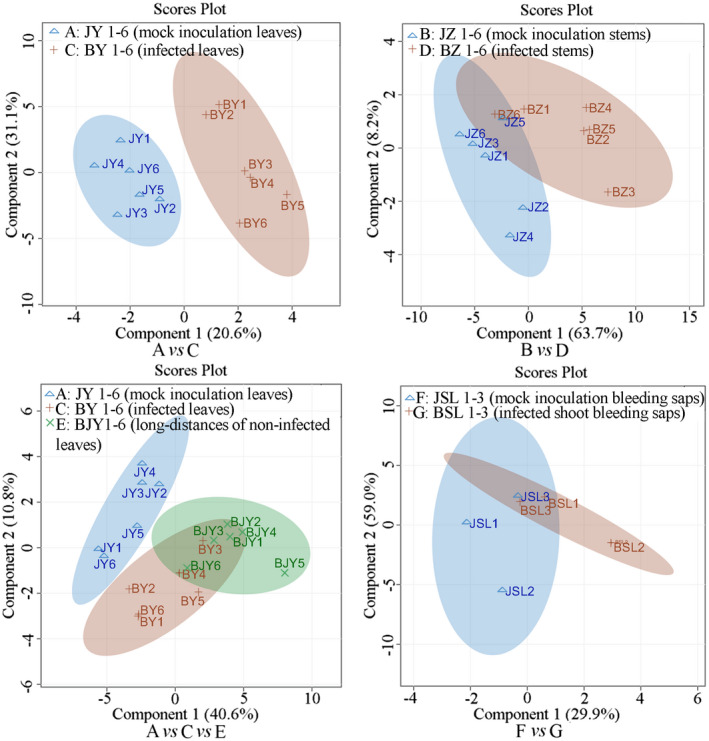
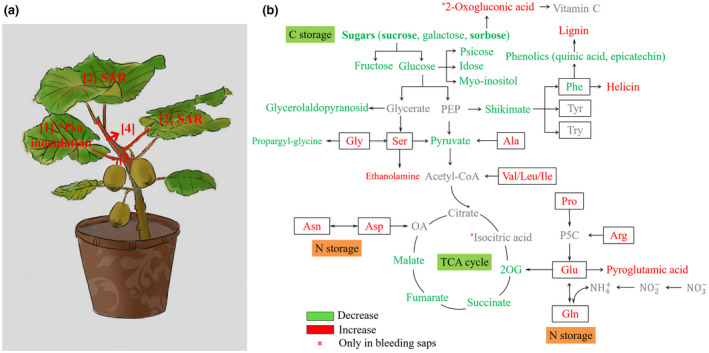
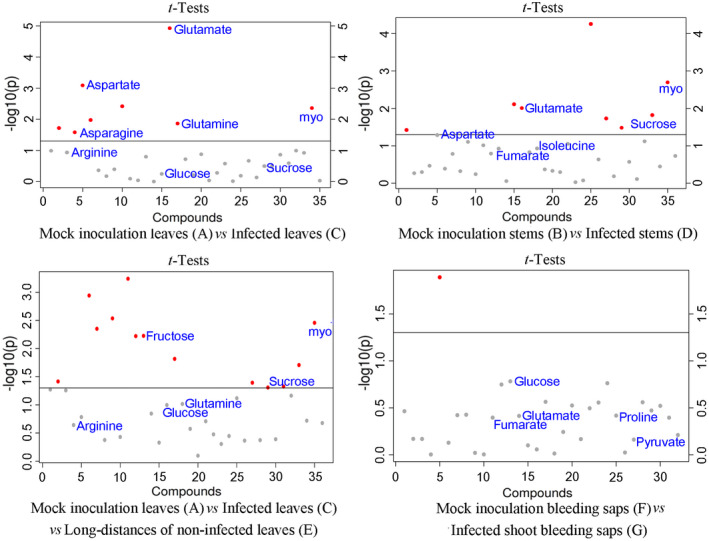
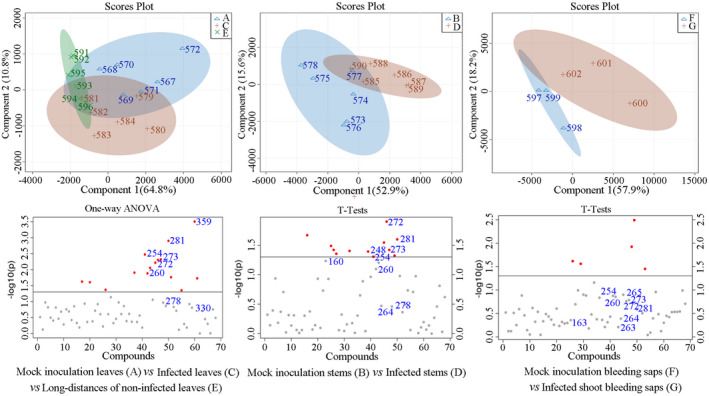
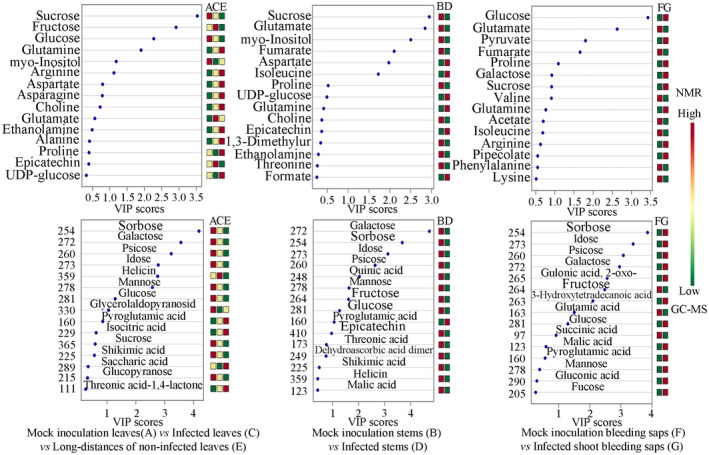
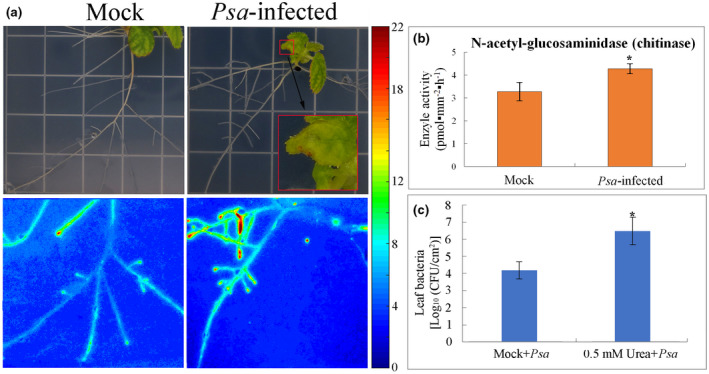
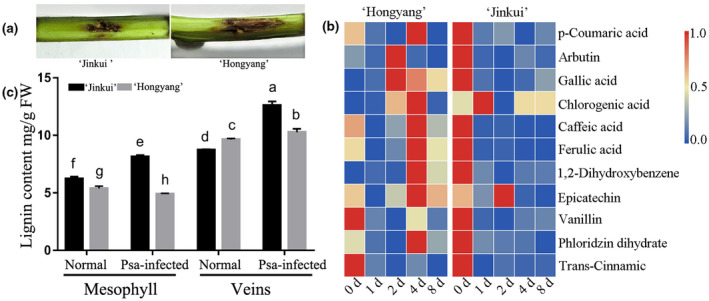
pv. (), a bacterial pathogen, causes bacterial canker disease in kiwifruit. To elucidate the local and systemic influences of infection on kiwifruit, comprehensive analyses were conducted by combining metabolomic and physiological approach under -infected treatment and mock-inoculated control in leaves, stems, and bleeding saps. Our results show that infection stimulated kiwifruit metabolic reprogramming. Levels of many sugars, fumarate, and malic acid were decreased in -infected leaves and stems, accompanied by the increased level of amino acids (AAs), which implies the anaplerotic reaction to replenish the TCA cycle generating energy and intermediates for defense-related metabolic pathways, such as phenylpropanoid metabolism. The inconsistent results were observed in bleeding saps, which may be attributed to the induced phloem transport of carbon (C) out of leaves and such a transport benefits bacterium movement. Arg, Gln, and pyroglutamic acid systematically were accumulated in long-distance leaves, which probably confers to systemic acquired resistance (SAR) and inoculation accelerated the nitrogen (N) cycling in kiwifruit. Moreover, infection specifically affected the content of phenolic compounds and lignin. Phenolic compounds were negatively and lignin was positively related to kiwifruit resistance, respectively. Our results first reveal that enhances infection by manipulating C/N metabolism and sweet immunity, and that host lignin synthesis is a major physical barrier for restricting bacterial infection. This study provides an insight into the complex remodeling of plant metabolic response to stress.
丁香假单胞菌猕猴桃致病变种(Pseudomonas syringae pv. actinidiae),一种细菌病原体,会导致猕猴桃发生细菌性溃疡病。为了阐明该病菌感染对猕猴桃的局部和系统影响,通过在感染处理和模拟接种对照条件下,对叶片、茎干和伤流液进行代谢组学和生理学方法相结合的综合分析。我们的结果表明,该病菌感染刺激了猕猴桃的代谢重编程。在受感染的叶片和茎干中,许多糖类、富马酸和苹果酸的水平降低,同时氨基酸(AAs)水平升高,这意味着存在回补反应以补充三羧酸循环,为防御相关代谢途径(如苯丙烷类代谢)生成能量和中间产物。在伤流液中观察到了不一致的结果,这可能归因于诱导的碳(C)从叶片中通过韧皮部运输出来,而这种运输有利于病菌移动。精氨酸、谷氨酰胺和焦谷氨酸在远距离叶片中系统性积累,这可能赋予了系统获得性抗性(SAR),并且接种该病菌加速了猕猴桃中的氮(N)循环。此外,该病菌感染特别影响了酚类化合物和木质素的含量。酚类化合物与猕猴桃抗性呈负相关,木质素与猕猴桃抗性呈正相关。我们的结果首次揭示,该病菌通过操纵碳/氮代谢和“甜蜜免疫”增强感染,并且宿主木质素合成是限制细菌感染的主要物理屏障。本研究为深入了解植物对该病菌胁迫的代谢反应的复杂重塑提供了见解。