Zhu Longming, Zhou Yang, Li Xiangnan, Zhao Jinming, Guo Na, Xing Han
National Center for Soybean Improvement, Key Laboratory of Biology and Genetics and Breeding for Soybean, Ministry of Agriculture, State Key Laboratory for Crop Genetics and Germplasm Enhancement, College of Agriculture, Nanjing Agricultural University, Nanjing, China.
Front Plant Sci. 2018 Oct 23;9:1530. doi: 10.3389/fpls.2018.01530. eCollection 2018.
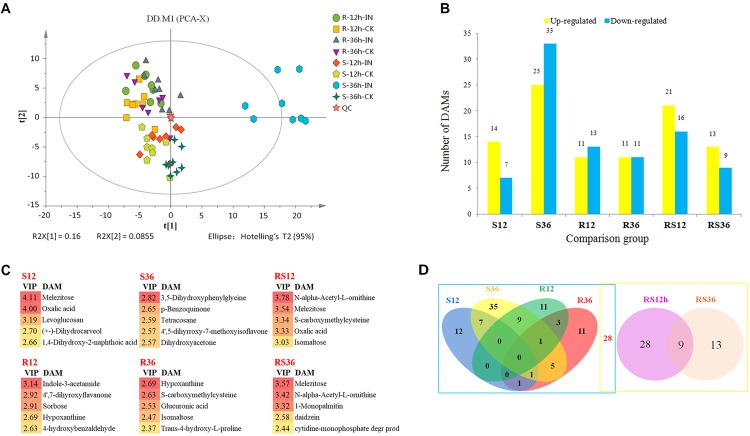
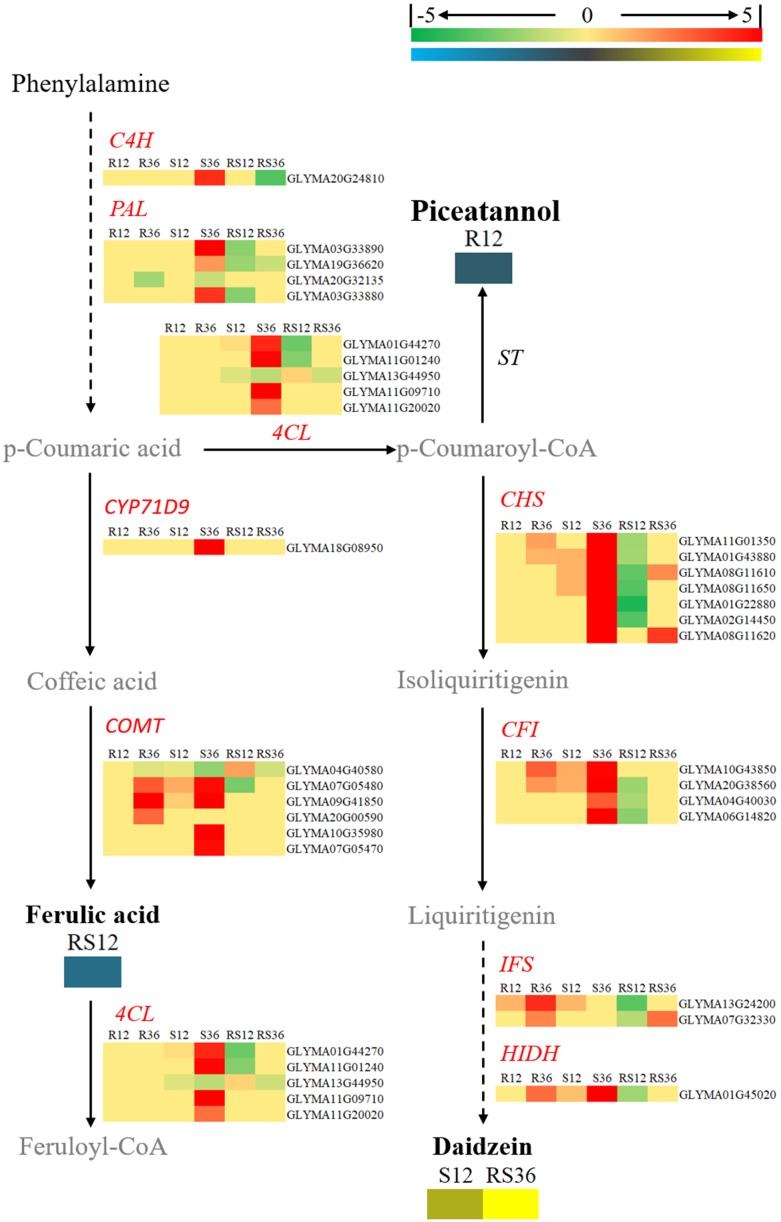
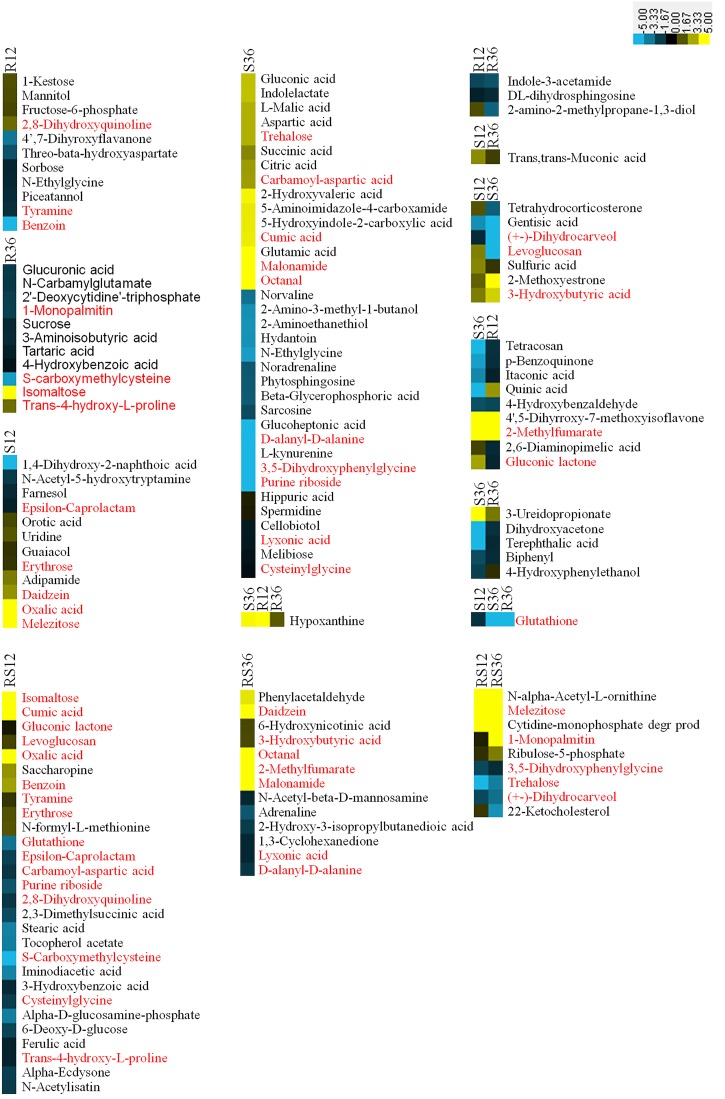
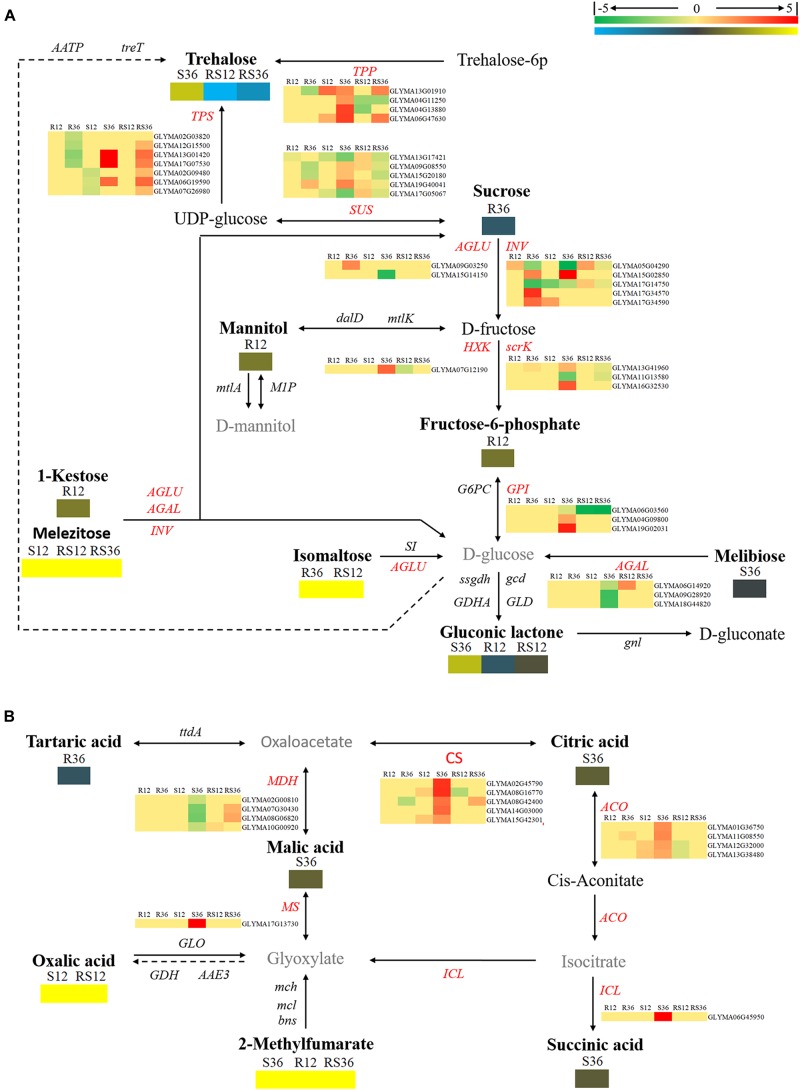
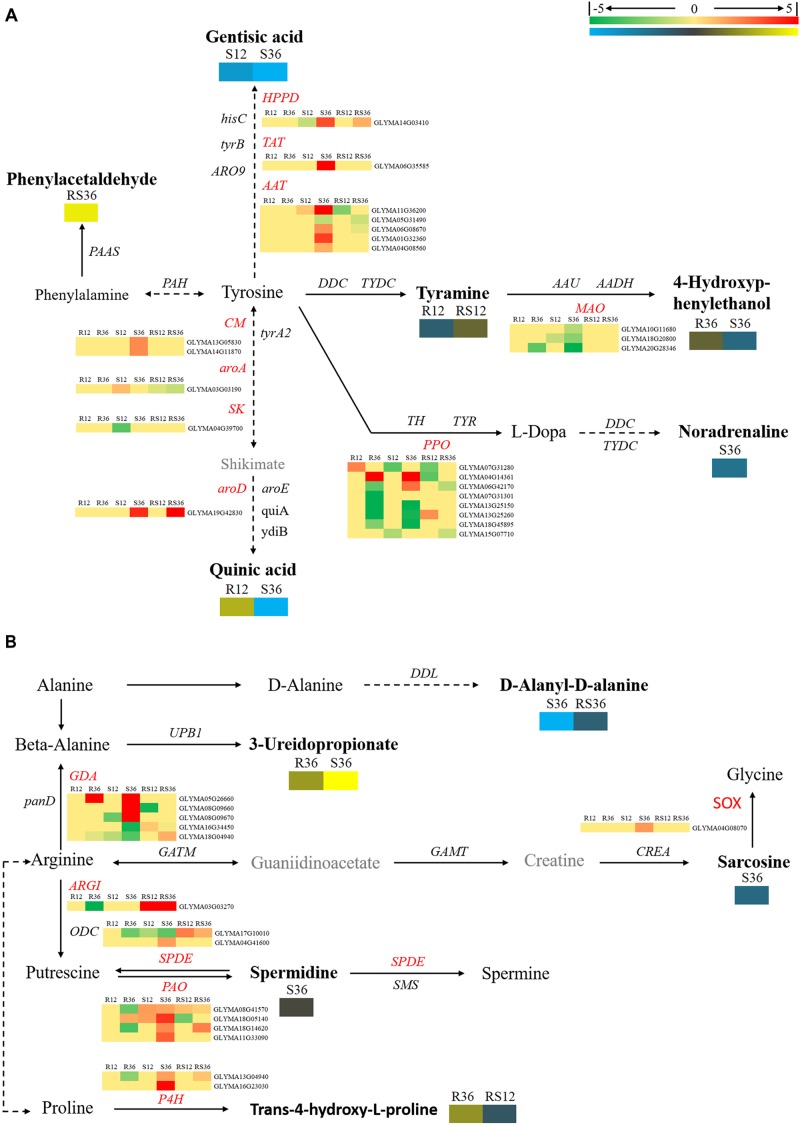
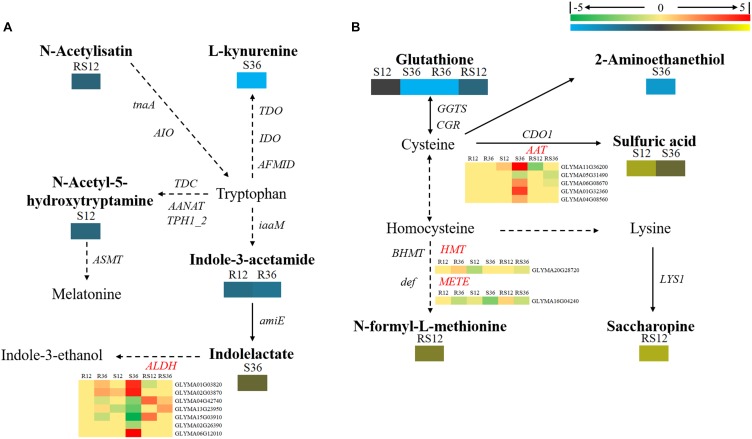
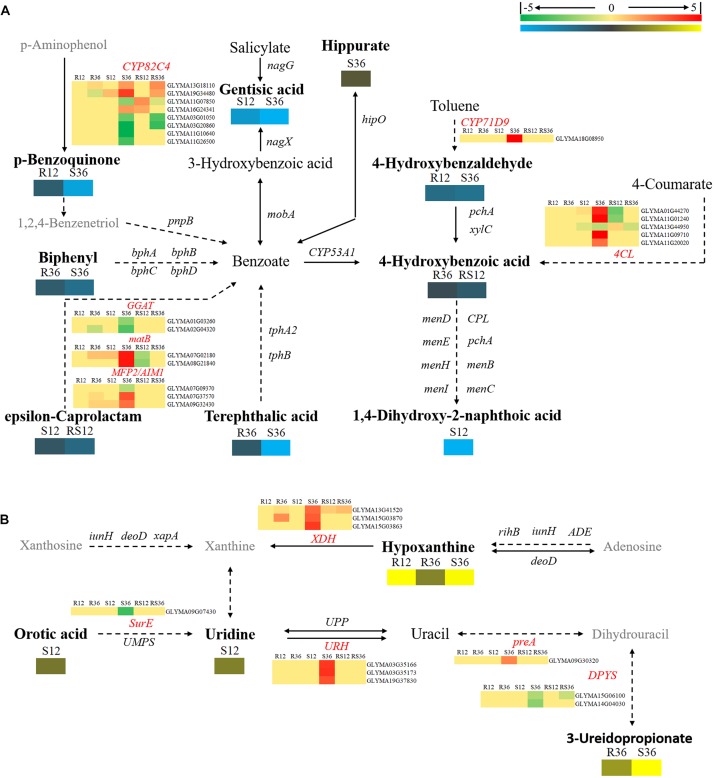
Soybean is one of the most important economic and oil crops across the world. Phytophthora root rot (PRR), caused by (), is a major disease in most soybean-growing regions worldwide. Here, we investigated metabolic changes in hypocotyls of two soybean lines, Nannong 10-1 (resistant line, R) and 06-070583 (susceptible line, S), at two time points (12 and 36 hpi) after infection and metabolic differences between the R line and the S line. In total, 90 differentially accumulated metabolites (DAMs) were identified after infection; the levels of 50 metabolites differed between the R line and the S line. There are 28 DAMs that not only differentially accumulated between the R line and the S line but also differentially accumulated after infection. Based on the changes of these DAMs in response to infection in different lines and at different timepoints, and the differences in the contents of these DAMs between the R line and the S line, we speculated that DAMs, including sugars (monosaccharides and oligosaccharides), organic acids (oxalic acid, cumic acid), amino acid derivatives, and other secondary metabolites (mannitol, octanal, hypoxanthine, and daidzein etc.) may participate in the metabolic-level defense response of soybean to . In this study, an integrated pathway-level analysis of transcriptomics (obtained by RNA-Seq) and metabolomics data illustrated the poor connections and interdependencies between the metabolic and transcriptional responses of soybean to infection. This work emphasizes the value of metabolomic studies of plant-pathogen interactions and paves the way for future research of critical metabolic determinants of the soybean- interaction.
大豆是世界上最重要的经济作物和油料作物之一。由()引起的大豆疫霉根腐病(PRR)是全球大多数大豆种植地区的主要病害。在此,我们研究了两个大豆品系南农10 - 1(抗病品系,R)和06 - 070583(感病品系,S)在感染后两个时间点(接种后12小时和36小时)下胚轴中的代谢变化以及R品系和S品系之间的代谢差异。感染后共鉴定出90种差异积累代谢物(DAMs);50种代谢物在R品系和S品系之间存在含量差异。有28种DAMs不仅在R品系和S品系之间差异积累,而且在感染后也差异积累。基于这些DAMs在不同品系和不同时间点对感染的响应变化,以及R品系和S品系之间这些DAMs含量的差异,我们推测包括糖类(单糖和寡糖)、有机酸(草酸、腐殖酸)、氨基酸衍生物以及其他次生代谢物(甘露醇、辛醛、次黄嘌呤和大豆苷元等)在内的DAMs可能参与大豆对()的代谢水平防御反应。在本研究中,对转录组学(通过RNA测序获得)和代谢组学数据进行的综合通路水平分析表明,大豆对感染的代谢和转录反应之间的联系和相互依赖性较差。这项工作强调了植物 - 病原体相互作用代谢组学研究的价值,并为未来大豆 - ()相互作用关键代谢决定因素的研究铺平了道路。