Department of Internal Medicine-Gastroenterology, University of Michigan, Ann Arbor, Michigan; Department of Medicine-Gastroenterology, University of Arizona, Tucson, Arizona.
Department of Medicine-Gastroenterology, University of Arizona, Tucson, Arizona.
Cell Mol Gastroenterol Hepatol. 2021;11(5):1251-1266. doi: 10.1016/j.jcmgh.2020.12.008. Epub 2021 Jan 10.
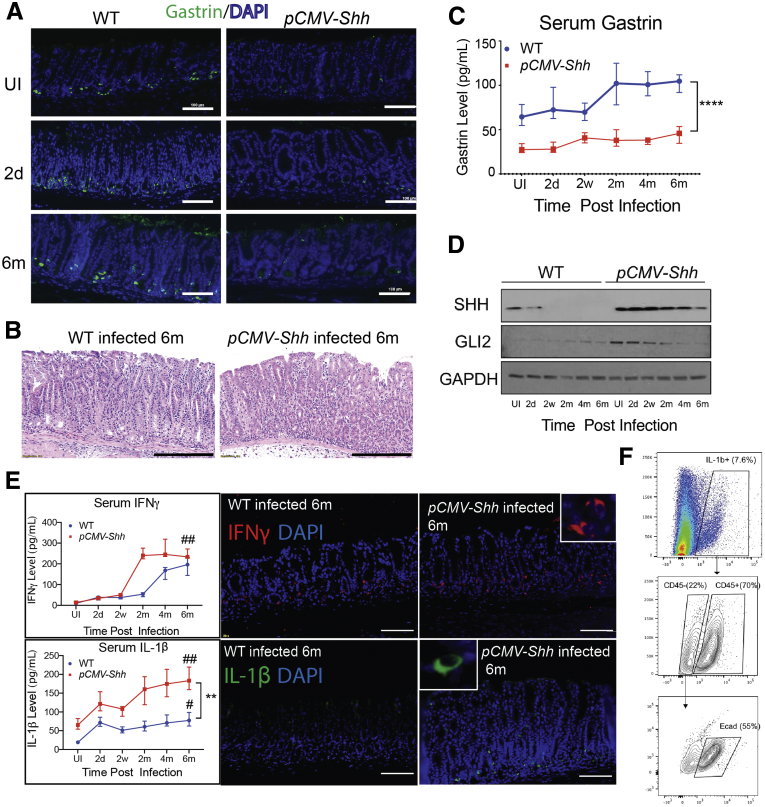
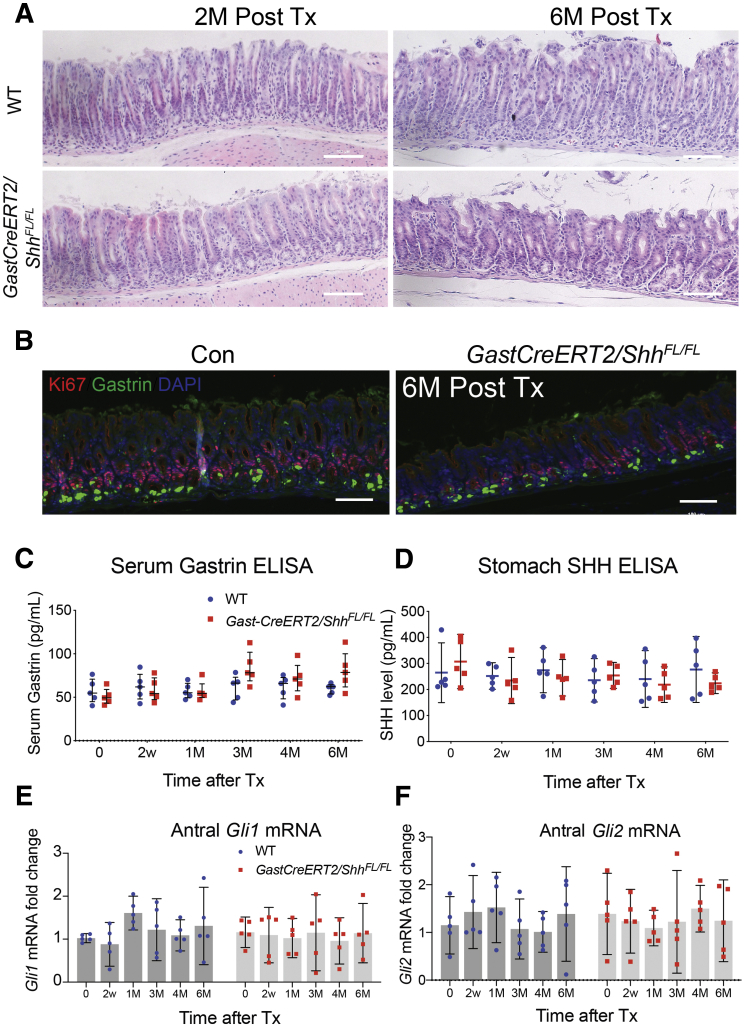
BACKGROUND & AIMS: Helicobacter pylori infection in humans typically begins with colonization of the gastric antrum. The initial Th1 response occasionally coincides with an increase in gastrin secretion. Subsequently, the gastritis segues to chronic atrophic gastritis, metaplasia, dysplasia and distal gastric cancer. Despite these well characterized clinical events, the link between inflammatory cytokines and non-cardia gastric cancer remains difficult to study in mouse models. Prior studies have demonstrated that overexpression of the Hedgehog (HH) effector GLI2 induces loss of gastrin (atrophy) and antral hyperplasia. To determine the link between specific cytokines, HH signaling and pre-neoplastic changes in the gastric antrum.
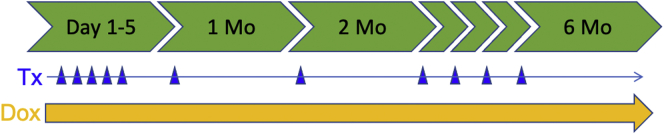
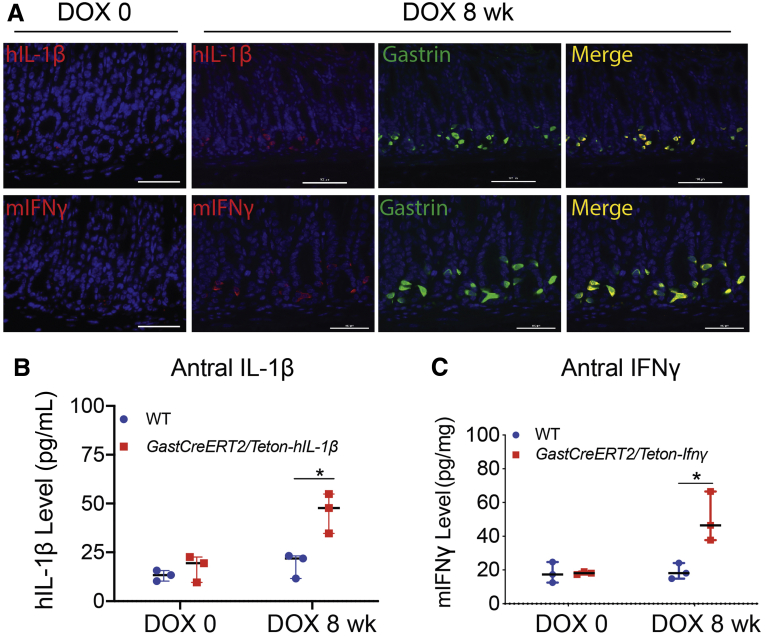
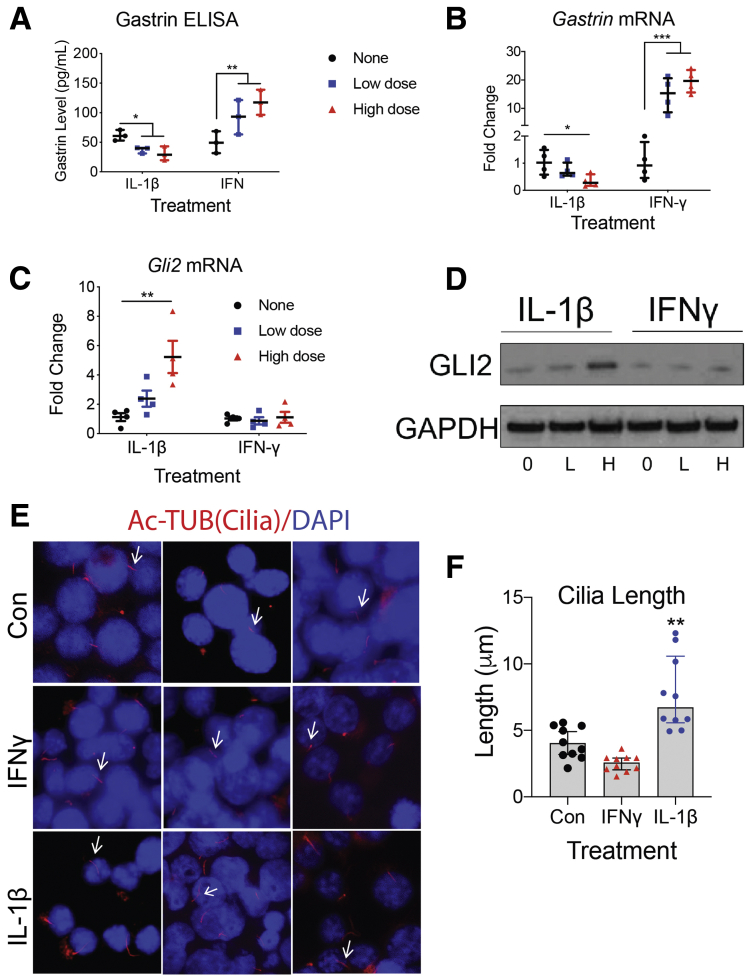
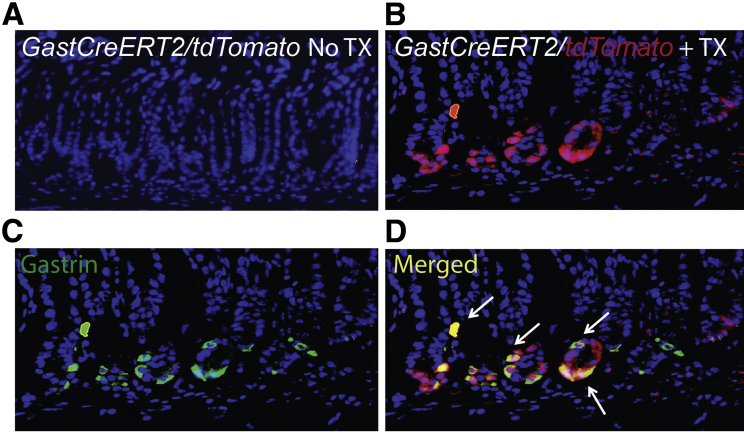
Mouse lines were created to conditionally direct IL1β or IFN-γ to the antrum using the Gastrin-CreERT2 and Tet activator. Primary cilia, which transduces HH signaling, on G cells were disrupted by deleting the ciliary motor protein KIF3a. Phenotypic changes were assessed by histology and western blots. A subclone of GLUTag enteroendocrine cells selected for gastrin expression and the presence of primary cilia was treated with recombinant SHH, IL1β or IFN-γ with or without kif3a siRNA.
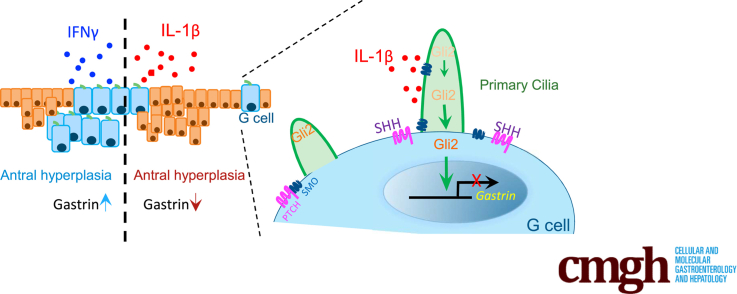
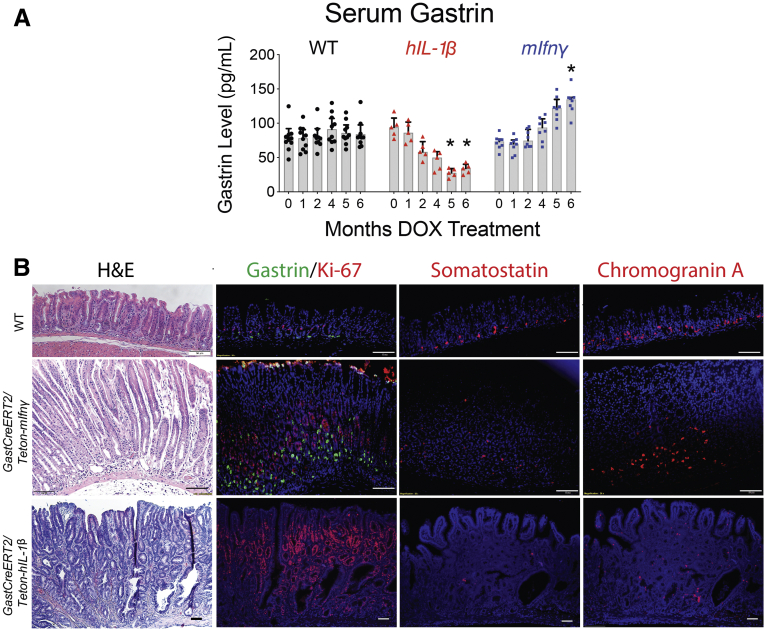
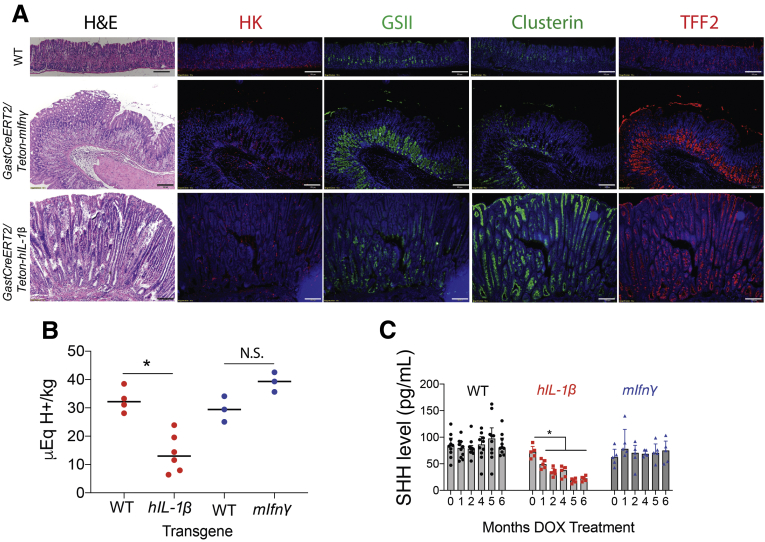
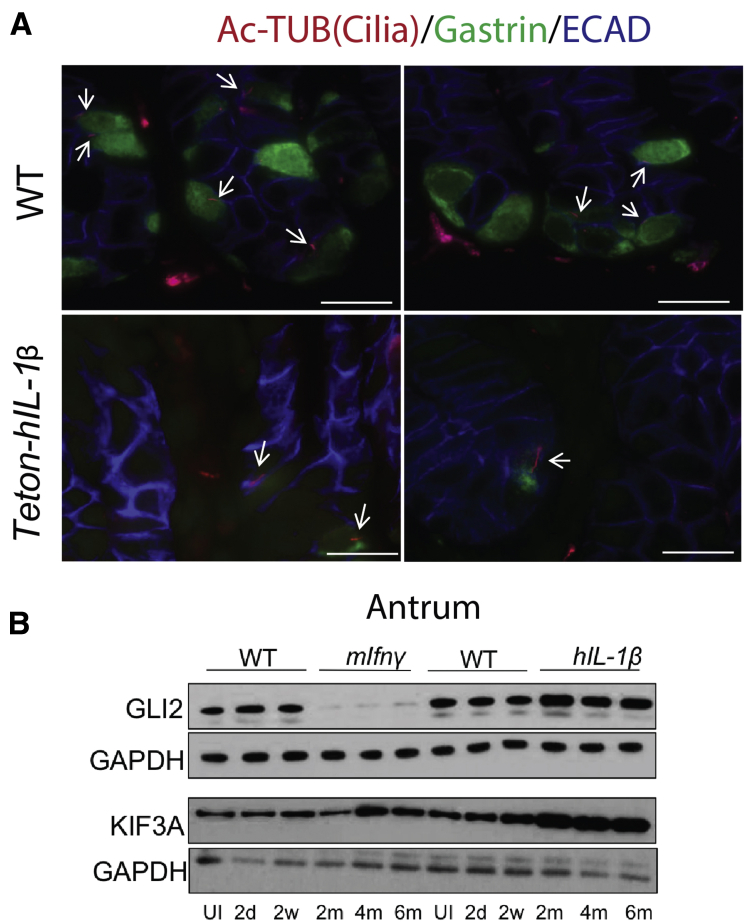
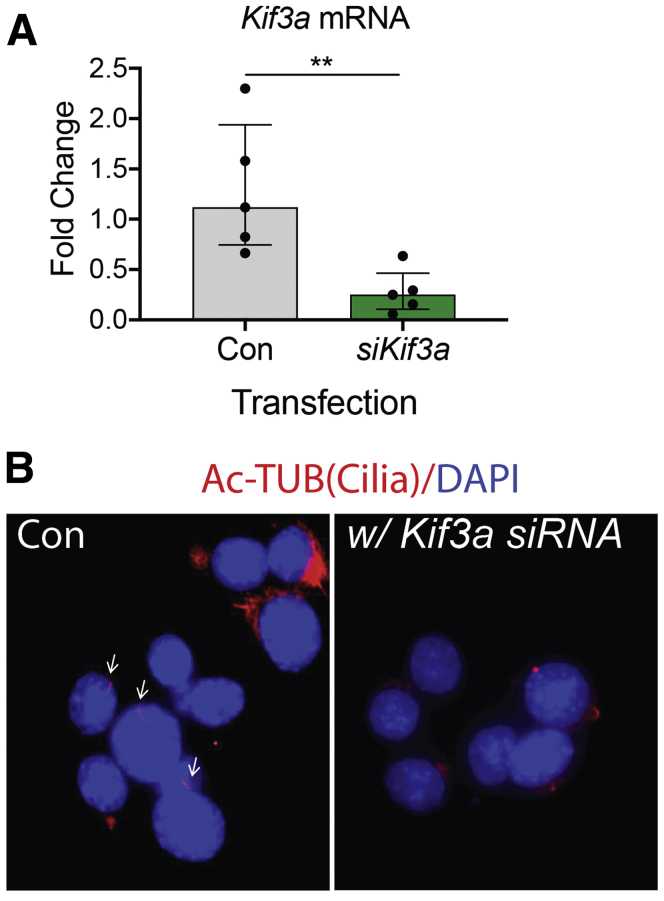
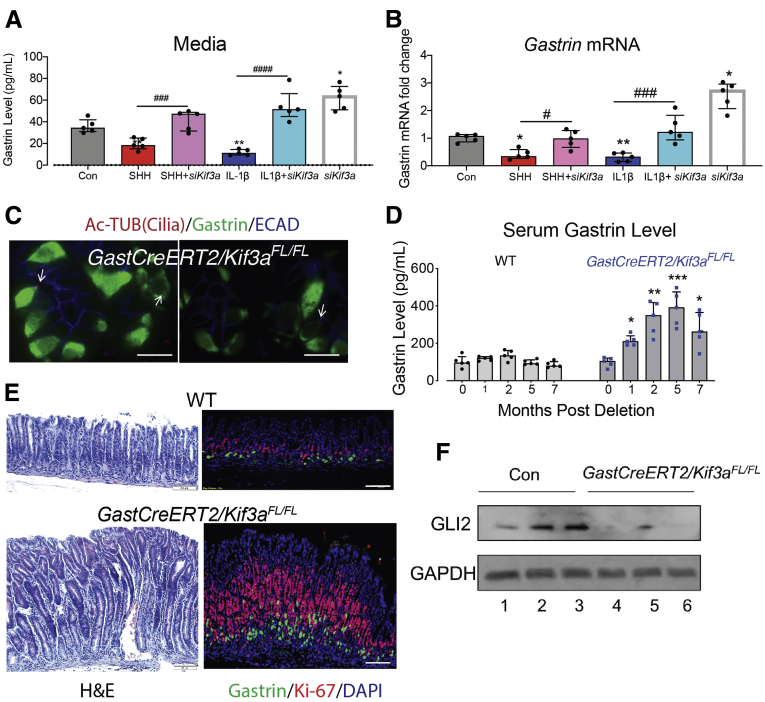
IFN-γ increased gastrin and induced antral hyperplasia. However, antral expression of IL1β suppressed tissue and serum gastrin, while also inducing antral hyperplasia. IFN-γ treatment of GLUTAg cells suppressed GLI2 and induced gastrin, without affecting cilia length. By contrast, IL1β treatment doubled primary cilia length, induced GLI2 and suppressed gastrin gene expression. Knocking down kif3a in GLUTAg cells mitigated SHH or IL1β suppression of gastrin.
Overexpression of IL1β in the antrum was sufficient to induce antral hyperplasia coincident with suppression of gastrin via primary cilia. ORCID: #0000-0002-6559-8184.
人类中幽门螺杆菌(H. pylori)感染通常始于胃窦的定植。最初的 Th1 反应偶尔会伴随着胃泌素分泌的增加。随后,胃炎进展为慢性萎缩性胃炎、化生、异型增生和远端胃癌。尽管这些临床事件特征明确,但在小鼠模型中,炎症细胞因子与非贲门胃癌之间的联系仍然难以研究。先前的研究表明,Hedgehog(HH)效应物 GLI2 的过表达会导致胃泌素(萎缩)和胃窦增生。为了确定特定细胞因子、HH 信号与胃窦前瘤变之间的联系。
使用 Gastrin-CreERT2 和 Tet 激活物,创建了条件性地将 IL1β 或 IFN-γ 靶向胃窦的小鼠品系。通过删除纤毛运动蛋白 KIF3a 破坏 G 细胞上的初级纤毛,该纤毛可转导 HH 信号。通过组织学和 Western blot 评估表型变化。为了选择胃泌素表达和初级纤毛存在的 GLUTag 内分泌细胞的亚克隆,用重组 SHH、IL1β 或 IFN-γ 进行处理,有或没有 kif3a siRNA。
IFN-γ 增加了胃泌素并诱导了胃窦增生。然而,IL1β 在胃窦中的表达抑制了组织和血清胃泌素,同时也诱导了胃窦增生。IFN-γ 处理 GLUTAg 细胞抑制了 GLI2 并诱导了胃泌素,而不影响纤毛长度。相比之下,IL1β 处理使初级纤毛长度增加了一倍,诱导了 GLI2,并抑制了胃泌素基因表达。在 GLUTAg 细胞中敲低 kif3a 减轻了 SHH 或 IL1β 对胃泌素的抑制。
在胃窦中过表达 IL1β 足以通过初级纤毛诱导胃窦增生,同时抑制胃泌素。ORCID:#0000-0002-6559-8184。