Nutrition and Obesity Group, Department of Pharmacy and Food Science, University of the Basque Country (UPV/EHU) and Lucio Lascaray Research Institute, 01006 Vitoria, Spain.
CIBEROBN Physiopathology of Obesity and Nutrition, Institute of Health Carlos III, 01006 Vitoria, Spain.
Nutrients. 2020 Dec 17;12(12):3853. doi: 10.3390/nu12123853.
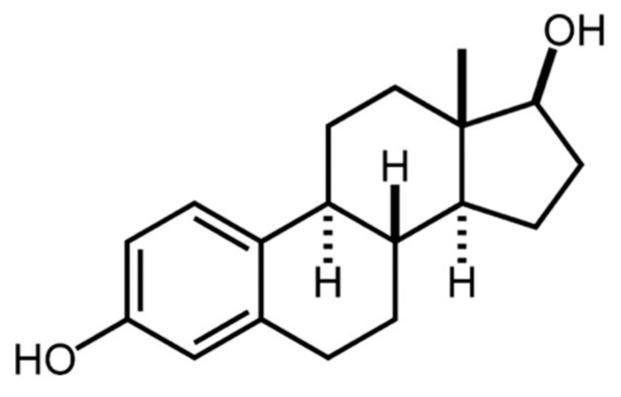
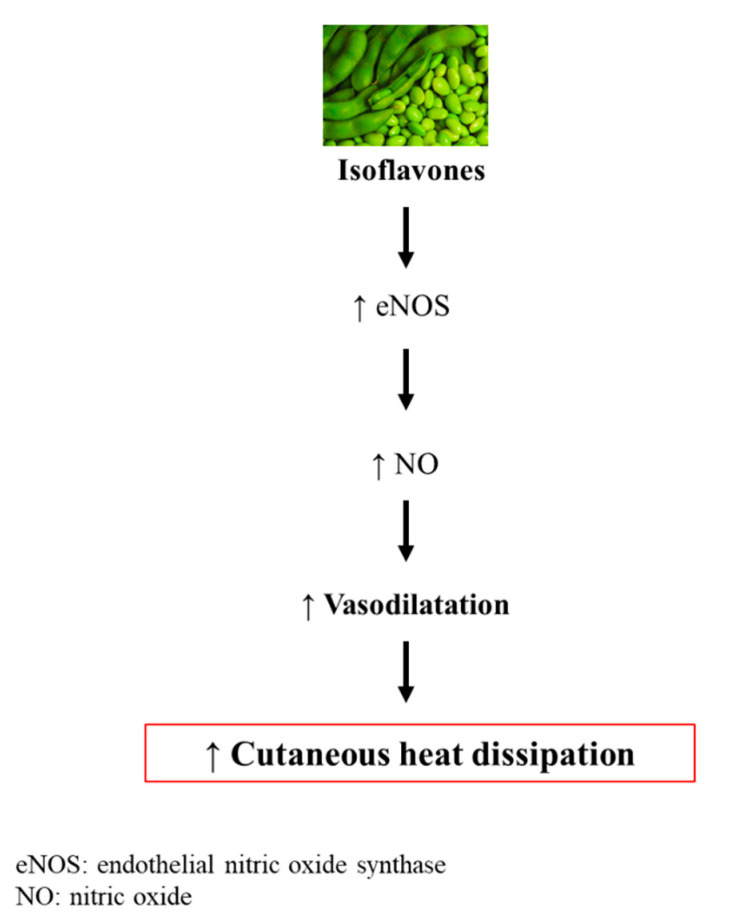
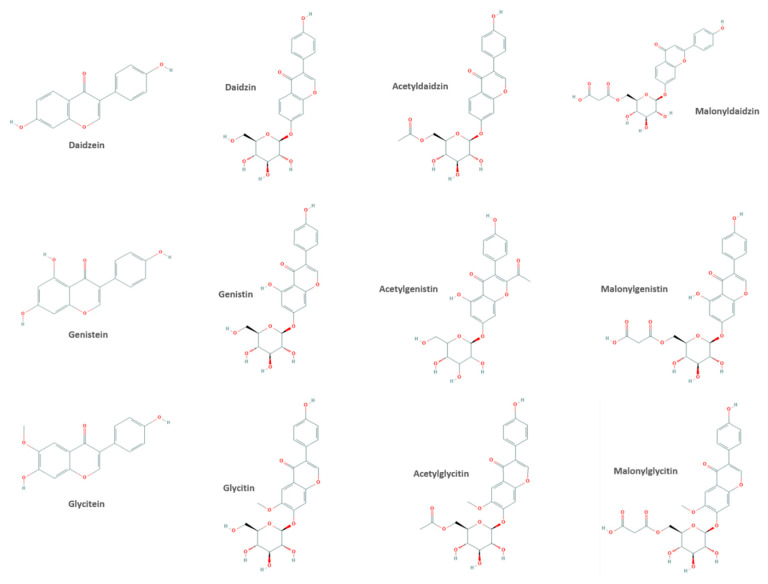
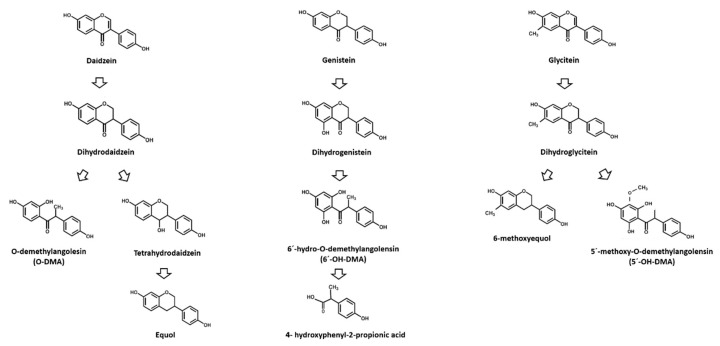
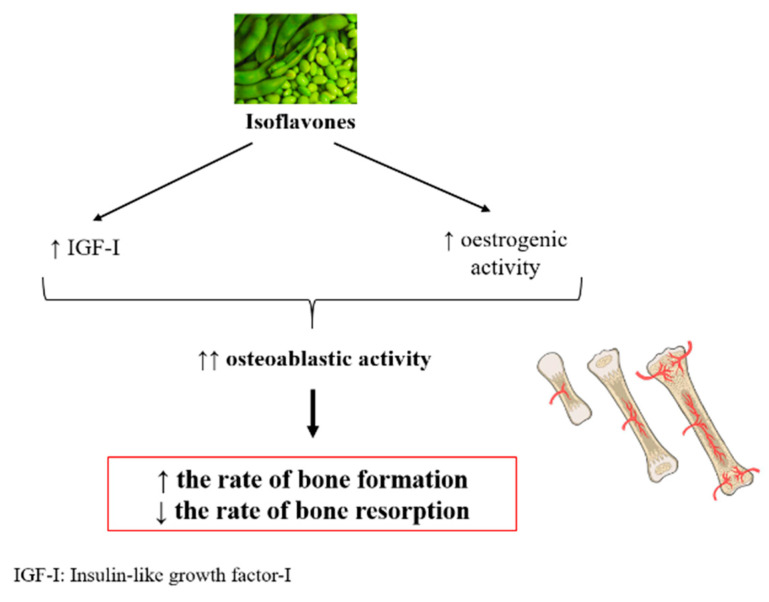
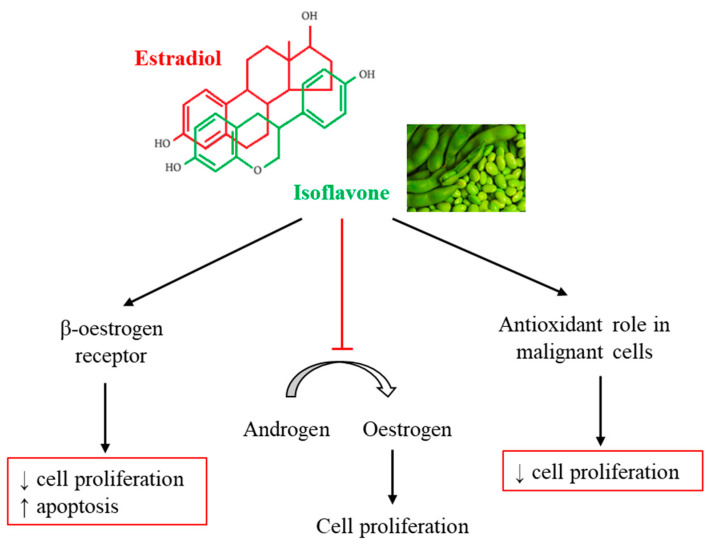
Isoflavones are phenolic compounds with a chemical structure similar to that of estradiol. They are present in several vegetables, mainly in legumes such as soy, white and red clover, alfalfa and beans. The most significant food source of isoflavones in humans is soy-derived products. Isoflavones could be used as an alternative therapy for pathologies dependent on hormonal disorders such as breast and prostate cancer, cardiovascular diseases, as well as to minimize menopausal symptoms. According to the results gathered in the present review, it can be stated that there is scientific evidence showing the beneficial effect of isoflavones on bone health and thus in the prevention and treatment of osteoporosis on postmenopausal women, although the results do not seem entirely conclusive as there are discrepancies among the studies, probably related to their experimental designs. For this reason, the results should be interpreted with caution, and more randomized clinical trials are required. By contrast, it seems that soy isoflavones do not lead to a meaningful protective effect on cardiovascular risk. Regarding cancer, scientific evidence suggests that isoflavones could be useful in reducing the risk of suffering some types of cancer, such as breast and endometrial cancer, but further studies are needed to confirm these results. Finally, isoflavones could be useful in reducing hot flushes associated with menopause. However, a limitation in this field is that there is still a great heterogeneity among studies. Lastly, with regard to isoflavone consumption safety, it seems that they are safe and that the most common adverse effect is mild and occurs at the gastrointestinal level.
异黄酮是一种酚类化合物,其化学结构与雌二醇相似。它们存在于多种蔬菜中,主要存在于豆类如大豆、白三叶草、红三叶草、紫花苜蓿和豆类中。人类异黄酮的最重要食物来源是大豆制品。异黄酮可作为依赖于激素紊乱的疾病的替代疗法,如乳腺癌和前列腺癌、心血管疾病,以及最大限度地减少更年期症状。根据本综述收集的结果,可以说有科学证据表明异黄酮对骨骼健康有益,因此对绝经后妇女的骨质疏松症有预防和治疗作用,尽管结果似乎并不完全结论性,因为研究之间存在差异,可能与它们的实验设计有关。因此,结果应谨慎解释,需要更多的随机临床试验。相比之下,大豆异黄酮似乎对心血管风险没有明显的保护作用。关于癌症,科学证据表明,异黄酮可能有助于降低某些类型癌症的风险,如乳腺癌和子宫内膜癌,但需要进一步的研究来证实这些结果。最后,异黄酮可能有助于减轻与更年期相关的热潮红。然而,这一领域的一个限制是,研究之间仍然存在很大的异质性。最后,关于异黄酮的食用安全性,它们似乎是安全的,最常见的不良反应是轻微的,发生在胃肠道水平。