Campelj Dean G, Timpani Cara A, Petersen Aaron C, Hayes Alan, Goodman Craig A, Rybalka Emma
Institute for Health and Sport (IHeS), Victoria University, Melbourne, VIC 8001, Australia.
Australian Institute for Musculoskeletal Science, Victoria University, St Albans, VIC 3021, Australia.
Cancers (Basel). 2020 Dec 17;12(12):3810. doi: 10.3390/cancers12123810.
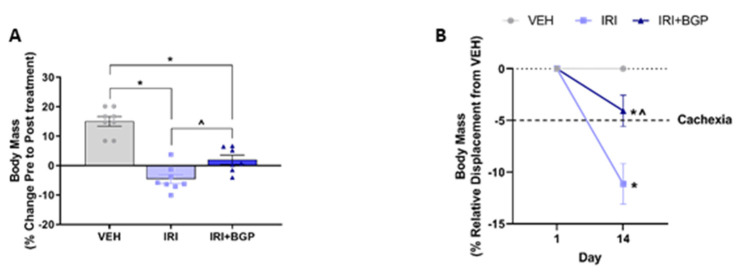
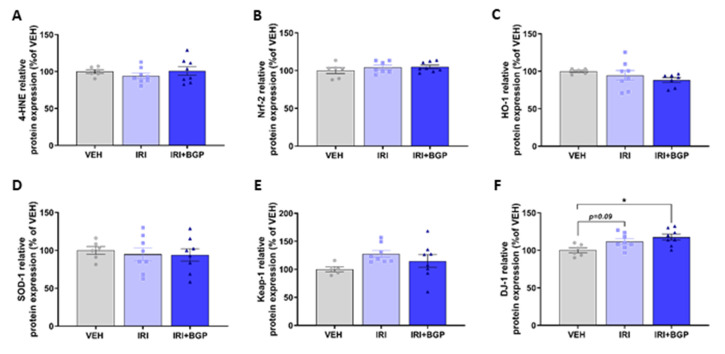
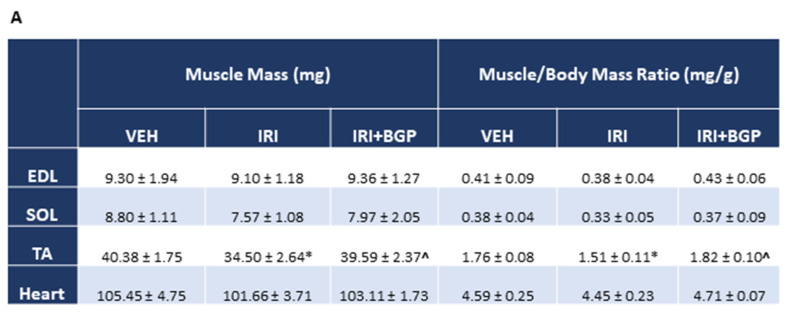
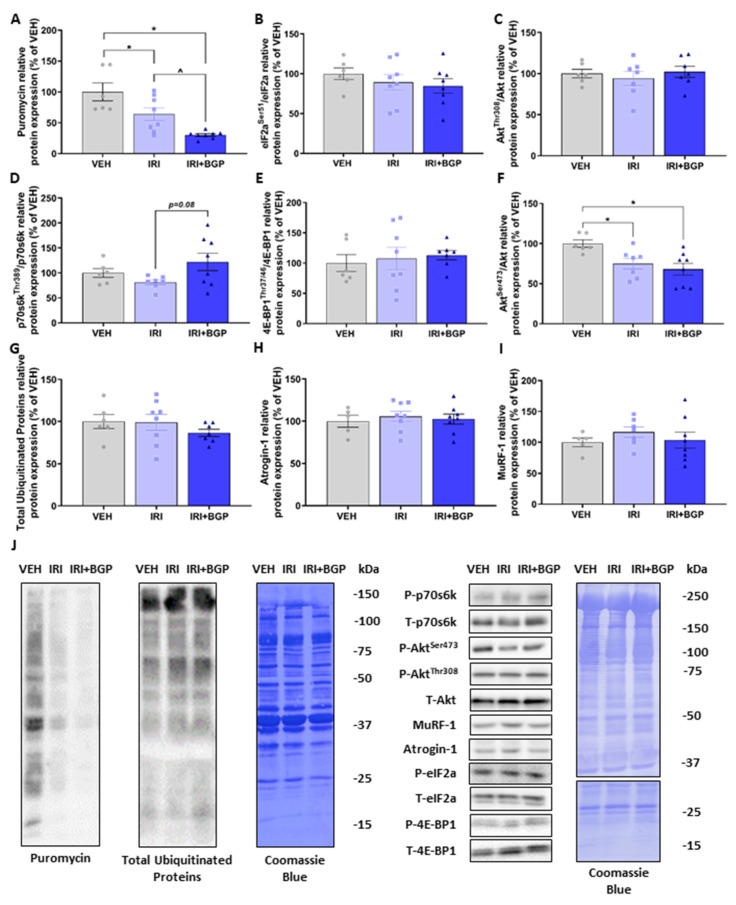
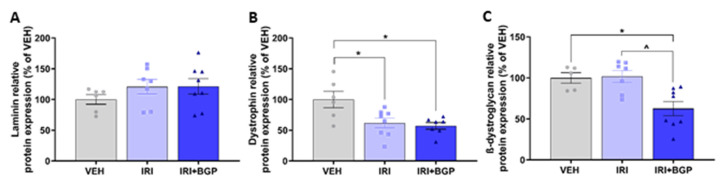
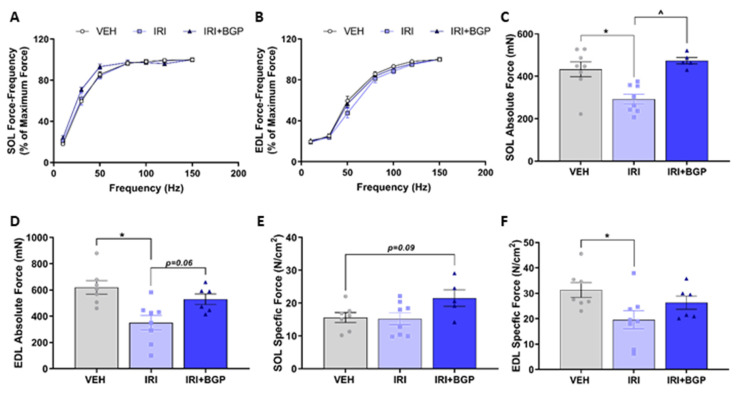
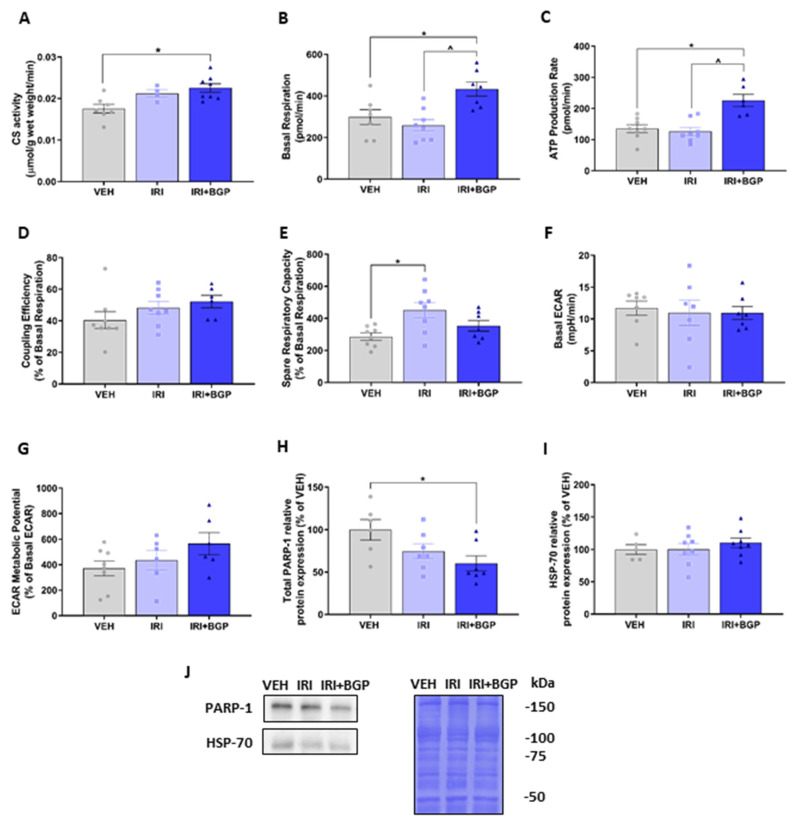
Chemotherapy-induced muscle wasting and dysfunction is a contributing factor to cachexia alongside cancer and increases the risk of morbidity and mortality. Here, we investigate the effects of the chemotherapeutic agent irinotecan (IRI) on skeletal muscle mass and function and whether BGP-15 (a poly-(ADP-ribose) polymerase-1 (PARP-1) inhibitor and heat shock protein co-inducer) adjuvant therapy could protect against IRI-induced skeletal myopathy. Healthy 6-week-old male Balb/C mice ( = 24; 8/group) were treated with six intraperitoneal injections of either vehicle, IRI (30 mg/kg) or BGP-15 adjuvant therapy (IRI+BGP; 15 mg/kg) over two weeks. IRI reduced lean and tibialis anterior mass, which were attenuated by IRI+BGP treatment. Remarkably, IRI reduced muscle protein synthesis, while IRI+BGP reduced protein synthesis further. These changes occurred in the absence of a change in crude markers of mammalian/mechanistic target of rapamycin (mTOR) Complex 1 (mTORC1) signaling and protein degradation. Interestingly, the cytoskeletal protein dystrophin was reduced in both IRI- and IRI+BGP-treated mice, while IRI+BGP treatment also decreased β-dystroglycan, suggesting significant remodeling of the cytoskeleton. IRI reduced absolute force production of the soleus and extensor digitorum longus (EDL) muscles, while IRI+BGP rescued absolute force production of the soleus and strongly trended to rescue force output of the EDL ( = 0.06), which was associated with improvements in mass. During the fatiguing stimulation, IRI+BGP-treated EDL muscles were somewhat susceptible to rupture at the musculotendinous junction, likely due to BGP-15's capacity to maintain the rate of force development within a weakened environment characterized by significant structural remodeling. Our paradoxical data highlight that BGP-15 has some therapeutic advantage by attenuating IRI-induced skeletal myopathy; however, its effects on the remodeling of the cytoskeleton and extracellular matrix, which appear to make fast-twitch muscles more prone to tearing during contraction, could suggest the induction of muscular dystrophy and, thus, require further characterization.
化疗引起的肌肉萎缩和功能障碍是恶病质的一个促成因素,与癌症共同作用,增加发病和死亡风险。在此,我们研究化疗药物伊立替康(IRI)对骨骼肌质量和功能的影响,以及BGP-15(一种聚(ADP-核糖)聚合酶-1(PARP-1)抑制剂和热休克蛋白共诱导剂)辅助治疗是否能预防IRI诱导的骨骼肌病。对24只健康的6周龄雄性Balb/C小鼠(每组8只)进行为期两周的腹腔注射,分别注射溶剂、IRI(30 mg/kg)或BGP-15辅助治疗(IRI+BGP;15 mg/kg)。IRI降低了瘦体重和胫前肌质量,而IRI+BGP治疗减轻了这种降低。值得注意的是,IRI降低了肌肉蛋白质合成,而IRI+BGP进一步降低了蛋白质合成。这些变化发生在哺乳动物/雷帕霉素机制靶点(mTOR)复合物1(mTORC1)信号传导和蛋白质降解的粗略标志物未发生变化的情况下。有趣的是,在IRI和IRI+BGP治疗的小鼠中,细胞骨架蛋白肌营养不良蛋白均减少,而IRI+BGP治疗还降低了β-肌聚糖,提示细胞骨架发生了显著重塑。IRI降低了比目鱼肌和趾长伸肌(EDL)的绝对力产生,而IRI+BGP恢复了比目鱼肌的绝对力产生,并强烈倾向于恢复EDL的力输出(P = 0.06),这与质量改善相关。在疲劳刺激期间,IRI+BGP治疗的EDL肌肉在肌腱连接处有些易破裂,可能是由于BGP-15能够在以显著结构重塑为特征的减弱环境中维持力发展的速率。我们矛盾的数据突出表明,BGP-15通过减轻IRI诱导的骨骼肌病具有一定的治疗优势;然而,其对细胞骨架和细胞外基质重塑的影响,似乎使快肌在收缩时更容易撕裂,这可能提示诱导了肌肉营养不良,因此需要进一步表征。