Department of Biochemistry and Medical Chemistry, University of Pecs Medical School, 7624 Pecs, Hungary.
Szentagothai Research Centre, University of Pecs, 7624 Pecs, Hungary.
Int J Mol Sci. 2020 Apr 16;21(8):2767. doi: 10.3390/ijms21082767.
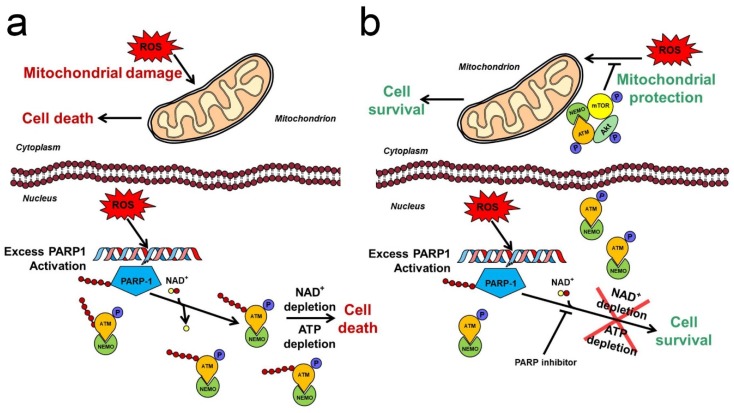
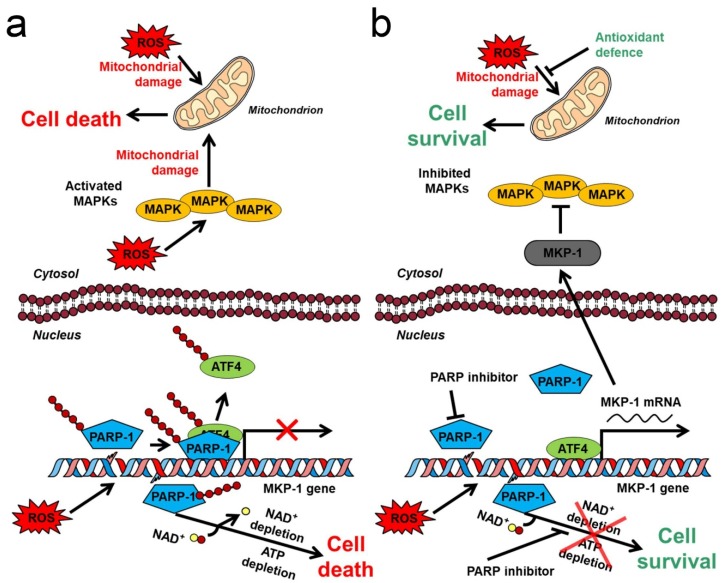
Inhibitors of the nuclear DNA damage sensor and signalling enzyme poly(ADP-ribose) polymerase (PARP) have recently been introduced in the therapy of cancers deficient in double-strand DNA break repair systems, and ongoing clinical trials aim to extend their use from other forms of cancer non-responsive to conventional treatments. Additionally, PARP inhibitors were suggested to be repurposed for oxidative stress-associated non-oncological diseases resulting in a devastating outcome, or requiring acute treatment. Their well-documented mitochondria- and cytoprotective effects form the basis of PARP inhibitors' therapeutic use for non-oncological diseases, yet can limit their efficacy in the treatment of cancers. A better understanding of the processes involved in their protective effects may improve the PARP inhibitors' therapeutic potential in the non-oncological indications. To this end, we endeavoured to summarise the basic features regarding mitochondrial structure and function, review the major PARP activation-induced cellular processes leading to mitochondrial damage, and discuss the role of PARP inhibition-mediated mitochondrial protection in several oxidative stress-associated diseases.
核 DNA 损伤传感器和信号酶聚(ADP-核糖)聚合酶(PARP)的抑制剂最近已被引入缺乏双链 DNA 修复系统的癌症治疗中,正在进行的临床试验旨在将其用途从其他对常规治疗无反应的癌症扩展到其他形式。此外,PARP 抑制剂被提议重新用于与氧化应激相关的非肿瘤性疾病,这些疾病会导致灾难性的后果,或需要急性治疗。它们有充分文献记录的线粒体和细胞保护作用是 PARP 抑制剂用于非肿瘤性疾病治疗的基础,但可能会限制其在癌症治疗中的疗效。更好地了解其保护作用涉及的过程可能会提高 PARP 抑制剂在非肿瘤性适应证中的治疗潜力。为此,我们努力总结了有关线粒体结构和功能的基本特征,综述了导致线粒体损伤的主要 PARP 激活诱导的细胞过程,并讨论了 PARP 抑制介导的线粒体保护在几种与氧化应激相关的疾病中的作用。