Division of Endocrinology, Department of Internal Medicine, Carver College of Medicine, Fraternal Order of Eagles Diabetes Research Center, University of Iowa, Iowa City, IA, 52242, USA; Department of Nutrition and Integrative Physiology and the Diabetes and Metabolism Research Center, University of Utah, Salt Lake City, UT, USA.
Department of Nutrition and Integrative Physiology and the Diabetes and Metabolism Research Center, University of Utah, Salt Lake City, UT, USA.
Mol Metab. 2021 Mar;45:101145. doi: 10.1016/j.molmet.2020.101145. Epub 2020 Dec 19.
Aging and weight gain lead to a decline in brown and beige adipocyte functionality that exacerbates obesity and insulin resistance. We sought to determine whether sphingolipids, such as ceramides, a class of lipid metabolites that accumulate in aging and overnutrition, are sufficient or necessary for the metabolic impairment of these thermogenic adipocytes.
We generated new mouse models allowing for the conditional ablation of genes required for ceramide synthesis (i.e., serine palmitoyltransferase subunit 2, Sptlc2) or degradation (i.e., acid ceramidase 1, Asah1) from mature, thermogenic adipocytes (i.e., from cells expressing uncoupling protein-1). Mice underwent a comprehensive suite of phenotyping protocols to assess energy expenditure and glucose and lipid homeostasis. Complementary studies were conducted in primary brown adipocytes to dissect the mechanisms controlling ceramide synthesis or action.
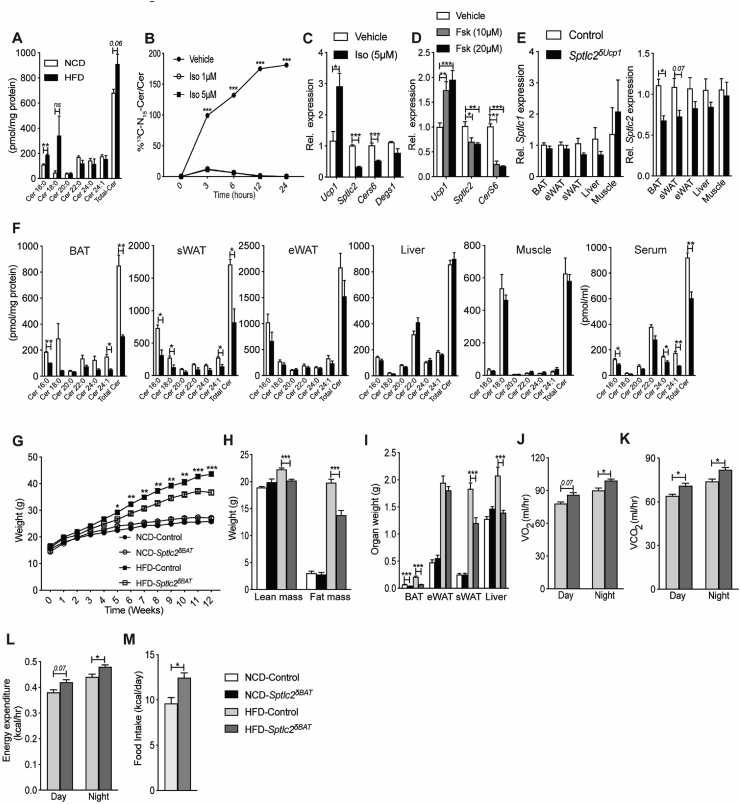
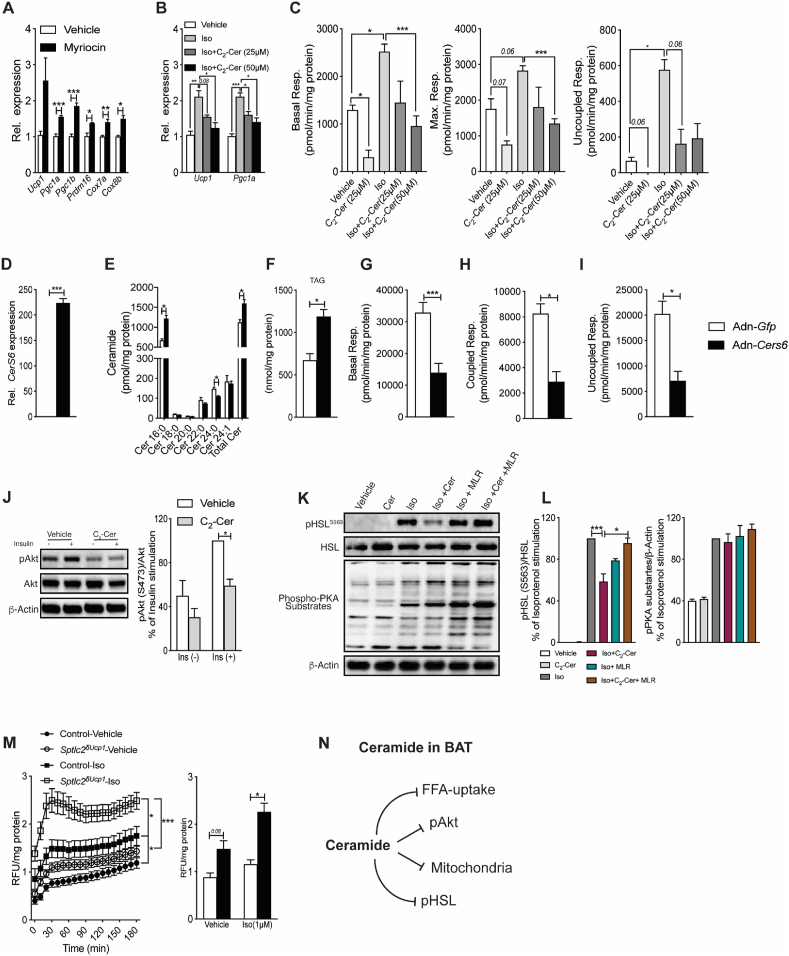
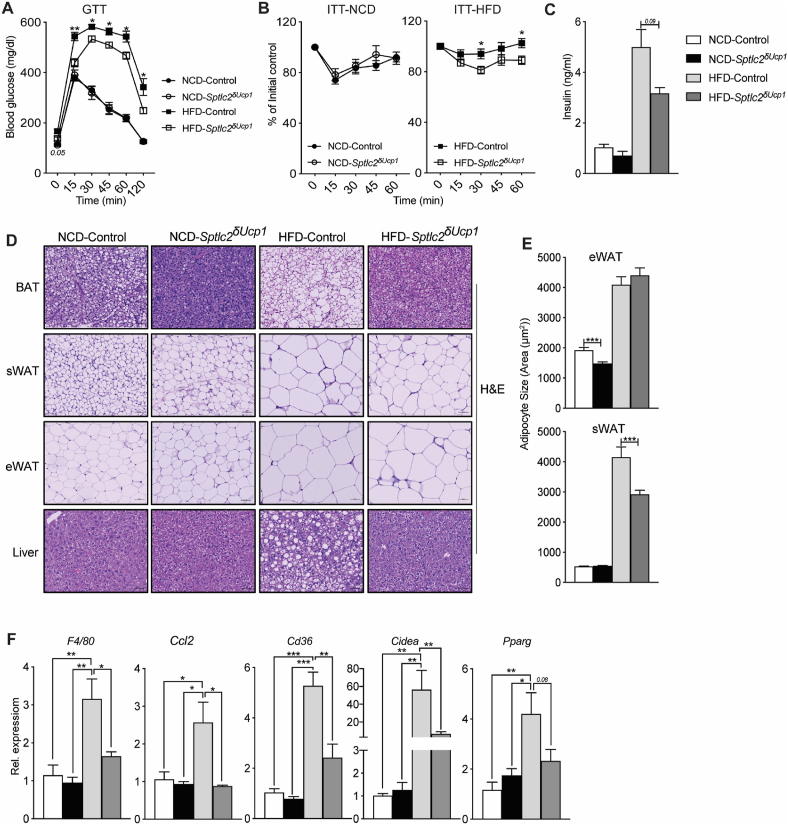
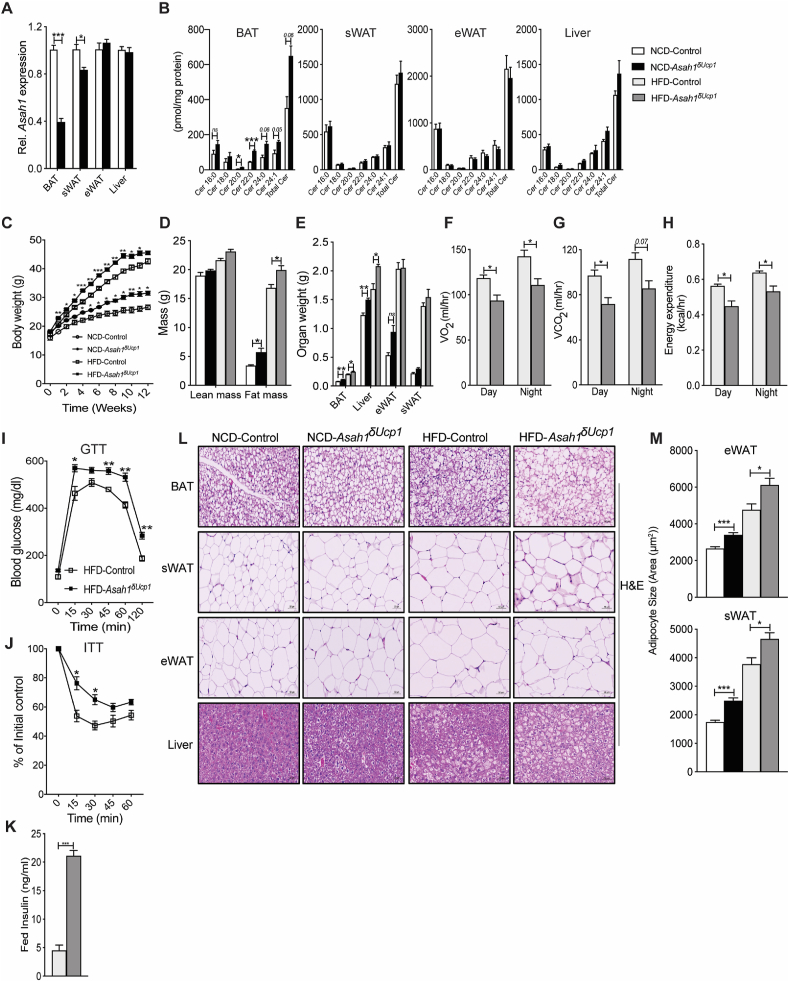
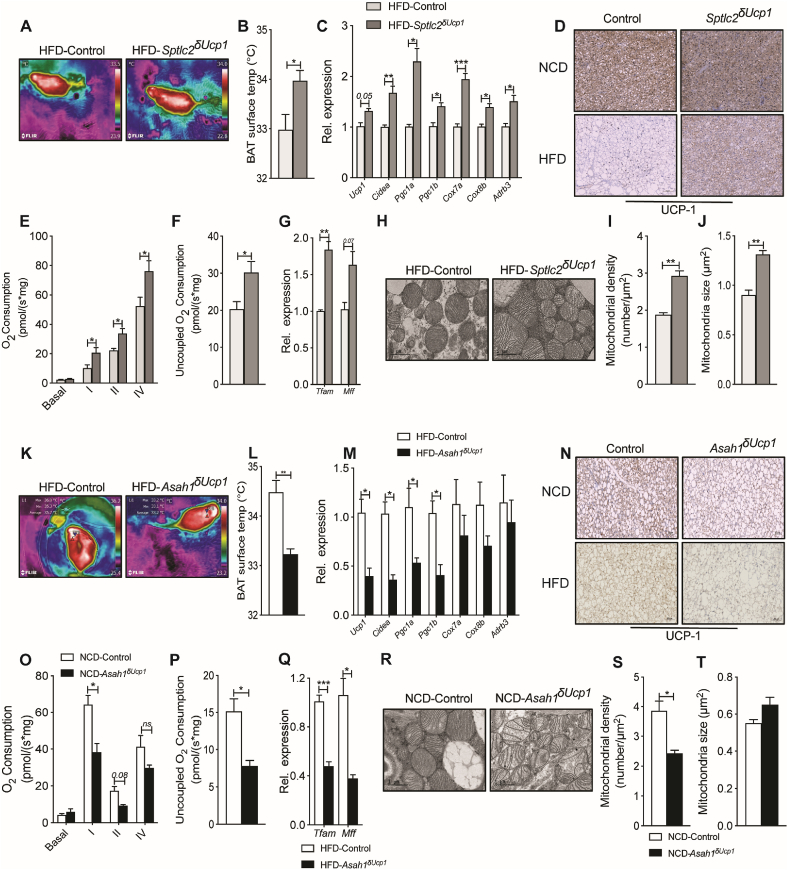
Depletion of Sptlc2 increased energy expenditure, improved glucose homeostasis, and prevented diet-induced obesity. Conversely, depletion of Asah1 led to ceramide accumulation, diminution of energy expenditure, and exacerbation of insulin resistance and obesity. Mechanistically, ceramides slowed lipolysis, inhibited glucose uptake, and decreased mitochondrial respiration. Moreover, β-adrenergic receptor agonists, which activate thermogenesis in brown adipocytes, decreased transcription of enzymes required for ceramide synthesis.
These studies support our hypothesis that ceramides are necessary and sufficient for the impairment in thermogenic adipocyte function that accompanies obesity. Moreover, they suggest that implementation of therapeutic strategies to block ceramide synthesis in thermogenic adipocytes may serve as a means of improving adipose health and combating obesity and cardiometabolic disease.
衰老和体重增加导致棕色和米色脂肪细胞功能下降,从而加剧肥胖和胰岛素抵抗。我们试图确定鞘脂,如神经酰胺,这是一类在衰老和营养过剩中积累的脂质代谢物,是否足以或必需代谢损伤这些产热脂肪细胞。
我们生成了新的小鼠模型,允许条件性敲除鞘脂合成所需的基因(即丝氨酸棕榈酰转移酶亚基 2,Sptlc2)或降解(即酸性神经酰胺酶 1,Asah1)从成熟的、产热脂肪细胞(即表达解偶联蛋白 1 的细胞)。小鼠进行了一系列综合表型分析方案,以评估能量消耗和葡萄糖和脂质代谢稳态。在原代棕色脂肪细胞中进行了补充研究,以剖析控制神经酰胺合成或作用的机制。
Sptlc2 的耗竭增加了能量消耗,改善了葡萄糖代谢,并预防了饮食诱导的肥胖。相反,Asah1 的耗竭导致神经酰胺积累,能量消耗减少,并加剧了胰岛素抵抗和肥胖。从机制上讲,神经酰胺会减缓脂肪分解,抑制葡萄糖摄取,并减少线粒体呼吸。此外,β-肾上腺素能受体激动剂可激活棕色脂肪细胞的产热作用,降低神经酰胺合成所需酶的转录。
这些研究支持我们的假设,即神经酰胺是肥胖相关产热脂肪细胞功能障碍的必要和充分条件。此外,它们表明,实施治疗策略以阻断产热脂肪细胞中的神经酰胺合成可能是改善脂肪健康和防治肥胖和代谢性心血管疾病的一种手段。