
心肌细胞来源的外泌体 miR-19a-3p 通过靶向 HIF-1α 抑制促进心肌梗死后小鼠的血管生成和改善心功能。
Inhibition of Exo-miR-19a-3p derived from cardiomyocytes promotes angiogenesis and improves heart function in mice with myocardial infarction via targeting HIF-1α.
机构信息
Department of Cardiovascular Medicine, Affiliated Hospital of North Sichuan Medical College, Nanchong, Sichuan Province, China.
Department of General Practitioner, Affiliated Hospital of North Sichuan Medical College, Nanchong, Sichuan Province, China.
出版信息
Aging (Albany NY). 2020 Dec 11;12(23):23609-23618. doi: 10.18632/aging.103563.
BACKGROUND
Myocardial infarction (MI), a common presentation for cardiovascular disease, is caused by reduction of blood flow and oxygen supply and is one of the main causes of death worldwide. MicroRNAs participate in multiple physiological and pathological processed and play crucial role in myocardial infarction.
RESULTS
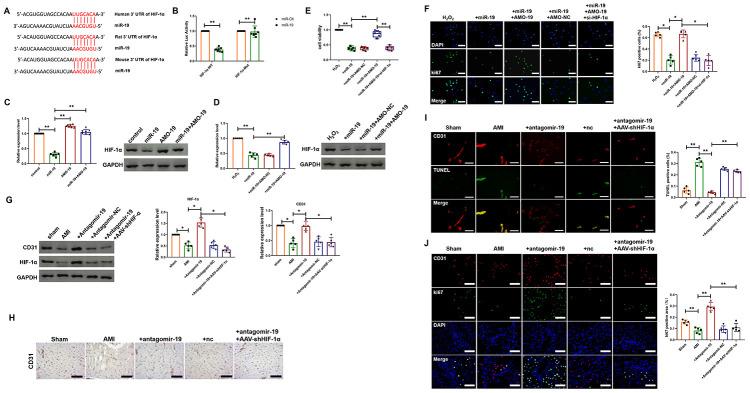
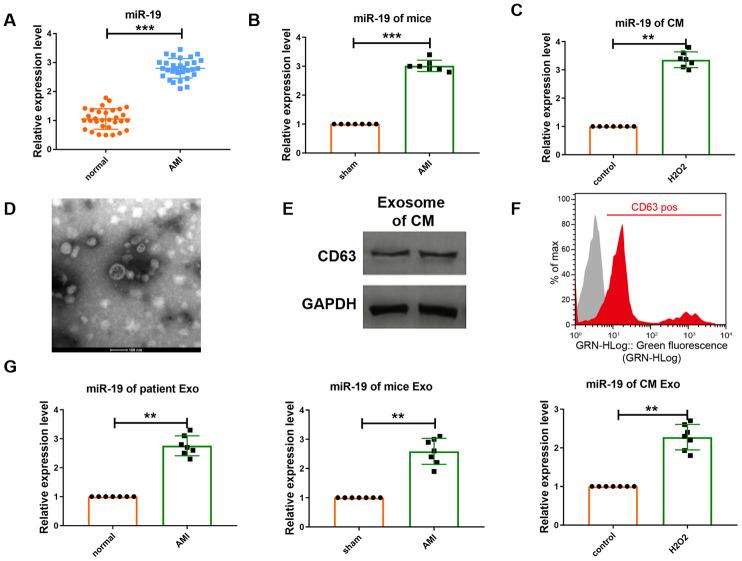
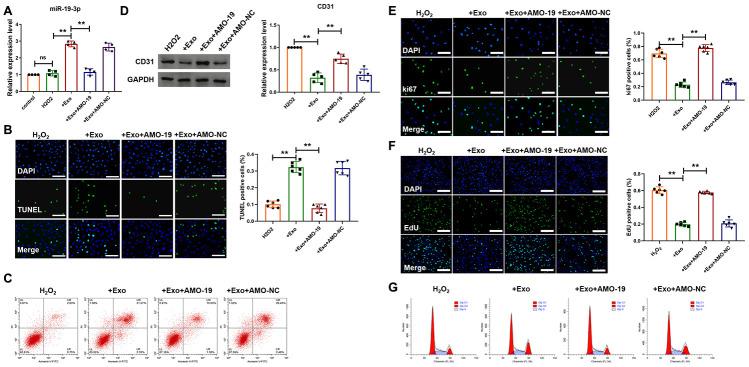
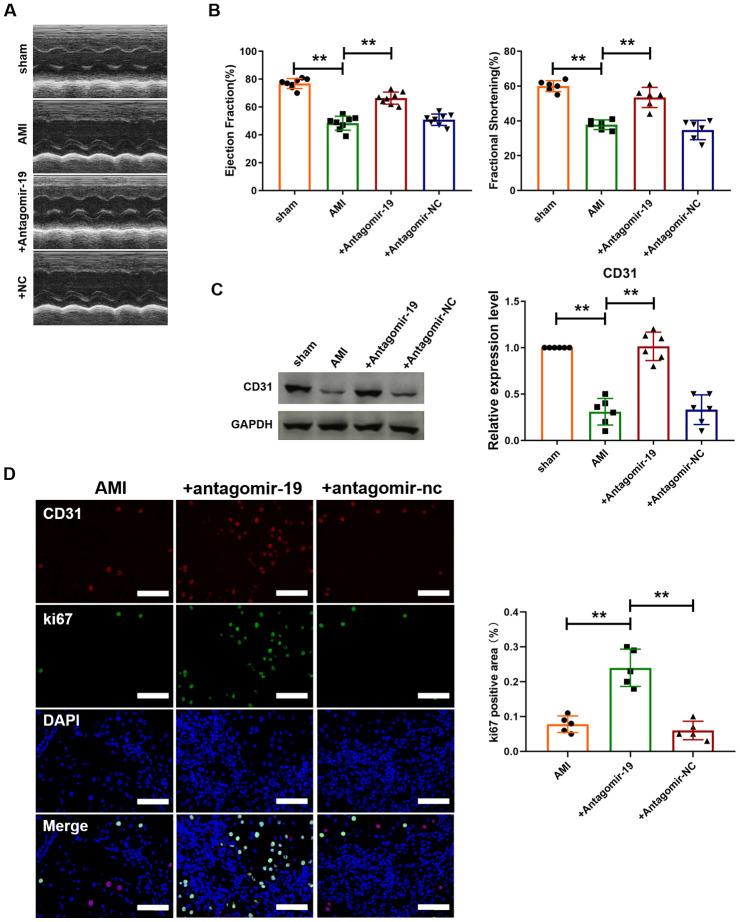
qRT-PCR analysis showed that expression level of miR-19a-3p was increased in serum of patient with MI. study indicated that the miR-19a-3p level was upregulated in response to HO treatment and transferred by exosome, and then, uptake occurred in endothelial cells. Furthermore, western blot and immunostaining showed that treatment of exosome enriched miR-19a-3p suppressed the proliferation of endothelial cells and induced cell death, which was inhibited by AMO-19 transfection. Administration of antagomiR-19a-3p promoted angiogenesis and improved heart function of MI mice. Moreover, miR-19a-3p overexpression downregulated the protein level of HIF-1α and transfection of si-HIF-1α reversed the promotion of endothelial cells proliferation caused by AMO-19 transfection. In addition, antagomiR-19a-3p treatment accelerated angiogenesis and infection of AAV5-shHIF-1α inhibited that effect in MI mice.
CONCLUSIONS
In conclusion, our finding indicated that miR-19a-3p inhibited endothelial cells proliferation and angiogenesis via targeting HIF-1α and attenuated heart function of mice after MI, and suggested a new mechanism of cell-to-cell communication between cardiomyocytes and endothelial cells.
背景
心肌梗死(MI)是心血管疾病的常见表现,由血流和氧气供应减少引起,是全球主要死亡原因之一。microRNAs 参与多种生理和病理过程,在心肌梗死中发挥关键作用。
结果
qRT-PCR 分析显示,MI 患者血清中 miR-19a-3p 的表达水平升高。研究表明,HO 处理后 miR-19a-3p 水平上调,并通过外泌体转移,然后在内皮细胞中摄取。此外,western blot 和免疫染色显示,富含 miR-19a-3p 的外泌体处理抑制内皮细胞增殖并诱导细胞死亡,而 AMO-19 转染可抑制该作用。给予 antagomiR-19a-3p 可促进血管生成并改善 MI 小鼠的心脏功能。此外,miR-19a-3p 过表达下调 HIF-1α 的蛋白水平,而 si-HIF-1α 的转染可逆转 AMO-19 转染引起的内皮细胞增殖促进作用。此外,antagomiR-19a-3p 处理可加速血管生成,而 AAV5-shHIF-1α 的感染抑制了 MI 小鼠中的该作用。
结论
总之,我们的研究结果表明,miR-19a-3p 通过靶向 HIF-1α 抑制内皮细胞增殖和血管生成,减轻 MI 后小鼠的心脏功能,并提示了心肌细胞和内皮细胞之间细胞间通讯的新机制。
 Zotero 插件