• 文献检索
  • 文档翻译
  • 深度研究
  • 学术资讯
  • Suppr Zotero 插件Zotero 插件
  • 邀请有礼
  • 套餐&价格
  • 历史记录
应用&插件
Suppr Zotero 插件Zotero 插件浏览器插件Mac 客户端Windows 客户端微信小程序
定价
高级版会员购买积分包购买API积分包
服务
文献检索文档翻译深度研究API 文档MCP 服务
关于我们
关于 Suppr公司介绍联系我们用户协议隐私条款
关注我们

Suppr 超能文献

核心技术专利:CN118964589B侵权必究
粤ICP备2023148730 号-1Suppr @ 2026

文献检索

告别复杂PubMed语法,用中文像聊天一样搜索,搜遍4000万医学文献。AI智能推荐,让科研检索更轻松。

立即免费搜索

文件翻译

保留排版,准确专业,支持PDF/Word/PPT等文件格式,支持 12+语言互译。

免费翻译文档

深度研究

AI帮你快速写综述,25分钟生成高质量综述,智能提取关键信息,辅助科研写作。

立即免费体验

亚洲乳腺癌的分子图谱揭示了具有临床相关性的人群特异性差异。

The molecular landscape of Asian breast cancers reveals clinically relevant population-specific differences.

机构信息

Cancer Research Malaysia, No. 1, Jalan SS12/1A, 47500, Subang Jaya, Malaysia.

University Malaya Cancer Research Institute, Faculty of Medicine, University Malaya, Kuala Lumpur, Malaysia.

出版信息

Nat Commun. 2020 Dec 22;11(1):6433. doi: 10.1038/s41467-020-20173-5.

DOI:10.1038/s41467-020-20173-5
PMID:33353943
原文链接:https://pmc.ncbi.nlm.nih.gov/articles/PMC7755902/
Abstract

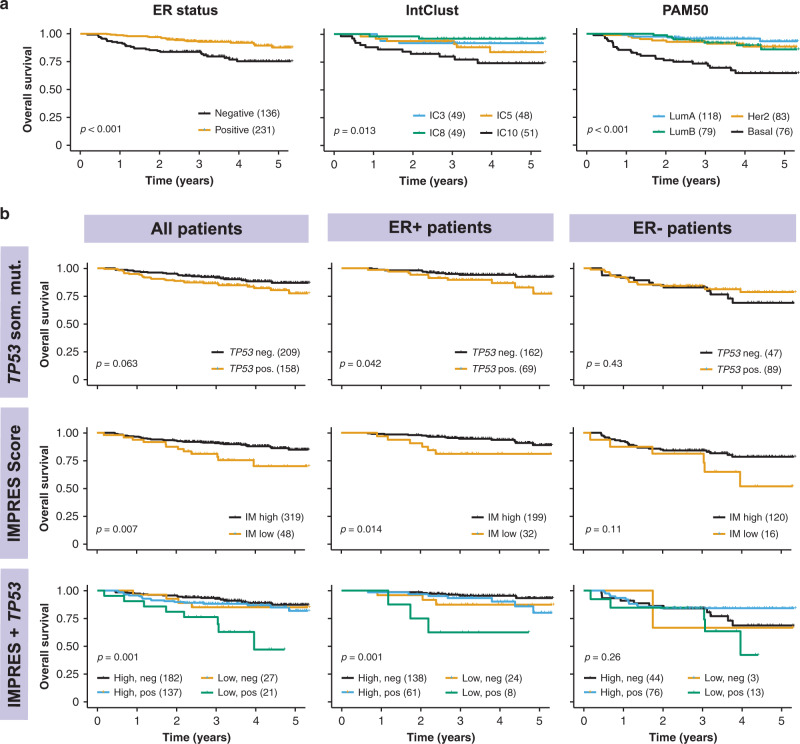
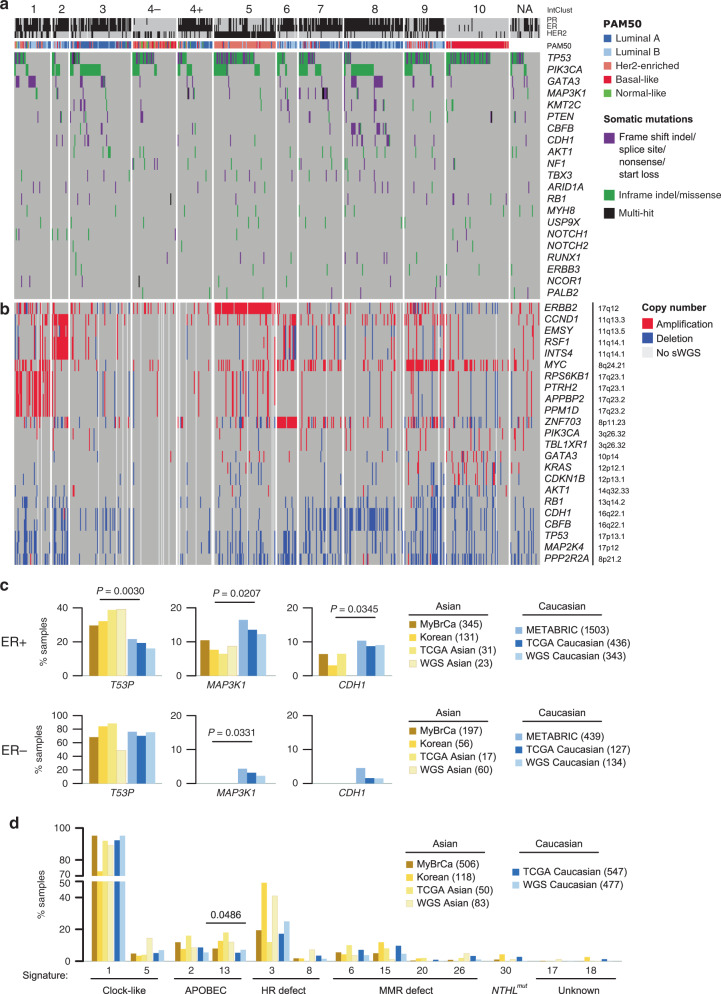
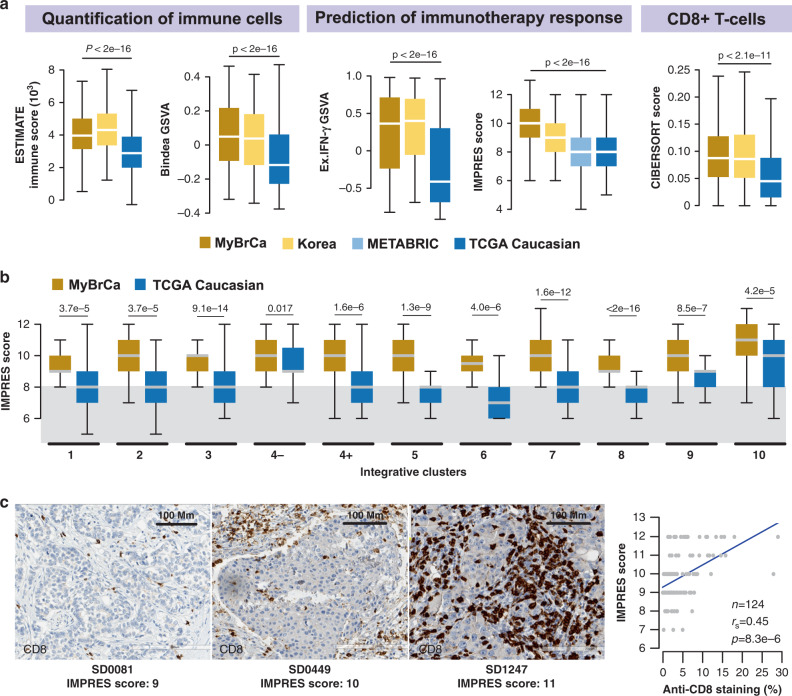
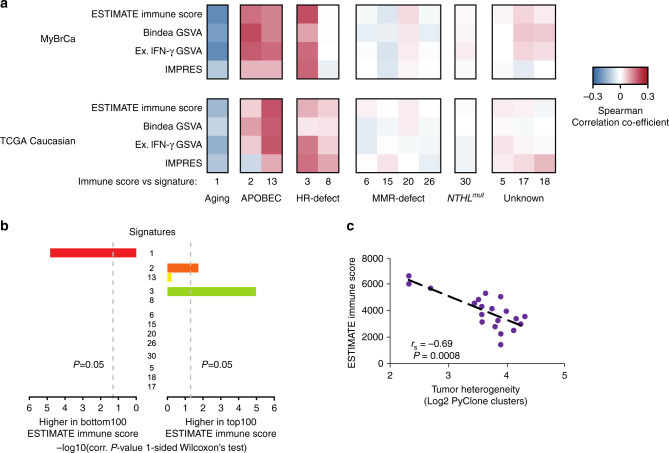
Molecular profiling of breast cancer has enabled the development of more robust molecular prognostic signatures and therapeutic options for breast cancer patients. However, non-Caucasian populations remain understudied. Here, we present the mutational, transcriptional, and copy number profiles of 560 Malaysian breast tumours and a comparative analysis of breast cancers arising in Asian and Caucasian women. Compared to breast tumours in Caucasian women, we show an increased prevalence of HER2-enriched molecular subtypes and higher prevalence of TP53 somatic mutations in ER+ Asian breast tumours. We also observe elevated immune scores in Asian breast tumours, suggesting potential clinical response to immune checkpoint inhibitors. Whilst HER2-subtype and enriched immune score are associated with improved survival, presence of TP53 somatic mutations is associated with poorer survival in ER+ tumours. Taken together, these population differences unveil opportunities to improve the understanding of this disease and lay the foundation for precision medicine in different populations.

摘要

乳腺癌的分子谱分析使乳腺癌患者的更强大的分子预后特征和治疗选择成为可能。然而,非白种人群的研究仍然不足。在这里,我们展示了 560 例马来西亚乳腺癌肿瘤的突变、转录和拷贝数图谱,并对亚洲和白种人女性乳腺癌进行了比较分析。与白种人女性的乳腺癌相比,我们发现 ER+亚洲乳腺癌中 HER2 富集的分子亚型更为普遍,TP53 体细胞突变的发生率更高。我们还观察到亚洲乳腺癌中免疫评分升高,提示对免疫检查点抑制剂有潜在的临床反应。虽然 HER2 亚型和丰富的免疫评分与生存改善相关,但 ER+肿瘤中存在 TP53 体细胞突变与生存较差相关。总之,这些人群差异揭示了改善对该疾病认识的机会,并为不同人群的精准医学奠定了基础。
https://cdn.ncbi.nlm.nih.gov/pmc/blobs/ac0a/7755902/bf49c8537ccc/41467_2020_20173_Fig5_HTML.jpg
https://cdn.ncbi.nlm.nih.gov/pmc/blobs/ac0a/7755902/ef3196b7ea68/41467_2020_20173_Fig1_HTML.jpg
https://cdn.ncbi.nlm.nih.gov/pmc/blobs/ac0a/7755902/a57db367ec5d/41467_2020_20173_Fig2_HTML.jpg
https://cdn.ncbi.nlm.nih.gov/pmc/blobs/ac0a/7755902/e680592f6de1/41467_2020_20173_Fig3_HTML.jpg
https://cdn.ncbi.nlm.nih.gov/pmc/blobs/ac0a/7755902/913ca235c417/41467_2020_20173_Fig4_HTML.jpg
https://cdn.ncbi.nlm.nih.gov/pmc/blobs/ac0a/7755902/bf49c8537ccc/41467_2020_20173_Fig5_HTML.jpg
https://cdn.ncbi.nlm.nih.gov/pmc/blobs/ac0a/7755902/ef3196b7ea68/41467_2020_20173_Fig1_HTML.jpg
https://cdn.ncbi.nlm.nih.gov/pmc/blobs/ac0a/7755902/a57db367ec5d/41467_2020_20173_Fig2_HTML.jpg
https://cdn.ncbi.nlm.nih.gov/pmc/blobs/ac0a/7755902/e680592f6de1/41467_2020_20173_Fig3_HTML.jpg
https://cdn.ncbi.nlm.nih.gov/pmc/blobs/ac0a/7755902/913ca235c417/41467_2020_20173_Fig4_HTML.jpg
https://cdn.ncbi.nlm.nih.gov/pmc/blobs/ac0a/7755902/bf49c8537ccc/41467_2020_20173_Fig5_HTML.jpg

相似文献

1
The molecular landscape of Asian breast cancers reveals clinically relevant population-specific differences.亚洲乳腺癌的分子图谱揭示了具有临床相关性的人群特异性差异。
Nat Commun. 2020 Dec 22;11(1):6433. doi: 10.1038/s41467-020-20173-5.
2
TP53 somatic mutations in Asian breast cancer are associated with subtype-specific effects.亚洲乳腺癌中的 TP53 体细胞突变与亚型特异性效应相关。
Breast Cancer Res. 2023 Apr 26;25(1):48. doi: 10.1186/s13058-023-01635-2.
3
Clustering of HR + /HER2- breast cancer in an Asian cohort is driven by immune phenotypes.亚洲队列中HR + /HER2-乳腺癌的聚类由免疫表型驱动。
Breast Cancer Res. 2024 Apr 22;26(1):67. doi: 10.1186/s13058-024-01826-5.
4
Multi-omics profiling of younger Asian breast cancers reveals distinctive molecular signatures.亚洲年轻乳腺癌的多组学特征分析揭示了独特的分子特征。
Nat Commun. 2018 Apr 30;9(1):1725. doi: 10.1038/s41467-018-04129-4.
5
Comparison of Breast Cancer Molecular Features and Survival by African and European Ancestry in The Cancer Genome Atlas.《癌症基因组图谱》中非洲裔和欧洲裔人群乳腺癌分子特征与生存的比较。
JAMA Oncol. 2017 Dec 1;3(12):1654-1662. doi: 10.1001/jamaoncol.2017.0595.
6
Conservation of breast cancer molecular subtypes and transcriptional patterns of tumor progression across distinct ethnic populations.不同种族人群中乳腺癌分子亚型的保守性及肿瘤进展的转录模式
Clin Cancer Res. 2004 Aug 15;10(16):5508-17. doi: 10.1158/1078-0432.CCR-04-0085.
7
Genomic profiling and comparative analysis of male versus female metastatic breast cancer across subtypes.基于不同亚型的男性与女性转移性乳腺癌的基因组分析与比较。
Breast Cancer Res. 2024 Jul 24;26(1):118. doi: 10.1186/s13058-024-01872-z.
8
HER2-enriched subtype and novel molecular subgroups drive aromatase inhibitor resistance and an increased risk of relapse in early ER+/HER2+ breast cancer.富含 HER2 的亚型和新型分子亚群可导致早期 ER+/HER2+乳腺癌对芳香化酶抑制剂产生耐药性,并增加复发风险。
EBioMedicine. 2022 Sep;83:104205. doi: 10.1016/j.ebiom.2022.104205. Epub 2022 Aug 16.
9
Mutant p53 accumulation in human breast cancer is not an intrinsic property or dependent on structural or functional disruption but is regulated by exogenous stress and receptor status.人类乳腺癌中突变型p53的积累并非内在特性,也不依赖于结构或功能破坏,而是受外源性应激和受体状态调控。
J Pathol. 2014 Jul;233(3):238-46. doi: 10.1002/path.4356. Epub 2014 May 21.
10
p53 accumulation is a strong predictor of recurrence in estrogen receptor-positive breast cancer patients treated with aromatase inhibitors.p53 积累是接受芳香化酶抑制剂治疗的雌激素受体阳性乳腺癌患者复发的强有力预测因子。
Cancer Sci. 2014 Jan;105(1):81-8. doi: 10.1111/cas.12302. Epub 2013 Nov 22.

引用本文的文献

1
Characterization of intra-tumoral microbiota from transcriptomic sequencing of Asian breast cancer.通过亚洲乳腺癌转录组测序对肿瘤内微生物群进行表征
Sci Rep. 2025 Aug 24;15(1):31147. doi: 10.1038/s41598-025-15877-x.
2
Characterization of Mutational Signatures in Tumors from a Large Chinese Population.中国大规模人群肿瘤中突变特征的表征
Cancer Res Commun. 2025 Aug 1;5(8):1466-1476. doi: 10.1158/2767-9764.CRC-24-0496.
3
Differences in the distribution of HER2-positive breast tumors according to ethnicity and genetic variants in : a special focus on Asian and Latina women.

本文引用的文献

1
European polygenic risk score for prediction of breast cancer shows similar performance in Asian women.欧洲多基因风险评分可预测乳腺癌,在亚洲女性中表现相似。
Nat Commun. 2020 Jul 31;11(1):3833. doi: 10.1038/s41467-020-17680-w.
2
UVB-Induced Tumor Heterogeneity Diminishes Immune Response in Melanoma.UVB 诱导的肿瘤异质性降低黑色素瘤的免疫反应。
Cell. 2019 Sep 19;179(1):219-235.e21. doi: 10.1016/j.cell.2019.08.032. Epub 2019 Sep 12.
3
Disparity in Tumor Immune Microenvironment of Breast Cancer and Prognostic Impact: Asian Versus Western Populations.
根据种族和基因变异的HER2阳性乳腺肿瘤分布差异:特别关注亚洲和拉丁裔女性。
Front Oncol. 2025 Jul 24;15:1635681. doi: 10.3389/fonc.2025.1635681. eCollection 2025.
4
Pembrolizumab monotherapy for previously treated metastatic HER2-negative breast cancer with germline deletion: results of the phase II AUROR study.帕博利珠单抗单药治疗既往接受过治疗的伴有种系缺失的转移性HER2阴性乳腺癌:II期AUROR研究结果
Lancet Reg Health West Pac. 2025 Jul 13;60:101637. doi: 10.1016/j.lanwpc.2025.101637. eCollection 2025 Jul.
5
Recent advances in breast cancer screening and treatment in the Western Pacific: challenges and opportunities.西太平洋地区乳腺癌筛查与治疗的最新进展:挑战与机遇
Lancet Reg Health West Pac. 2025 Apr 2;57:101538. doi: 10.1016/j.lanwpc.2025.101538. eCollection 2025 Apr.
6
Immunotherapy and its racial specificity for breast cancer treatment in Asia: a narrative review.免疫疗法及其在亚洲乳腺癌治疗中的种族特异性:一项叙述性综述。
Lancet Reg Health West Pac. 2024 Sep 19;57:101180. doi: 10.1016/j.lanwpc.2024.101180. eCollection 2025 Apr.
7
Potential role of CFLAR in enhancing 5-FU sensitivity and modulating immune cell infiltration in breast cancer.CFLAR在增强乳腺癌对5-氟尿嘧啶的敏感性及调节免疫细胞浸润中的潜在作用
Eur J Med Res. 2025 Apr 10;30(1):265. doi: 10.1186/s40001-025-02532-4.
8
Risk factors for early recurrence in patients with hormone receptor-positive, HER2-negative breast cancer: a retrospective cohort study in Japan (WJOG15721B).激素受体阳性、HER2阴性乳腺癌患者早期复发的危险因素:日本的一项回顾性队列研究(WJOG15721B)
Breast Cancer. 2025 Apr 10. doi: 10.1007/s12282-025-01700-y.
9
Comprehensive germline and somatic profiling of high-risk Thai breast cancer via next-generation sequencing.通过下一代测序对泰国高危乳腺癌进行全面的种系和体细胞分析。
Sci Rep. 2025 Apr 3;15(1):11427. doi: 10.1038/s41598-025-95834-w.
10
Unveiling breast cancer disparities: comparative insights from Asian and Western populations.揭示乳腺癌差异:亚洲和西方人群的比较见解。
Transl Breast Cancer Res. 2025 Jan 21;6:1. doi: 10.21037/tbcr-24-69. eCollection 2025.
乳腺癌肿瘤免疫微环境的差异及其对预后的影响:亚洲人群与西方人群的比较。
Oncologist. 2020 Jan;25(1):e16-e23. doi: 10.1634/theoncologist.2019-0123. Epub 2019 Aug 1.
4
Insights Into Breast Cancer in the East vs the West: A Review.东西方乳腺癌研究洞察:综述
JAMA Oncol. 2019 Oct 1;5(10):1489-1496. doi: 10.1001/jamaoncol.2019.0620.
5
Dynamics of breast-cancer relapse reveal late-recurring ER-positive genomic subgroups.乳腺癌复发的动力学揭示了晚期复发的 ER 阳性基因组亚群。
Nature. 2019 Mar;567(7748):399-404. doi: 10.1038/s41586-019-1007-8. Epub 2019 Mar 13.
6
Genomic and Transcriptomic Landscape of Triple-Negative Breast Cancers: Subtypes and Treatment Strategies.三阴性乳腺癌的基因组和转录组全景:亚型和治疗策略。
Cancer Cell. 2019 Mar 18;35(3):428-440.e5. doi: 10.1016/j.ccell.2019.02.001. Epub 2019 Mar 7.
7
Comparison of breast cancer risk factors among molecular subtypes: A case-only study.分子亚型乳腺癌危险因素比较:病例对照研究。
Cancer Med. 2019 Apr;8(4):1882-1892. doi: 10.1002/cam4.2012. Epub 2019 Feb 14.
8
Prevalence and clinical outcomes of germline mutations in BRCA1/2 and PALB2 genes in 2769 unselected breast cancer patients in China.在中国 2769 例未经选择的乳腺癌患者中,BRCA1/2 和 PALB2 基因种系突变的流行率和临床结局。
Int J Cancer. 2019 Sep 15;145(6):1517-1528. doi: 10.1002/ijc.32184. Epub 2019 Feb 22.
9
Molecular landmarks of tumor hypoxia across cancer types.肿瘤缺氧的分子标志物在各种癌症类型中。
Nat Genet. 2019 Feb;51(2):308-318. doi: 10.1038/s41588-018-0318-2. Epub 2019 Jan 14.
10
MDM2, MDM2-C, and mutant p53 expression influence breast cancer survival in a multiethnic population.MDM2、MDM2-C 和突变型 p53 的表达影响多民族人群乳腺癌的生存。
Breast Cancer Res Treat. 2019 Feb;174(1):257-269. doi: 10.1007/s10549-018-5065-7. Epub 2018 Nov 23.