Graduate School of Heilongjiang University of Chinese Medicine, Harbin, Heilongjiang, China.
Institute of traditional Chinese Medicine, Heilongjiang University of Chinese Medicine, Harbin, Heilongjiang, China.
Technol Cancer Res Treat. 2020 Jan-Dec;19:1533033820984177. doi: 10.1177/1533033820984177.
The incidence of colorectal cancer is increasing every year, and autophagy may be related closely to the pathogenesis of colorectal cancer. Autophagy is a natural catabolic mechanism that allows the degradation of cellular components in eukaryotic cells. However, autophagy plays a dual role in tumorigenesis. It not only promotes normal cell survival and tumor growth but also induces cell death and suppresses tumors survival. In addition, the pathogenesis of various conditions, including inflammation, neurodegenerative diseases, or tumors, is associated with abnormal autophagy. The present work aimed to examine the significance of autophagy-related genes (ARGs) in prognosis prediction, to construct an autophagy prognostic model, and to identify independent prognostic factors for colorectal cancer (CRC).
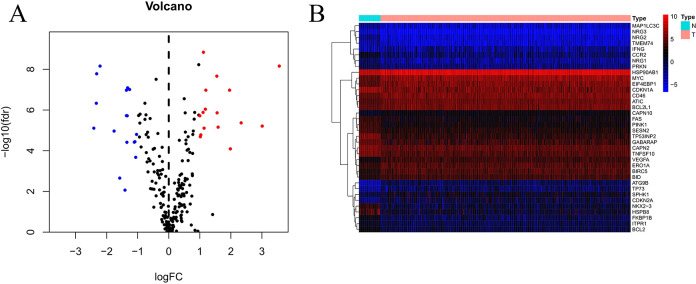
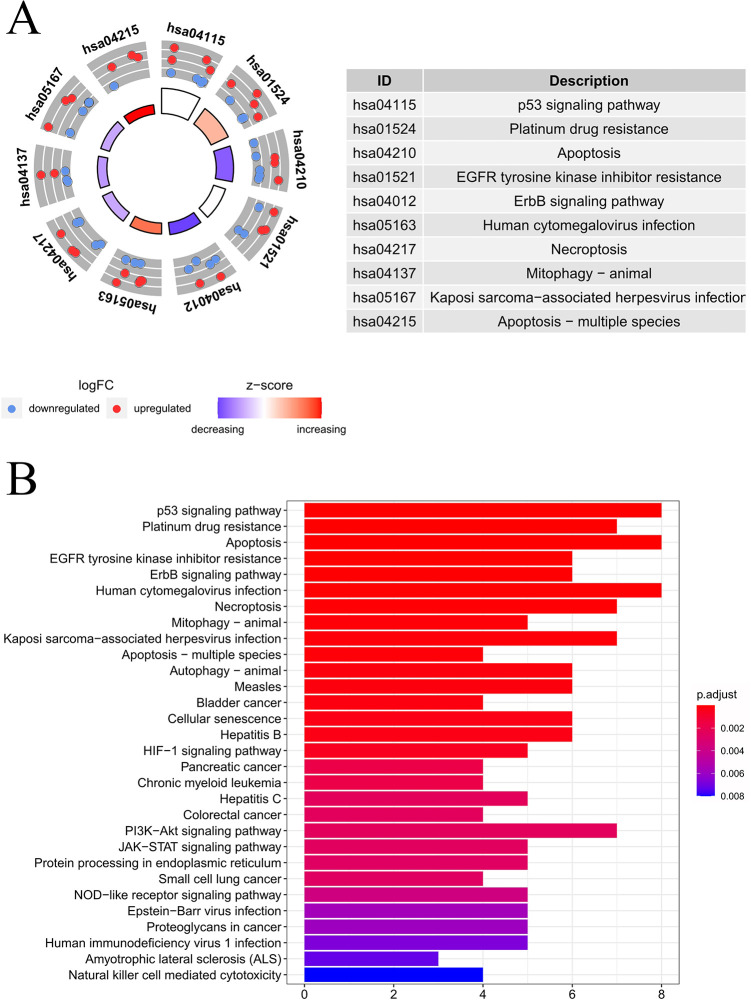
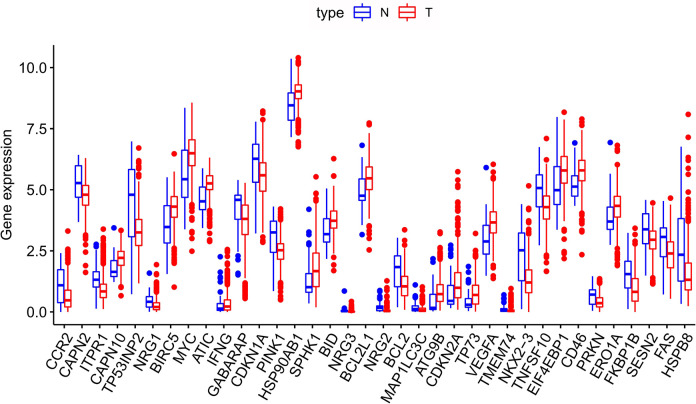
This study discovered a total of 36 ARGs in CRC cases using The Cancer Genome Atlas (TCGA) and Human Autophagy-dedicated (HADd) databases along with functional enrichment analysis. Then, an autophagy prognostic model was constructed using univariate Cox regression analysis, and the key prognostic genes were screened. Finally, independent prognostic markers were determined through independent prognostic analysis and clinical correlation analysis of key genes.
Of the 36 differentially expressed ARGs, 13 were related to prognosis, as determined by univariate Cox regression analysis. A total of 6 key genes were obtained by a multivariate Cox regression analysis. Independent prognostic values were shown by 3 genes, namely, microtubule-associated protein 1 light chain 3 (MAP1LC3C), small GTPase superfamily and Rab family (RAB7A), and WD-repeat domain phosphoinositide-interacting protein 2 (WIPI2) by independent prognostic analysis and clinical correlation.
In this study, molecular bioinformatics technology was employed to determine and construct a prognostic model of autophagy for colon cancer patients, which revealed 3 autophagy-related features, namely, MAP1LC3C, WIPI2, and RAB7A.
结直肠癌的发病率逐年上升,自噬可能与结直肠癌的发病机制密切相关。自噬是一种天然的分解代谢机制,允许真核细胞中细胞成分的降解。然而,自噬在肿瘤发生中起双重作用。它不仅促进正常细胞存活和肿瘤生长,还诱导细胞死亡并抑制肿瘤存活。此外,包括炎症、神经退行性疾病或肿瘤在内的各种疾病的发病机制与异常自噬有关。本工作旨在研究自噬相关基因(ARGs)在预后预测中的意义,构建自噬预后模型,并确定结直肠癌(CRC)的独立预后因素。
本研究使用癌症基因组图谱(TCGA)和人类自噬专用(HADd)数据库,结合功能富集分析,共发现 36 个 CRC 病例中的 ARGs。然后,使用单变量 Cox 回归分析构建自噬预后模型,并筛选关键预后基因。最后,通过关键基因的独立预后分析和临床相关性分析确定独立预后标志物。
通过单变量 Cox 回归分析,在 36 个差异表达的 ARGs 中,有 13 个与预后有关。通过多变量 Cox 回归分析共获得 6 个关键基因。通过独立预后分析和关键基因的临床相关性分析,显示出 3 个基因(微管相关蛋白 1 轻链 3(MAP1LC3C)、小 GTP 酶超家族和 Rab 家族(RAB7A)以及 WD 重复域磷酸肌醇相互作用蛋白 2(WIPI2))具有独立的预后价值。
本研究采用分子生物信息学技术确定并构建了结肠癌患者的自噬预后模型,揭示了 3 个自噬相关特征,即 MAP1LC3C、WIPI2 和 RAB7A。