Biomedical Science Laboratory, Department of Nutrition, China Medical University, Taichung, Taiwan, Republic of China.
Department of Chinese Pharmaceutical Sciences and Chinese Medicine Resources, China Medical University, Taichung, Republic of China.
PLoS One. 2020 May 13;15(5):e0232832. doi: 10.1371/journal.pone.0232832. eCollection 2020.
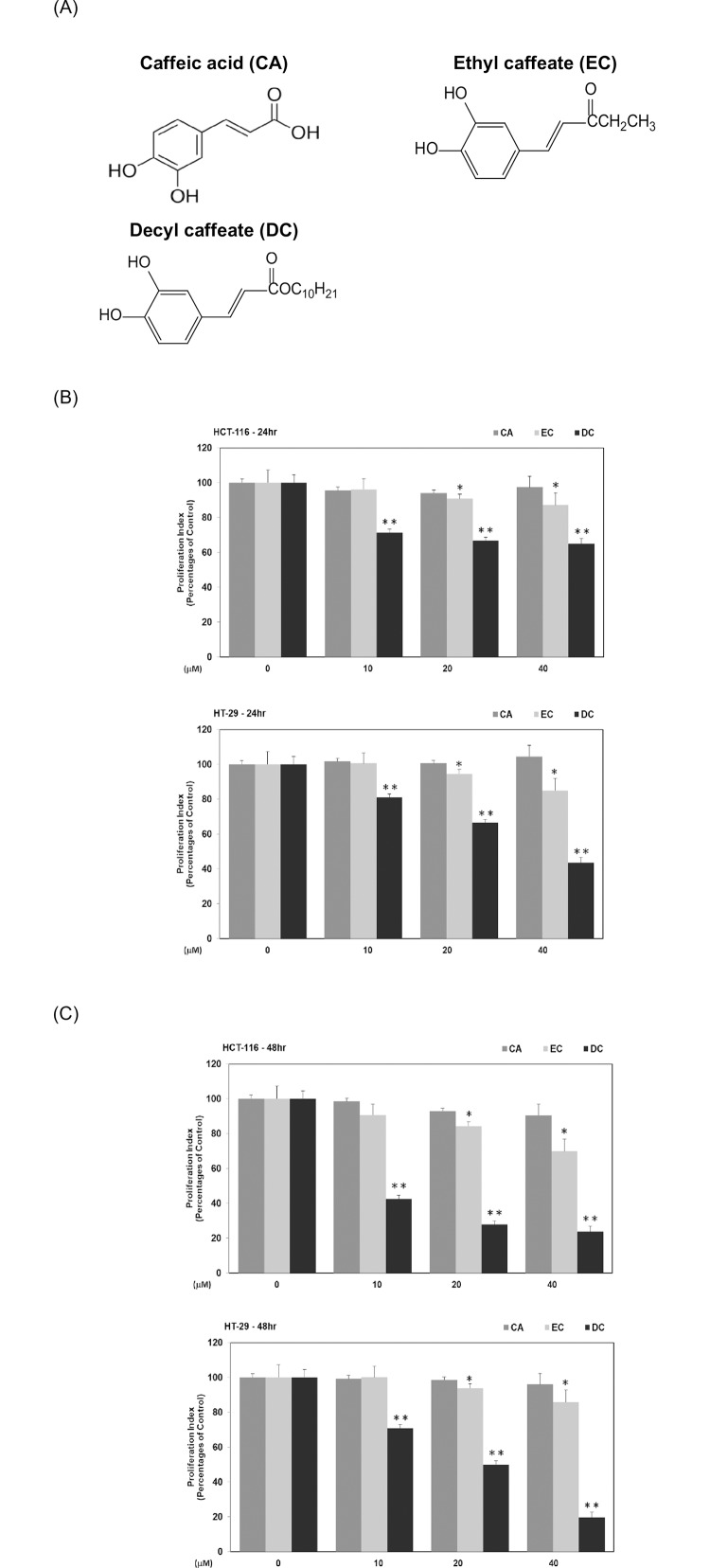
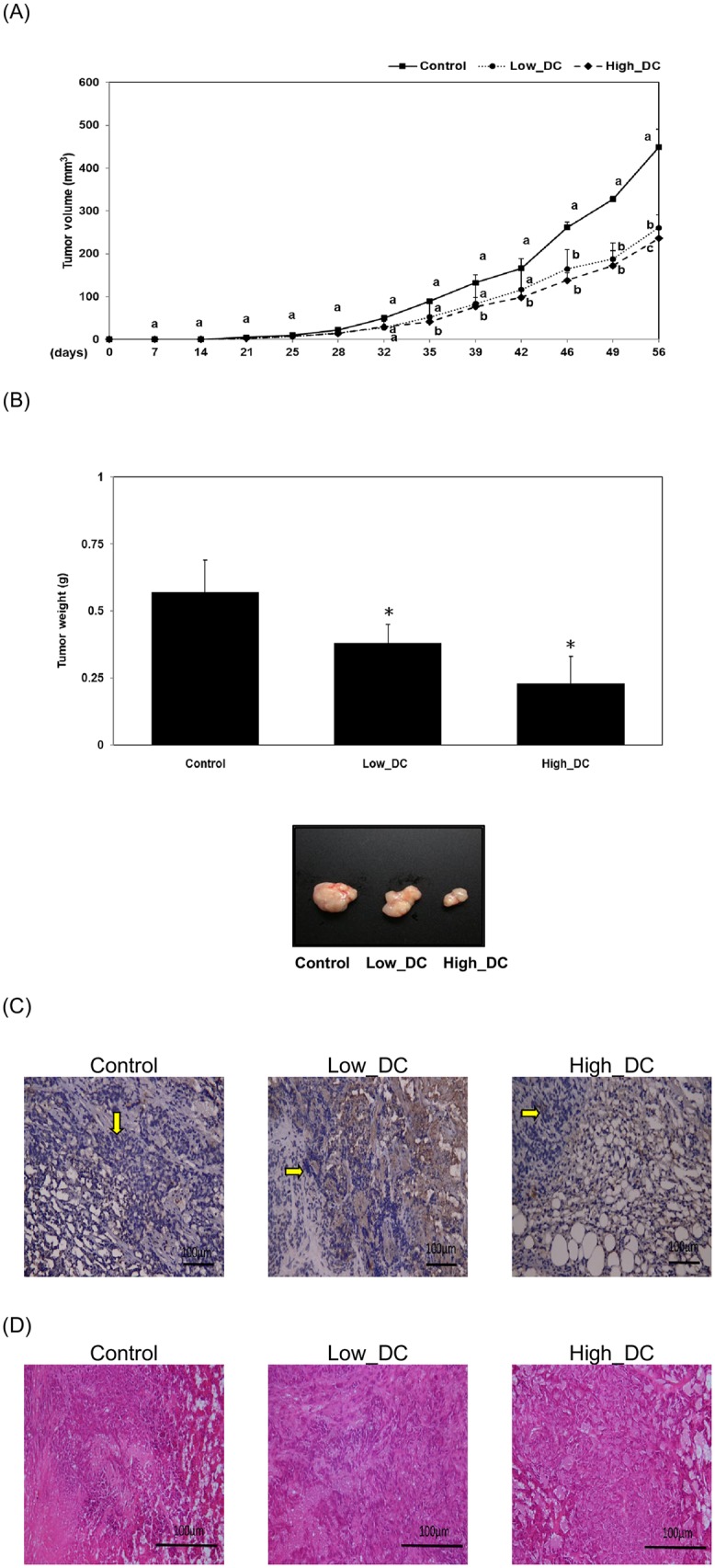
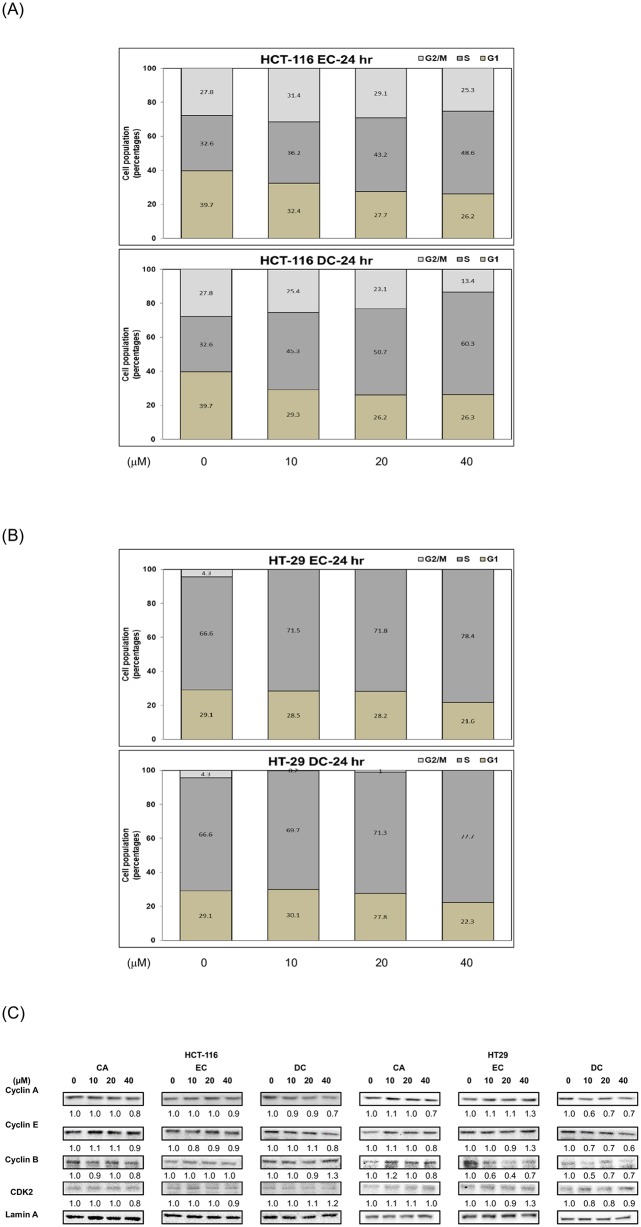
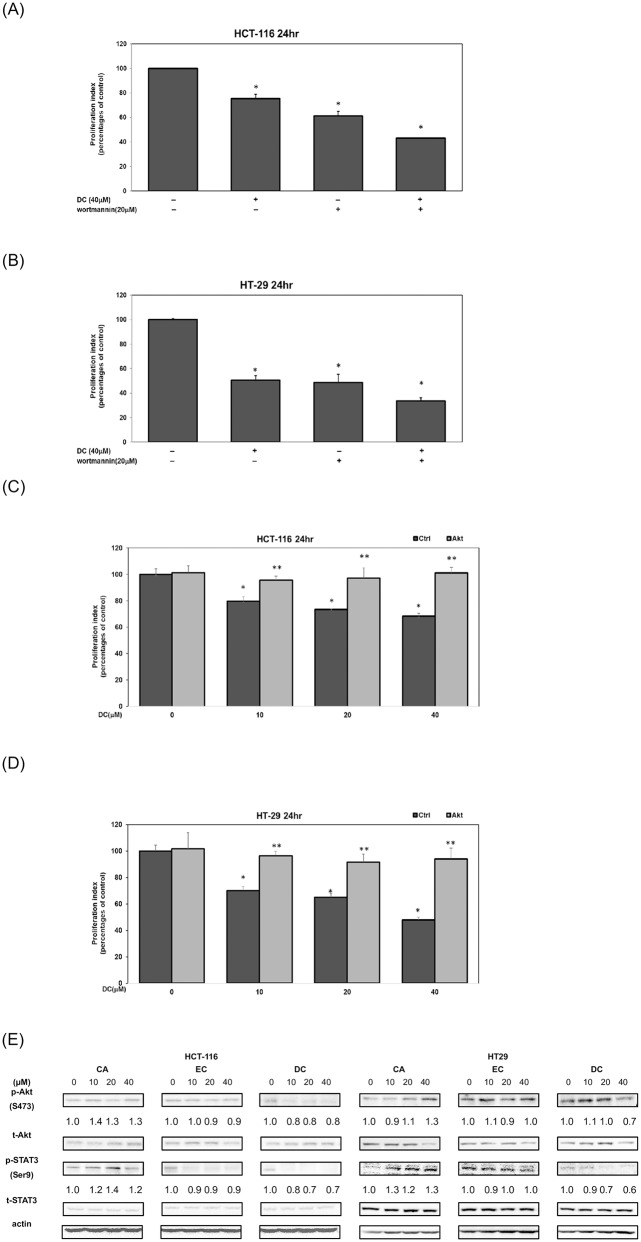
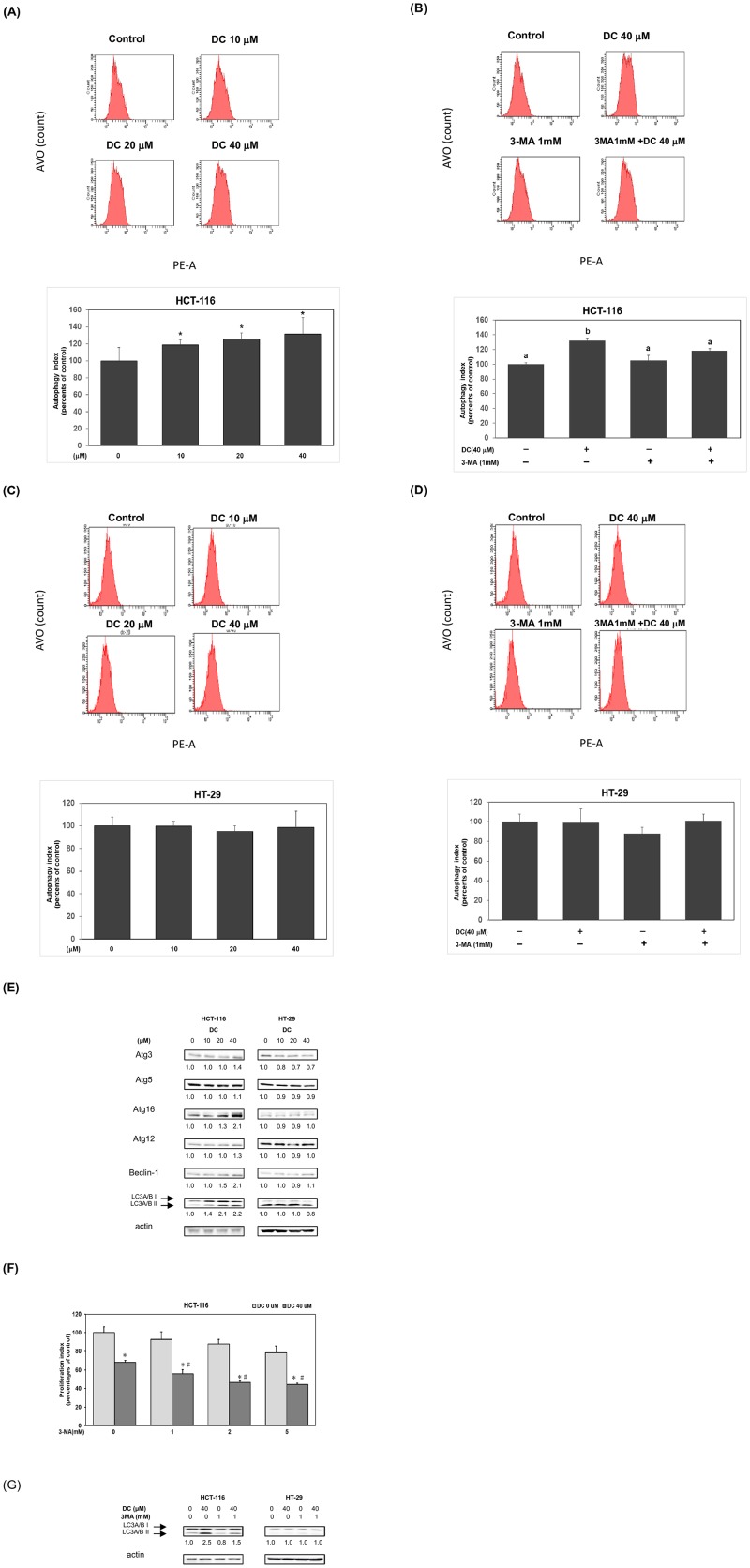
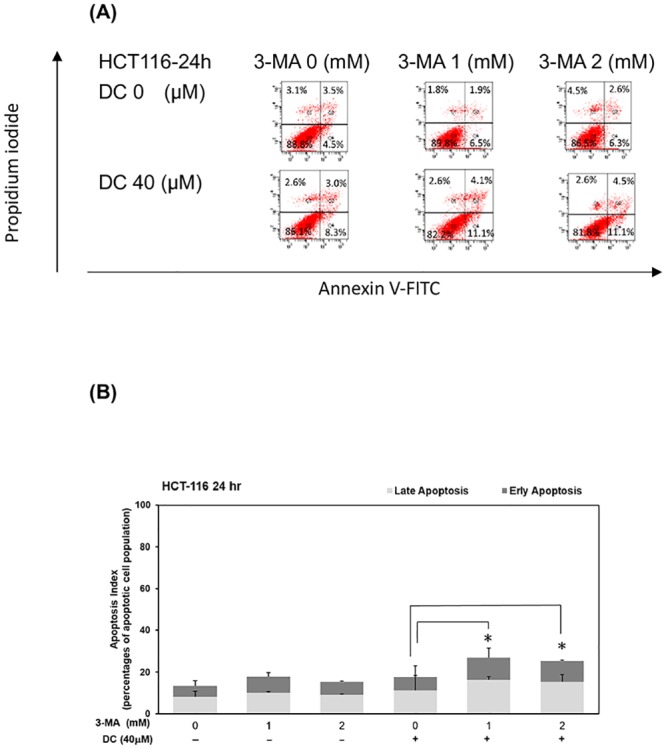
The treatment of human colorectal cancer (CRC) cells through suppressing the abnormal survival signaling pathways has recently become a significant area of focus. In this study, our results demonstrated that decyl caffeic acid (DC), one of the novel caffeic acid derivatives, remarkedly suppressed the growth of CRC cells both in vitro and in vivo. The inhibitory effects of DC on CRC cells were investigated in an in vitro cell model and in vivo using a xenograft mouse model. CRC cells were treated with DC at various dosages (0, 10, 20 and 40 μM), and cell survival, the apoptotic index and the autophagy level were measured using an MTT assay and flow cytometry analysis, respectively. The signaling cascades in CRC were examined by Western blot assay. The anti-cancer effects of DC on tumor growth were examined by using CRC HCT-116 cells implanted in an animal model. Our results indicated that DC differentially suppressed the growth of CRC HT-29 and HCT-116 cells through an enhancement of cell-cycle arrest at the S phase. DC inhibited the expression of cell-cycle regulators, which include cyclin E and cyclin A proteins. The molecular mechanisms of action were correlated to the blockade of the STAT3 and Akt signaling cascades. Strikingly, a high dosage of DC prompted a self-protection action through inducing cell-dependent autophagy in HCT-116 cells. Suppression of autophagy induced cell death in the treatment of DC in HCT-116 cells. DC seemed to inhibit cell proliferation of CRC differentially, and the therapeutic advantage appeared to be autophagy dependent. Moreover, consumption of DC blocked the tumor growth of colorectal adenocarcinoma in an experimental animal model. In conclusion, our results suggested that DC could act as a therapeutic agent through the significant suppression of tumor growth of human CRC cells.
抑制异常存活信号通路治疗人类结直肠癌(CRC)细胞最近已成为一个重要的研究领域。在本研究中,我们的结果表明,咖啡酸癸酯(DC)是一种新型咖啡酸衍生物,可显著抑制 CRC 细胞在体外和体内的生长。在体外细胞模型和体内异种移植小鼠模型中研究了 DC 对 CRC 细胞的抑制作用。用不同剂量(0、10、20 和 40 μM)的 DC 处理 CRC 细胞,通过 MTT 测定和流式细胞术分析分别测量细胞存活、凋亡指数和自噬水平。通过 Western blot 分析检查 CRC 中的信号级联。通过使用植入动物模型的 CRC HCT-116 细胞检查 DC 对肿瘤生长的抗癌作用。我们的结果表明,DC 通过增强 S 期细胞周期阻滞,差异抑制 CRC HT-29 和 HCT-116 细胞的生长。DC 抑制细胞周期调节剂的表达,包括细胞周期蛋白 E 和细胞周期蛋白 A 蛋白。作用的分子机制与 STAT3 和 Akt 信号级联的阻断有关。引人注目的是,高剂量的 DC 通过在 HCT-116 细胞中诱导细胞依赖性自噬来引发自我保护作用。在 HCT-116 细胞中用 DC 处理时,抑制自噬会诱导细胞死亡。DC 似乎以自噬依赖性的方式差异抑制 CRC 的细胞增殖,并且治疗优势似乎依赖于自噬。此外,DC 的消耗阻断了实验动物模型中结直肠腺癌的肿瘤生长。总之,我们的结果表明,DC 可以作为一种治疗剂,通过显著抑制人类 CRC 细胞的肿瘤生长来发挥作用。