Zhang Kunyu, Dai Zhaoxia, Liu Siya, Li Dan, Yang Dafu, Cui Saiqiong
The Second Affiliated Hospital of Dalian Medical University, Dalian 116021, China.
Zhongguo Fei Ai Za Zhi. 2020 Dec 20;23(12):1039-1048. doi: 10.3779/j.issn.1009-3419.2020.102.42.
The mortality rate of lung cancer meningeal metastasis is extremely high. Circulating tumor DNA (ctDNA) has been confirmed to be contain the genomic alterations present in tumors and has been used to monitor tumor progression and response to treatments. Due to the presence of blood-brain barrier and other factors, peripheral blood ctDNA cannot reflect the information of brain lesions for patients with meningeal metastases. However, cerebrospinal fluid ctDNA as a test sample can better reflect the genetic status of intracranial tumors and guide clinical targeted treatment of intracranial lesions. This study explored the feasibility of cerebrospinal fluid ctNDA for evaluating non-small cell lung cancer (NSCLC) meningeal metastasis and the potential clinical value of cerebrospinal fluid ctDNA detection in NSCLC meningeal metastasis.
A total of 21 patients with NSCLC meningeal metastasis were included. Tumor genomic variation was performed on the cerebrospinal fluid and peripheral blood samples of patients by second-generation gene sequencing technology. The situation was examined, and pathological evaluation of cerebrospinal fluid cytology and head magnetic resonance imaging (MRI) enhanced examination were performed.
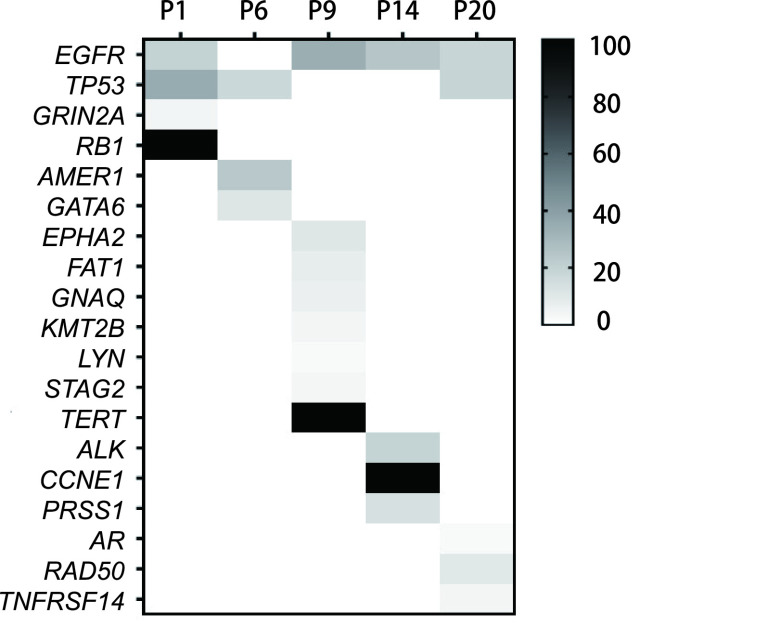
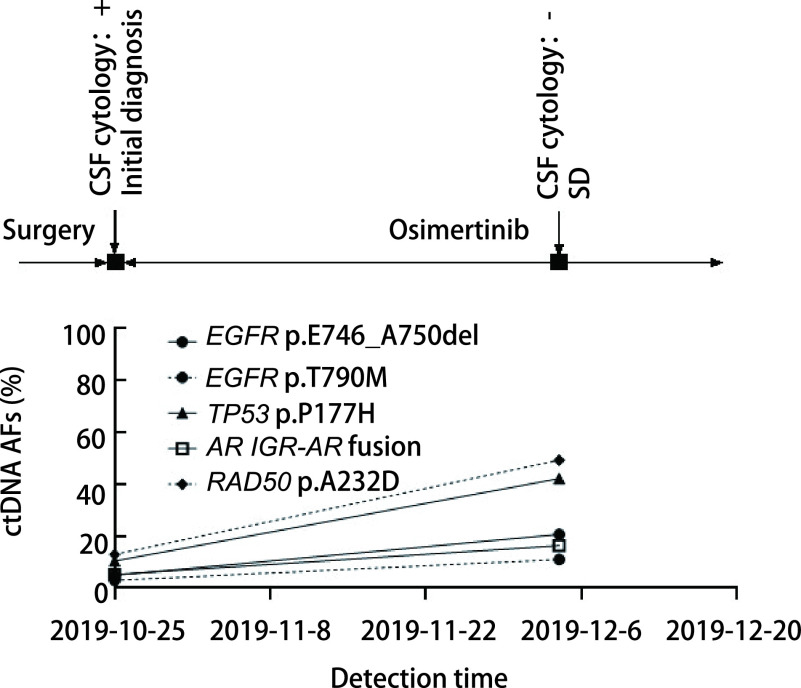
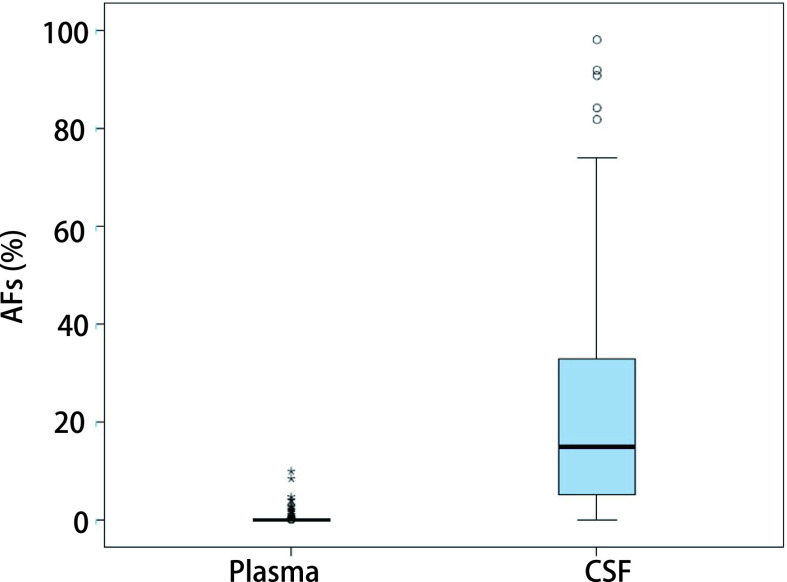
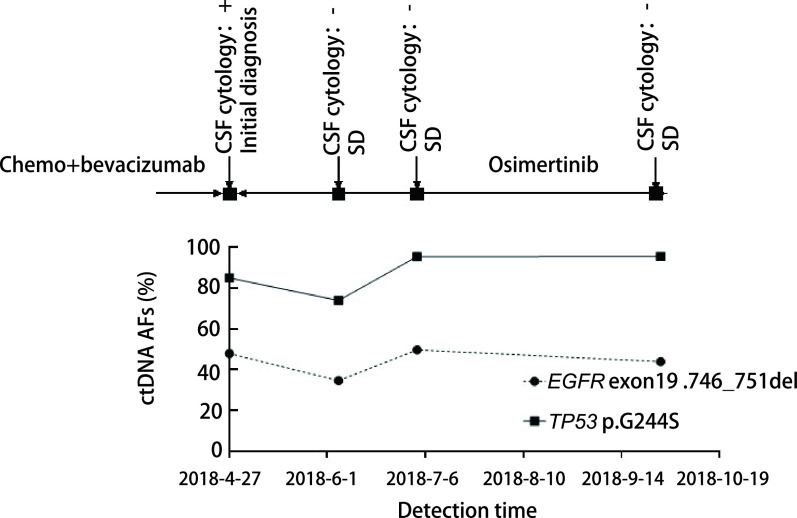
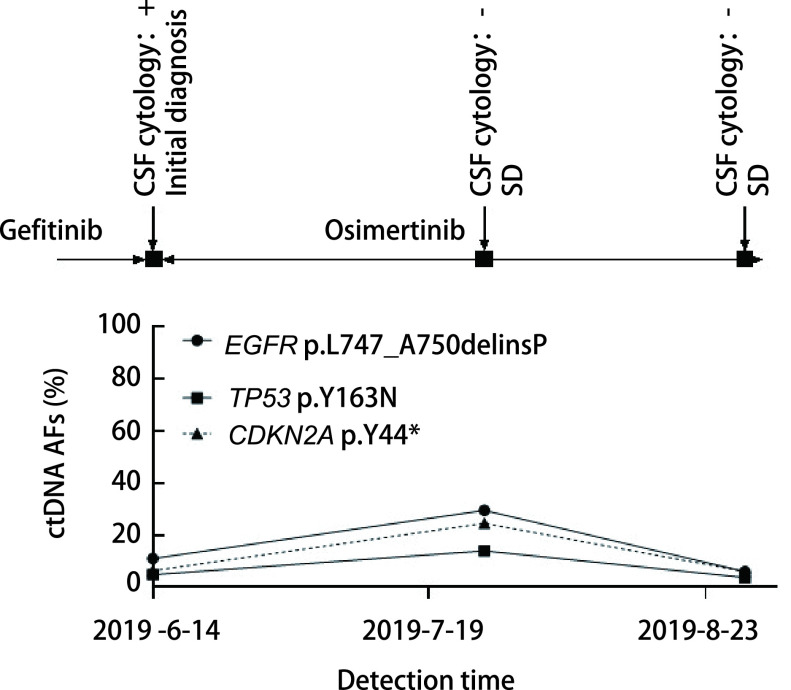
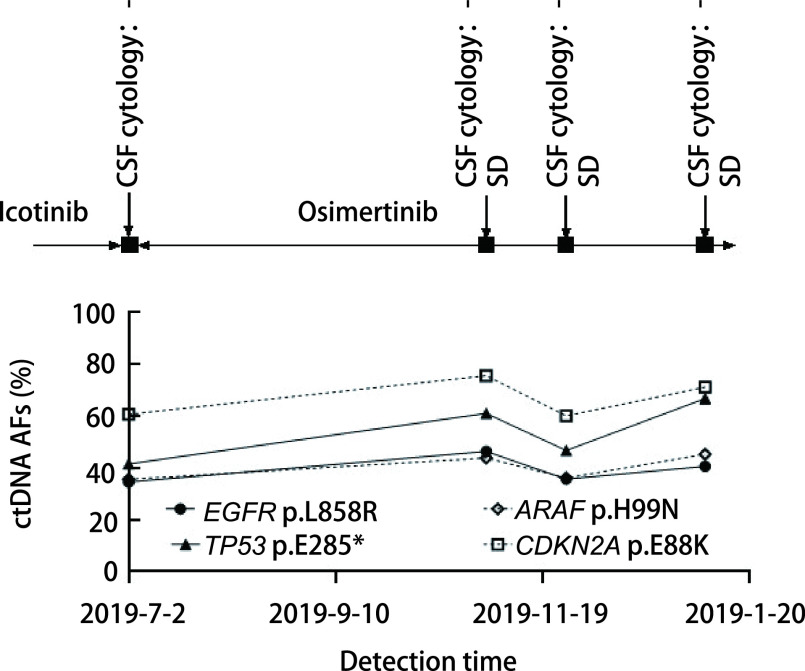
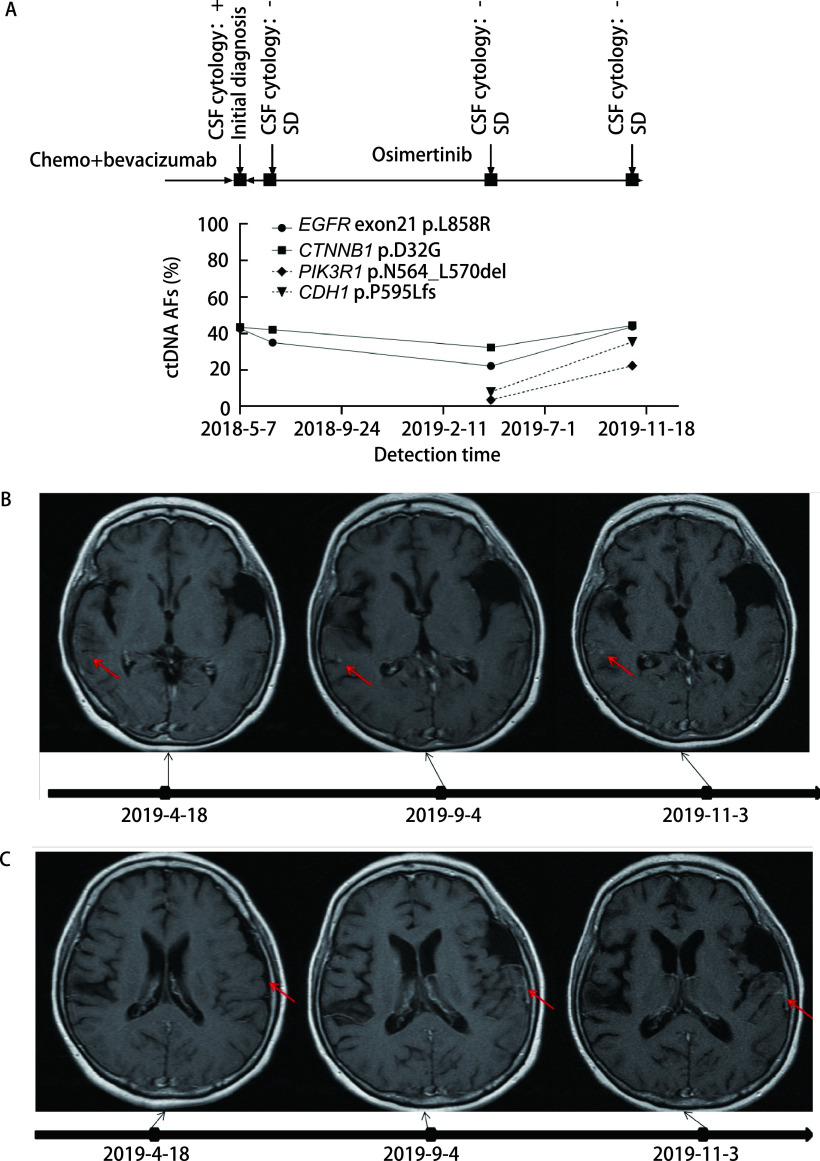
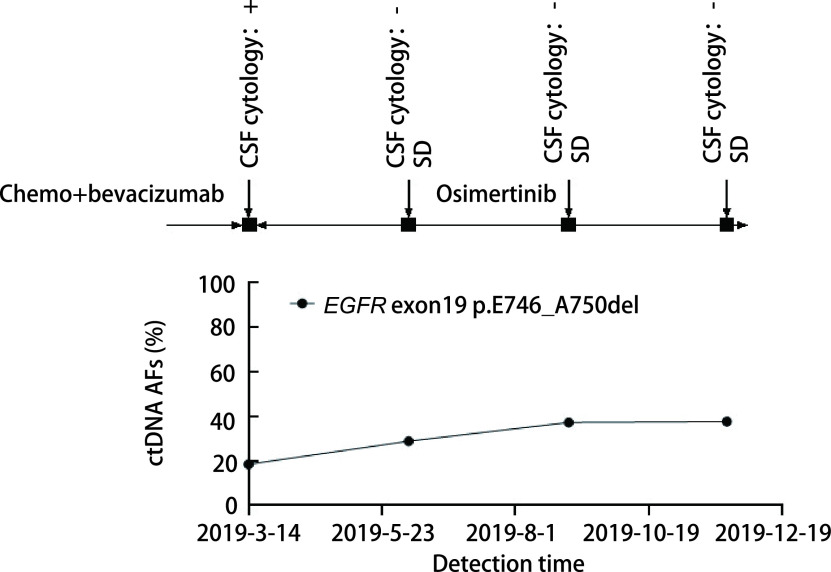
ctDNA was detected in the cerebrospinal fluid of 21 patients. The sensitivity of cerebrospinal fluid ctDNA detection was superior to cytology in the diagnosis of meningeal metastasis (P<0.001). The detection rate and gene mutation abundance of cerebrospinal fluid were higher than plasma (P<0.001). Cerebro-spinal fluid had a unique genetic profile. In 6 patients with dynamic detection, changes of ctDNA allele fraction occurred at the same time or earlier than clinical disease changes, which could timely monitor drug resistance mechanism and relapse trend.
The detection rate of ctDNA in cerebrospinal fluid is higher than that in cytology and imaging. The detection of ctDNA in cerebrospinal fluid can reveal the specific mutation map of meningeal metastasis lesions. The dynamic monitoring of ctDNA in cerebrospinal fluid has hint significance for clinical response of lung cancer patients.
肺癌脑膜转移的死亡率极高。循环肿瘤DNA(ctDNA)已被证实包含肿瘤中存在的基因组改变,并已用于监测肿瘤进展和对治疗的反应。由于血脑屏障等因素的存在,外周血ctDNA无法反映脑膜转移患者脑病变的信息。然而,脑脊液ctDNA作为检测样本能更好地反映颅内肿瘤的基因状态,并指导颅内病变的临床靶向治疗。本研究探讨了脑脊液ctNDA评估非小细胞肺癌(NSCLC)脑膜转移的可行性以及脑脊液ctDNA检测在NSCLC脑膜转移中的潜在临床价值。
共纳入21例NSCLC脑膜转移患者。采用二代基因测序技术对患者的脑脊液和外周血样本进行肿瘤基因组变异检测。检查情况,并进行脑脊液细胞学病理评估和头部磁共振成像(MRI)增强检查。
21例患者的脑脊液中均检测到ctDNA。脑脊液ctDNA检测在脑膜转移诊断中的敏感性优于细胞学检查(P<0.001)。脑脊液的检测率和基因突变丰度均高于血浆(P<0.001)。脑脊液具有独特的基因图谱。在6例动态检测的患者中,ctDNA等位基因分数的变化与临床疾病变化同时或早于临床疾病变化出现,可及时监测耐药机制和复发趋势。
脑脊液中ctDNA的检测率高于细胞学检查和影像学检查。脑脊液中ctDNA的检测可揭示脑膜转移病灶的特定突变图谱。脑脊液中ctDNA的动态监测对肺癌患者的临床反应具有提示意义。