Tumor Initiation and Maintenance Program, NCI-Designated Cancer Center, Sanford Burnham Prebys Medical Discovery Institute, La Jolla, CA 92037, USA.
Division of Regenerative Medicine, Department of Medicine, Moores Cancer Center and Sanford Consortium for Regenerative Medicine, University of California, San Diego, La Jolla, CA 92037, USA.
Cell. 2021 Jan 21;184(2):352-369.e23. doi: 10.1016/j.cell.2020.11.042. Epub 2020 Dec 23.
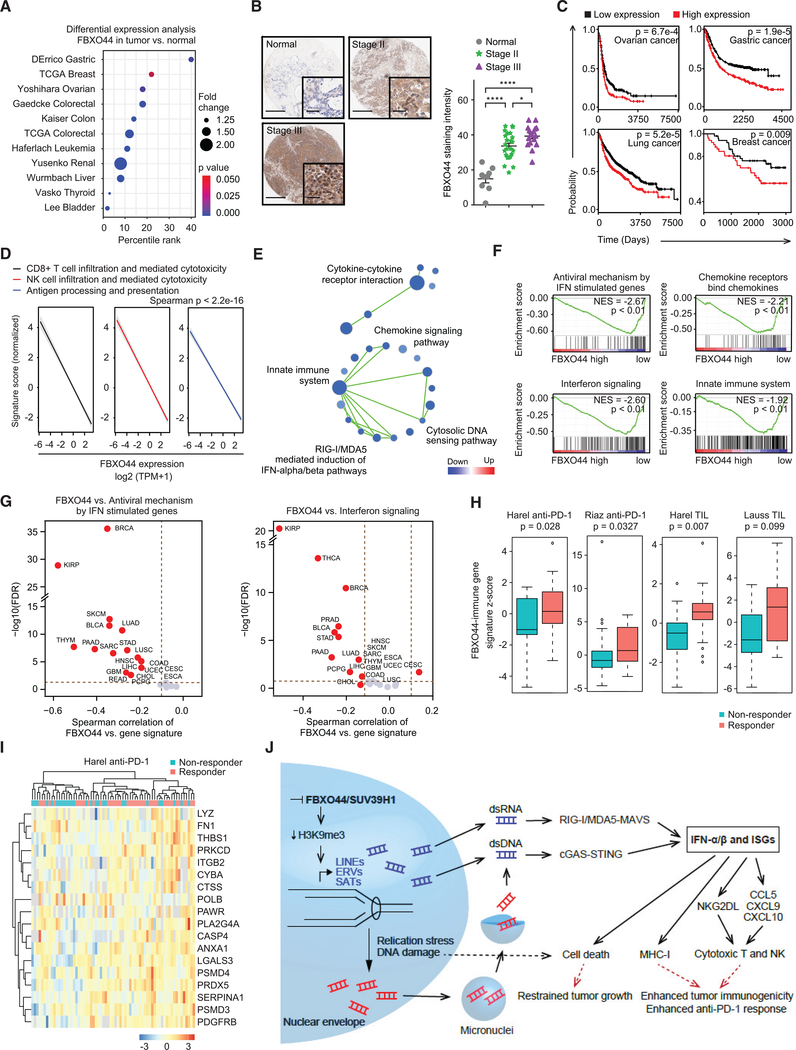
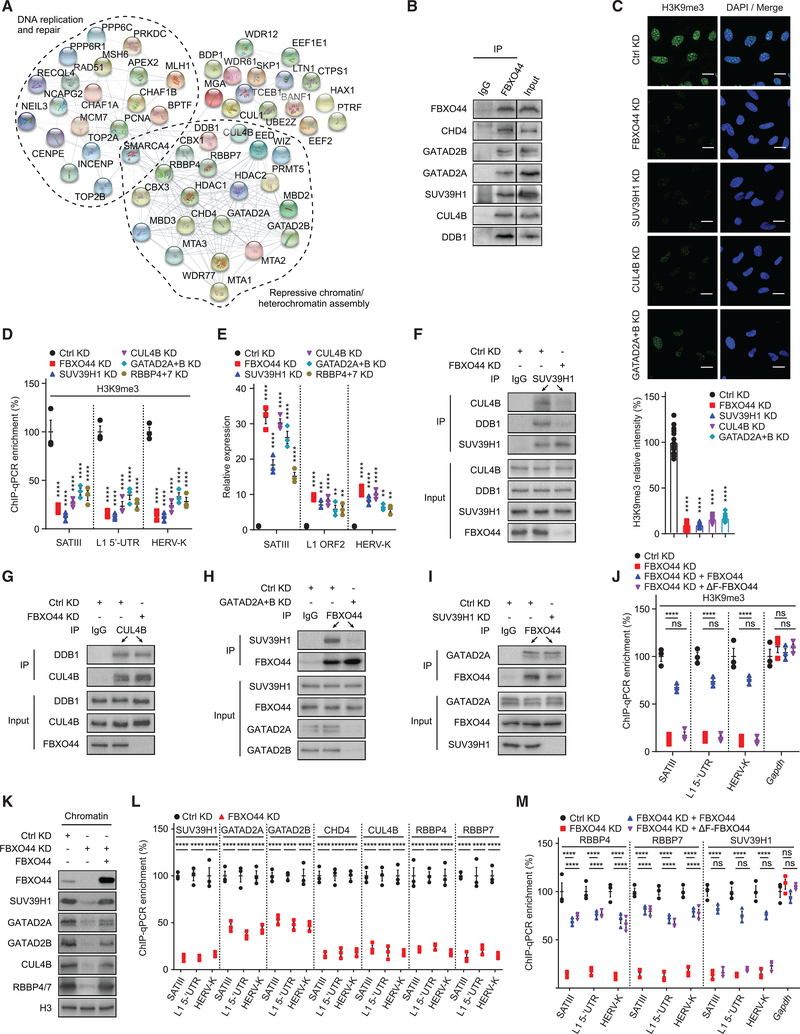
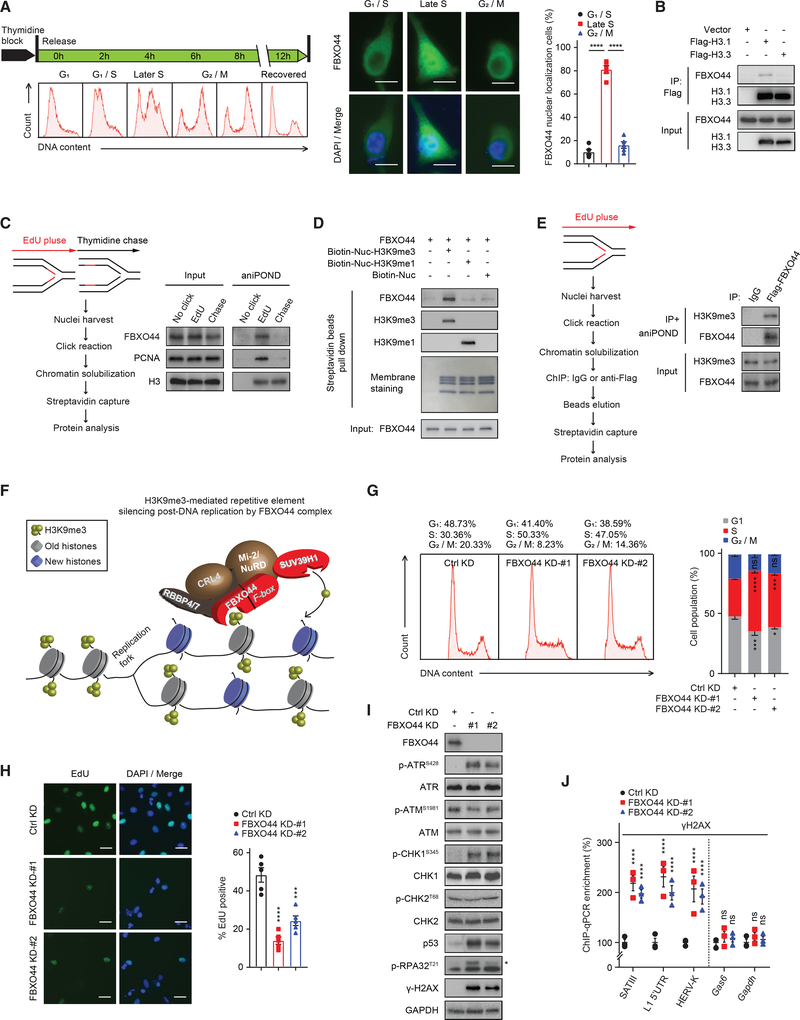
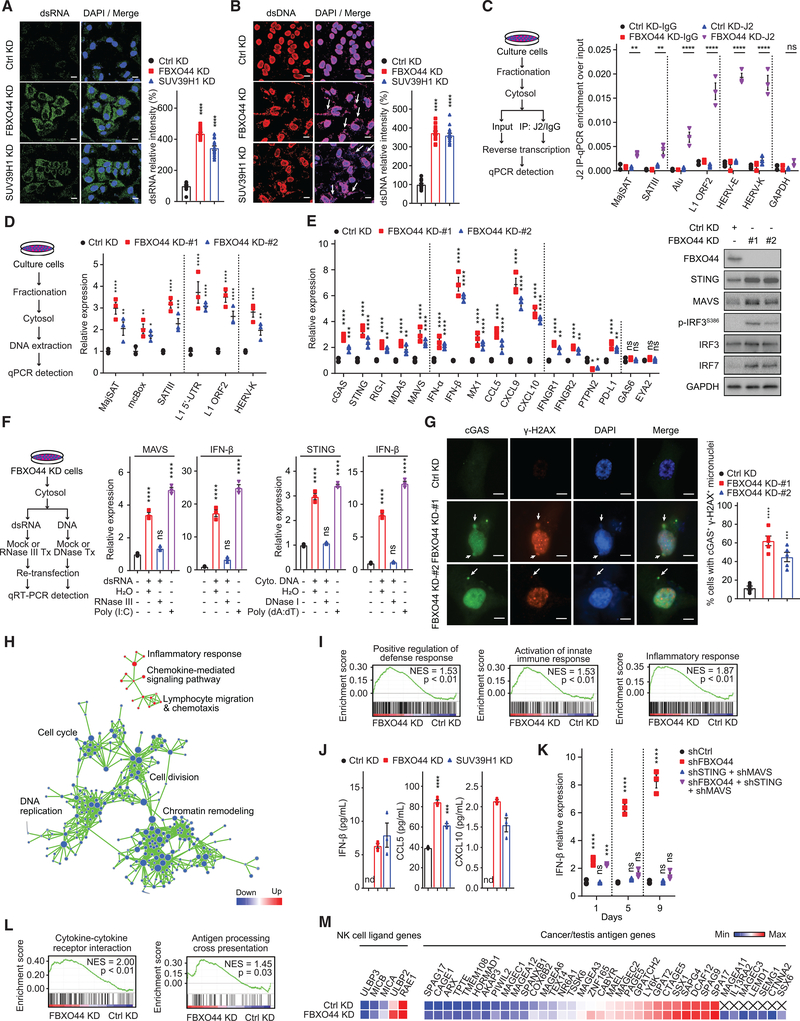
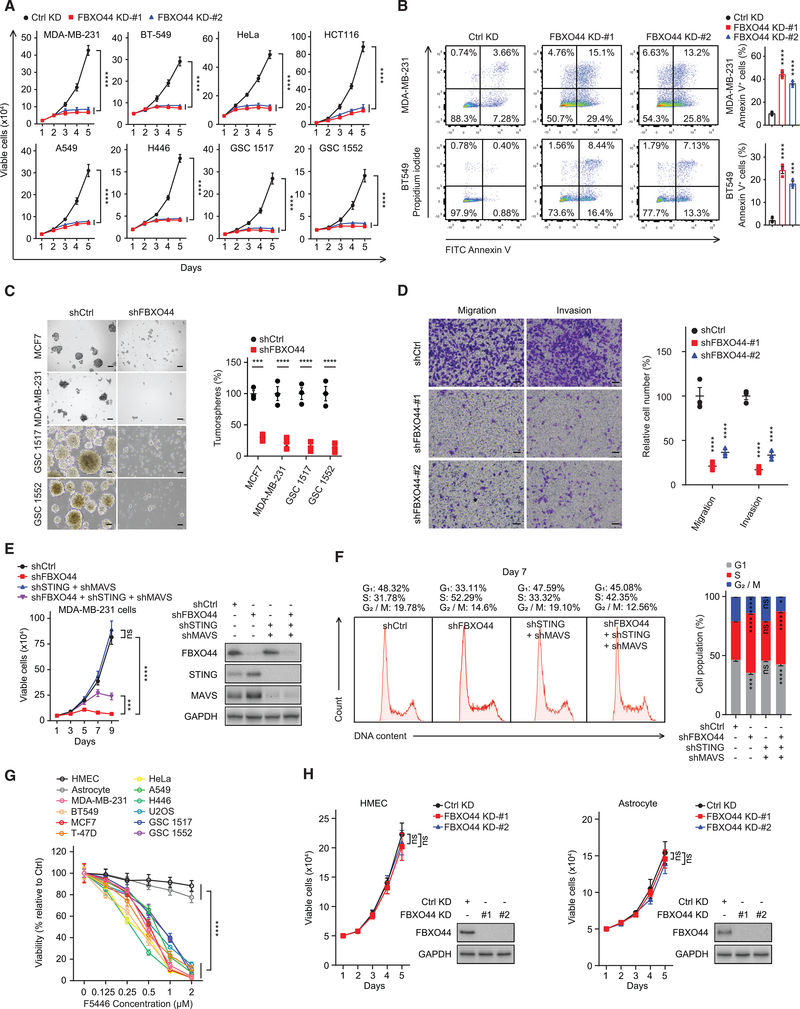
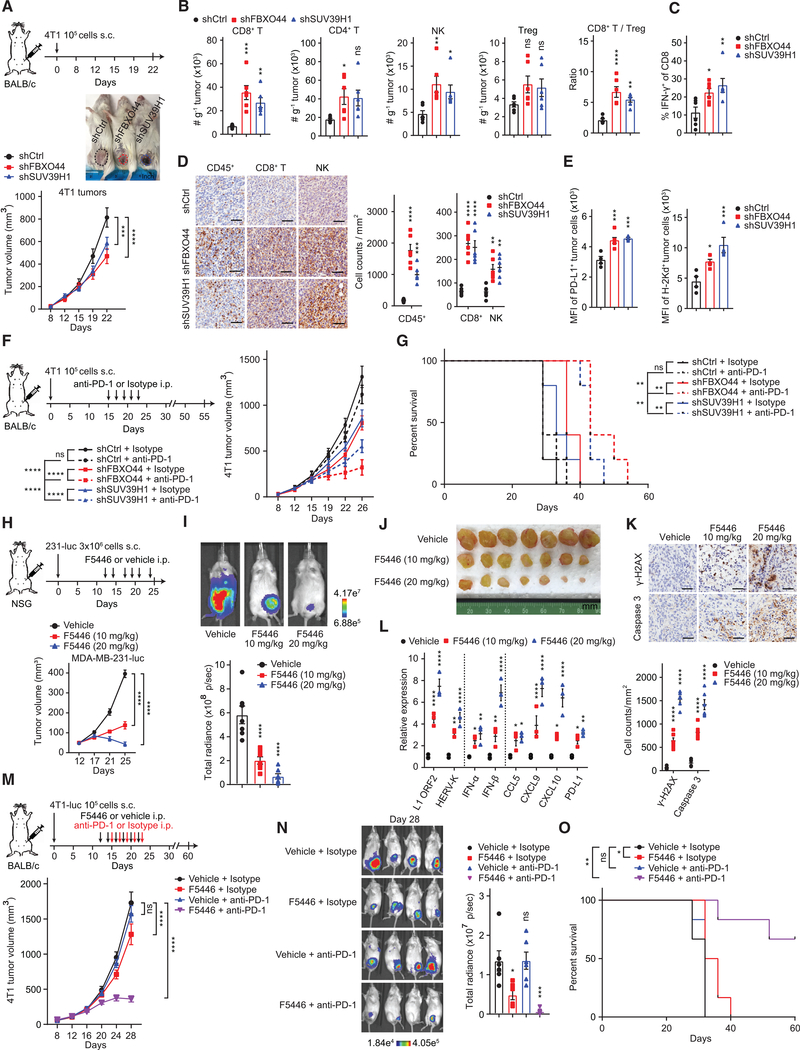
Repetitive elements (REs) compose ∼50% of the human genome and are normally transcriptionally silenced, although the mechanism has remained elusive. Through an RNAi screen, we identified FBXO44 as an essential repressor of REs in cancer cells. FBXO44 bound H3K9me3-modified nucleosomes at the replication fork and recruited SUV39H1, CRL4, and Mi-2/NuRD to transcriptionally silence REs post-DNA replication. FBXO44/SUV39H1 inhibition reactivated REs, leading to DNA replication stress and stimulation of MAVS/STING antiviral pathways and interferon (IFN) signaling in cancer cells to promote decreased tumorigenicity, increased immunogenicity, and enhanced immunotherapy response. FBXO44 expression inversely correlated with replication stress, antiviral pathways, IFN signaling, and cytotoxic T cell infiltration in human cancers, while a FBXO44-immune gene signature correlated with improved immunotherapy response in cancer patients. FBXO44/SUV39H1 were dispensable in normal cells. Collectively, FBXO44/SUV39H1 are crucial repressors of RE transcription, and their inhibition selectively induces DNA replication stress and viral mimicry in cancer cells.
重复元件 (REs) 组成人类基因组的 ∼50%,通常转录沉默,尽管其机制仍难以捉摸。通过 RNAi 筛选,我们鉴定出 FBXO44 是癌细胞中重复元件的必需抑制剂。FBXO44 在复制叉处结合 H3K9me3 修饰的核小体,并募集 SUV39H1、CRL4 和 Mi-2/NuRD,以在 DNA 复制后转录沉默重复元件。FBXO44/SUV39H1 抑制可重新激活重复元件,导致 DNA 复制应激,并刺激 MAVS/STING 抗病毒途径和干扰素 (IFN) 信号在癌细胞中,以促进肿瘤发生减少、免疫原性增加和增强免疫治疗反应。FBXO44 在人类癌症中的表达与复制应激、抗病毒途径、IFN 信号和细胞毒性 T 细胞浸润呈负相关,而 FBXO44-免疫基因特征与癌症患者免疫治疗反应的改善相关。FBXO44/SUV39H1 在正常细胞中是可有可无的。总之,FBXO44/SUV39H1 是重复转录的关键抑制剂,其抑制可选择性诱导癌细胞中的 DNA 复制应激和病毒模拟。