• 文献检索
  • 文档翻译
  • 深度研究
  • 学术资讯
  • Suppr Zotero 插件Zotero 插件
  • 邀请有礼
  • 套餐&价格
  • 历史记录
应用&插件
Suppr Zotero 插件Zotero 插件浏览器插件Mac 客户端Windows 客户端微信小程序
定价
高级版会员购买积分包购买API积分包
服务
文献检索文档翻译深度研究API 文档MCP 服务
关于我们
关于 Suppr公司介绍联系我们用户协议隐私条款
关注我们

Suppr 超能文献

核心技术专利:CN118964589B侵权必究
粤ICP备2023148730 号-1Suppr @ 2026

文献检索

告别复杂PubMed语法,用中文像聊天一样搜索,搜遍4000万医学文献。AI智能推荐,让科研检索更轻松。

立即免费搜索

文件翻译

保留排版,准确专业,支持PDF/Word/PPT等文件格式,支持 12+语言互译。

免费翻译文档

深度研究

AI帮你快速写综述,25分钟生成高质量综述,智能提取关键信息,辅助科研写作。

立即免费体验

利用社交媒体数据评估 COVID-19 大流行期间儿童遭受暴力的情况。

Using social media data for assessing children's exposure to violence during the COVID-19 pandemic.

机构信息

Stevens Institute of Technology, 1 Caste Point Terrace, Hoboken, NY 07030, USA.

UNICEF, Data and Analytics Section, 3 UN Plaza, New York, NY 10017, USA.

出版信息

Child Abuse Negl. 2021 Jun;116(Pt 2):104747. doi: 10.1016/j.chiabu.2020.104747. Epub 2020 Sep 17.

DOI:10.1016/j.chiabu.2020.104747
PMID:33358281
原文链接:https://pmc.ncbi.nlm.nih.gov/articles/PMC7498240/
Abstract

BACKGROUND

The COVID-19 pandemic brought unforeseen challenges that could forever change the way societies prioritize and deal with public health issues. The approaches to contain the spread of the virus have entailed governments issuing recommendations on social distancing, lockdowns to restrict movements, and suspension of services.

OBJECTIVE

There are concerns that the COVID-19 crisis and the measures adopted by countries in response to the pandemic may have led to an upsurge in violence against children. Added stressors placed on caregivers, economic uncertainty, job loss or disruption to livelihoods and social isolation may have led to a rise in children's experience of violence in the home. Extended online presence by children may have resulted in increased exposure to abusive content and cyberbullying.

PARTICIPANTS AND SETTING

This study uses testimonial-based and conversational-based data collected from social media users.

METHODS

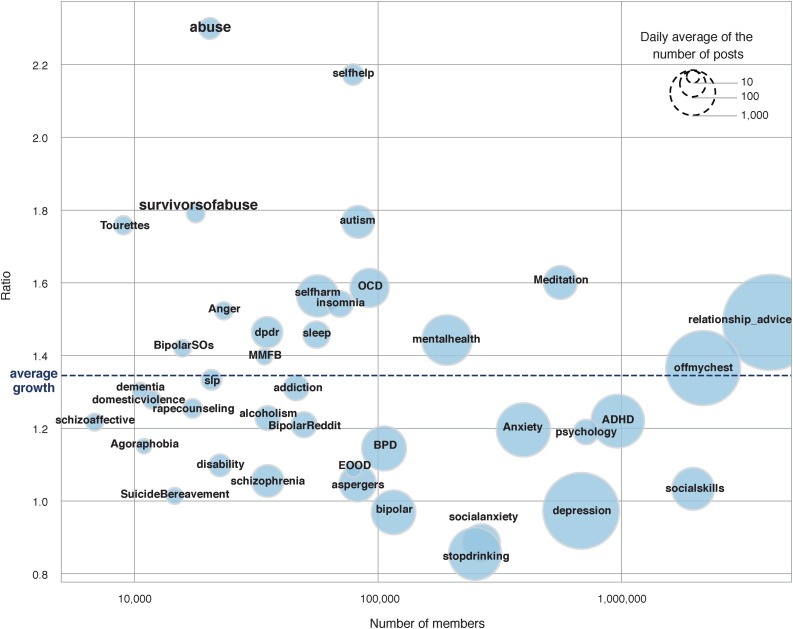
Conversations on Twitter were reviewed to measure increases in abusive or hateful content, and cyberbullying, while testimonials from Reddit forums were examined to monitor changes in references to family violence before and after the start of the stay-at-home restrictions.

RESULTS

Violence-related subreddits were among the topics with the highest growth after the COVID-19 outbreak. The analysis of Twitter data shows a significant increase in abusive content generated during the stay-at-home restrictions.

CONCLUSIONS

The collective experience of the COVID-19 pandemic and related containment measures offers insights into the wide-ranging risks that children are exposed to in times of crisis. As societies shift towards a new normal, which places emerging technology, remote working and online learning at its center, and in anticipation of similar future threats, governments and other stakeholders need to put in place measures to protect children from violence.

摘要

背景

新冠疫情带来了前所未有的挑战,这些挑战可能会永远改变社会优先考虑和处理公共卫生问题的方式。为了遏制病毒的传播,各国政府提出了保持社交距离、封锁限制行动以及暂停服务等建议。

目的

人们担心新冠危机以及各国为应对疫情而采取的措施可能导致针对儿童的暴力行为激增。看护者承受的额外压力、经济不确定性、失业或生计中断以及社会孤立,可能导致儿童在家中遭受暴力的情况增加。儿童在网上的存在时间延长,可能会增加他们接触虐待内容和网络欺凌的机会。

参与者和背景

本研究使用基于证词和基于对话的数据,这些数据是从社交媒体用户那里收集的。

方法

审查了 Twitter 上的对话,以衡量辱骂性或仇恨性内容以及网络欺凌的增加情况,同时检查了 Reddit 论坛上的证词,以监测在实施居家限制前后,家庭暴力的提及率变化。

结果

在新冠疫情爆发后,与暴力相关的子版块是增长最快的话题之一。对 Twitter 数据的分析显示,在居家限制期间,产生的辱骂性内容显著增加。

结论

对新冠疫情大流行的集体经验以及相关遏制措施的分析,让我们深入了解儿童在危机时期面临的广泛风险。随着社会向以新兴技术、远程工作和在线学习为中心的新常态转变,并预计会出现类似的未来威胁,政府和其他利益相关者需要采取措施,保护儿童免受暴力侵害。

https://cdn.ncbi.nlm.nih.gov/pmc/blobs/c9d8/7498240/eca23d71e88e/gr9_lrg.jpg
https://cdn.ncbi.nlm.nih.gov/pmc/blobs/c9d8/7498240/ab0b1fa0cd3e/gr1_lrg.jpg
https://cdn.ncbi.nlm.nih.gov/pmc/blobs/c9d8/7498240/18ea71ef8734/gr2_lrg.jpg
https://cdn.ncbi.nlm.nih.gov/pmc/blobs/c9d8/7498240/d92b1941a669/gr3_lrg.jpg
https://cdn.ncbi.nlm.nih.gov/pmc/blobs/c9d8/7498240/ce2d859cac74/gr4_lrg.jpg
https://cdn.ncbi.nlm.nih.gov/pmc/blobs/c9d8/7498240/9ed26c8494dc/gr5_lrg.jpg
https://cdn.ncbi.nlm.nih.gov/pmc/blobs/c9d8/7498240/b548d83efb14/gr6_lrg.jpg
https://cdn.ncbi.nlm.nih.gov/pmc/blobs/c9d8/7498240/57d454c2bc17/gr7_lrg.jpg
https://cdn.ncbi.nlm.nih.gov/pmc/blobs/c9d8/7498240/34d67e68b955/gr8_lrg.jpg
https://cdn.ncbi.nlm.nih.gov/pmc/blobs/c9d8/7498240/eca23d71e88e/gr9_lrg.jpg
https://cdn.ncbi.nlm.nih.gov/pmc/blobs/c9d8/7498240/ab0b1fa0cd3e/gr1_lrg.jpg
https://cdn.ncbi.nlm.nih.gov/pmc/blobs/c9d8/7498240/18ea71ef8734/gr2_lrg.jpg
https://cdn.ncbi.nlm.nih.gov/pmc/blobs/c9d8/7498240/d92b1941a669/gr3_lrg.jpg
https://cdn.ncbi.nlm.nih.gov/pmc/blobs/c9d8/7498240/ce2d859cac74/gr4_lrg.jpg
https://cdn.ncbi.nlm.nih.gov/pmc/blobs/c9d8/7498240/9ed26c8494dc/gr5_lrg.jpg
https://cdn.ncbi.nlm.nih.gov/pmc/blobs/c9d8/7498240/b548d83efb14/gr6_lrg.jpg
https://cdn.ncbi.nlm.nih.gov/pmc/blobs/c9d8/7498240/57d454c2bc17/gr7_lrg.jpg
https://cdn.ncbi.nlm.nih.gov/pmc/blobs/c9d8/7498240/34d67e68b955/gr8_lrg.jpg
https://cdn.ncbi.nlm.nih.gov/pmc/blobs/c9d8/7498240/eca23d71e88e/gr9_lrg.jpg

相似文献

1
Using social media data for assessing children's exposure to violence during the COVID-19 pandemic.利用社交媒体数据评估 COVID-19 大流行期间儿童遭受暴力的情况。
Child Abuse Negl. 2021 Jun;116(Pt 2):104747. doi: 10.1016/j.chiabu.2020.104747. Epub 2020 Sep 17.
2
Concerns Expressed by Chinese Social Media Users During the COVID-19 Pandemic: Content Analysis of Sina Weibo Microblogging Data.新冠疫情期间中国社交媒体用户表达的担忧:对新浪微博数据的内容分析
J Med Internet Res. 2020 Nov 26;22(11):e22152. doi: 10.2196/22152.
3
Public Sentiment and Discourse on Domestic Violence During the COVID-19 Pandemic in Australia: Analysis of Social Media Posts.新冠疫情期间澳大利亚公众对家庭暴力问题的态度和讨论:社交媒体帖子分析
J Med Internet Res. 2021 Oct 1;23(10):e29025. doi: 10.2196/29025.
4
Emerging responses implemented to prevent and respond to violence against women and children in WHO European member states during the COVID-19 pandemic: a scoping review of online media reports.在 COVID-19 大流行期间,世卫组织欧洲成员国为预防和应对暴力侵害妇女和儿童行为而采取的新对策:对在线媒体报道的范围界定审查。
BMJ Open. 2021 Apr 7;11(4):e045872. doi: 10.1136/bmjopen-2020-045872.
5
COVID-19 and violence against children: A review of early studies.COVID-19 与儿童暴力:早期研究综述。
Child Abuse Negl. 2021 Jun;116(Pt 2):105053. doi: 10.1016/j.chiabu.2021.105053. Epub 2021 Apr 14.
6
The Hidden Pandemic of Family Violence During COVID-19: Unsupervised Learning of Tweets.新冠疫情期间家庭暴力的隐性大流行:推文的无监督学习
J Med Internet Res. 2020 Nov 6;22(11):e24361. doi: 10.2196/24361.
7
Conversations and Medical News Frames on Twitter: Infodemiological Study on COVID-19 in South Korea.推特上的对话与医学新闻框架:韩国新冠肺炎信息流行病学研究
J Med Internet Res. 2020 May 5;22(5):e18897. doi: 10.2196/18897.
8
Top Concerns of Tweeters During the COVID-19 Pandemic: Infoveillance Study.新冠疫情期间推特用户的主要担忧:信息监测研究
J Med Internet Res. 2020 Apr 21;22(4):e19016. doi: 10.2196/19016.
9
Twitter Discussions and Emotions About the COVID-19 Pandemic: Machine Learning Approach.关于新冠疫情的推特讨论与情绪:机器学习方法
J Med Internet Res. 2020 Nov 25;22(11):e20550. doi: 10.2196/20550.
10
Identifying #addiction concerns on twitter during the COVID-19 pandemic: A text mining analysis.识别新冠疫情期间推特上与成瘾相关的问题:一项文本挖掘分析。
Subst Abus. 2021;42(1):39-46. doi: 10.1080/08897077.2020.1822489. Epub 2020 Sep 24.

引用本文的文献

1
"Somebody's Gonna Go Home and Put it on Facebook": A Mixed Method Exploration of Black Youth and Adults' Online Exposure to Violence in a Low-income Community.“有人会回家把它发在脸书上”:对低收入社区黑人青年和成年人在线接触暴力情况的混合方法探索
J Child Adolesc Trauma. 2025 Apr 17;18(3):585-598. doi: 10.1007/s40653-025-00706-0. eCollection 2025 Sep.
2
Adolescent Cyberbullying and Cyber Victimization: Longitudinal Study Before and During COVID-19.青少年网络欺凌与网络受害:新冠疫情前及疫情期间的纵向研究
J Med Internet Res. 2025 Mar 25;27:e70508. doi: 10.2196/70508.
3
Understanding Loneliness Through Analysis of Twitter and Reddit Data: Comparative Study.
通过分析推特和红迪网数据理解孤独感:比较研究
Interact J Med Res. 2025 Mar 14;14:e49464. doi: 10.2196/49464.
4
Violence against women and girls research: Leveraging gains across disciplines.针对妇女和女童的暴力行为研究:利用各学科的成果。
Proc Natl Acad Sci U S A. 2025 Jan 28;122(4):e2404557122. doi: 10.1073/pnas.2404557122. Epub 2025 Jan 23.
5
Child maltreatment during the COVID-19 pandemic: implications for child and adolescent mental health.新冠疫情期间的儿童虐待:对儿童和青少年心理健康的影响
Front Child Adolesc Psychiatry. 2024 Jul 3;3:1415497. doi: 10.3389/frcha.2024.1415497. eCollection 2024.
6
Social media users' attitudes toward cyberbullying during the COVID-19 pandemic: associations with gender and verification status.社交媒体用户在新冠疫情期间对网络欺凌的态度:与性别和认证状态的关联
Front Psychol. 2024 Jun 13;15:1395668. doi: 10.3389/fpsyg.2024.1395668. eCollection 2024.
7
The Impact of COVID-19 and Exposure to Violent Media Content on Cyber Violence Victimization Among Adolescents in South Korea: National Population-Based Study.新冠疫情和接触暴力媒体内容对韩国青少年网络暴力受害的影响:全国人口基础研究。
J Med Internet Res. 2024 Mar 22;26:e45563. doi: 10.2196/45563.
8
Associations over the COVID-19 pandemic period and the mental health and substance use of youth not in employment, education or training in Ontario, Canada: a longitudinal, cohort study.加拿大安大略省未就业、未接受教育或培训的青年在新冠疫情期间的关联情况以及他们的心理健康和物质使用情况:一项纵向队列研究。
Child Adolesc Psychiatry Ment Health. 2023 Sep 7;17(1):105. doi: 10.1186/s13034-023-00653-4.
9
Fertility desire among HIV-positive individuals in the Chinese sociocultural context: A qualitative study.中国社会文化背景下HIV阳性个体的生育意愿:一项定性研究。
J Educ Health Promot. 2023 May 31;12:156. doi: 10.4103/jehp.jehp_126_23. eCollection 2023.
10
Characterizing the Differences in Descriptions of Violence on Reddit During the COVID-19 Pandemic.描述 COVID-19 大流行期间 Reddit 上暴力行为的差异。
J Interpers Violence. 2023 Aug;38(15-16):9290-9314. doi: 10.1177/08862605231163885. Epub 2023 Mar 28.