CSIRO Land and Water, Ecosciences Precinct, 41 Boggo Road, Qld 4102, Australia.
Queensland Alliance for Environmental Health Sciences (QAEHS), The University of Queensland, 20 Cornwall Street, Woolloongabba, QLD 4103, Australia.
Sci Total Environ. 2021 Mar 20;761:144216. doi: 10.1016/j.scitotenv.2020.144216. Epub 2020 Dec 5.
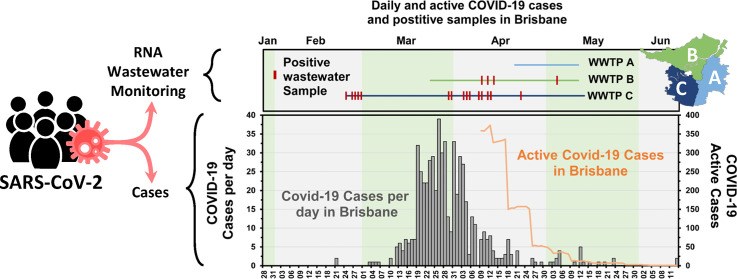
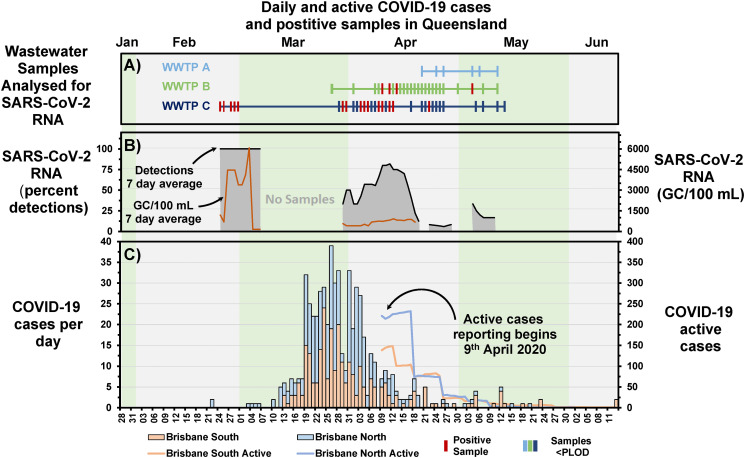
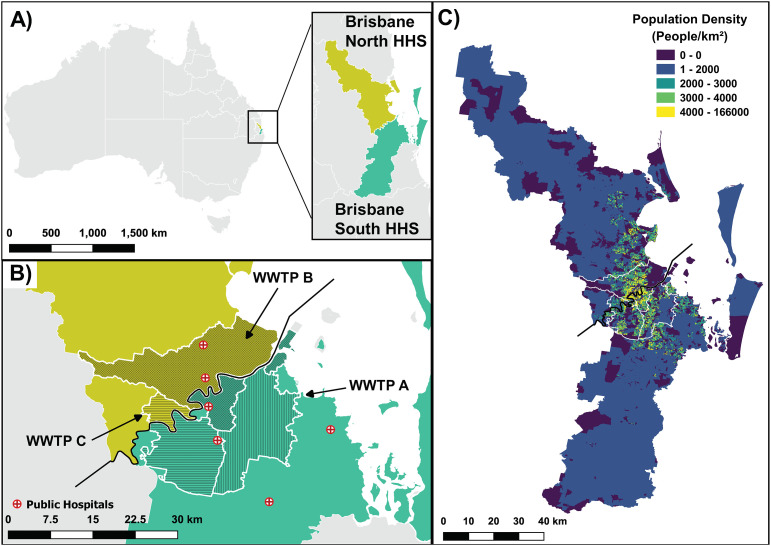
Severe acute respiratory syndrome coronavirus 2 (SARS-CoV-2), the virus which causes coronavirus disease (COVID-19), has spread rapidly across the globe infecting millions of people and causing significant health and economic impacts. Authorities are exploring complimentary approaches to monitor this infectious disease at the community level. Wastewater-based epidemiology (WBE) approaches to detect SARS-CoV-2 RNA in municipal wastewater are being implemented worldwide as an environmental surveillance approach to inform health authority decision-making. Owing to the extended excretion of SARS-CoV-2 RNA in stool, WBE can surveil large populated areas with a longer detection window providing unique information on the presence of pre-symptomatic and asymptomatic cases that are unlikely to be screened by clinical testing. Herein, we analysed SARS-CoV-2 RNA in 24-h composite wastewater samples (n = 63) from three wastewater treatment plants (WWTPs) in Brisbane, Queensland, Australia from 24th of February to 1st of May 2020. A total of 21 samples were positive for SARS-CoV-2, ranging from 135 to 11,992 gene copies (GC)/100 mL of wastewater. Detections were made in a Southern Brisbane WWTP in late February 2020, up to three weeks before the first clininal case was reported there. Wastewater samples were generally positive during the period with highest caseload data. The positive SARS-CoV-2 RNA detection in wastewater while there were limited clinical reported cases demonstrates the potential of WBE as an early warning system to identify hotspots and target localised public health responses, such as increased individual testing and the provision of health warnings.
严重急性呼吸综合征冠状病毒 2(SARS-CoV-2)是导致冠状病毒病(COVID-19)的病毒,已在全球迅速传播,感染了数百万人,并对健康和经济造成了重大影响。当局正在探索在社区层面监测这种传染病的补充方法。污水流行病学(WBE)方法用于检测市政废水中的 SARS-CoV-2 RNA,作为一种环境监测方法,为卫生当局的决策提供信息,正在全球范围内实施。由于 SARS-CoV-2 RNA 在粪便中排泄时间延长,WBE 可以监测人口众多的地区,具有更长的检测窗口,提供关于可能未通过临床检测筛查的无症状和症状前病例的独特信息。在此,我们分析了来自澳大利亚昆士兰州布里斯班的三个污水处理厂(WWTP)的 24 小时复合污水样本(n=63)中的 SARS-CoV-2 RNA,时间为 2020 年 2 月 24 日至 5 月 1 日。共有 21 个样本对 SARS-CoV-2 呈阳性,范围从 135 到 11992 基因拷贝(GC)/100 mL 废水。2020 年 2 月下旬在布里斯班南部的一个 WWTP 中发现了检测结果,比那里首次报告临床病例早了三周。在此期间,污水样本通常呈阳性,最高病例数据。在有有限临床报告病例的情况下,废水中检测到 SARS-CoV-2 RNA 阳性表明,WBE 作为一种早期预警系统具有潜力,可以识别热点,并针对局部公共卫生反应,如增加个体检测和提供健康警告。