Kevill Jessica L, Farkas Kata, Herridge Kate, Malham Shelagh K, Jones Davey L
School of Environmental and Natural Sciences, Bangor University, Bangor, Gwynedd, LL57 2UW, UK.
School of Ocean Sciences, Bangor University, Menai Bridge, Anglesey, LL59 5AB, UK.
Food Environ Virol. 2025 Jan 6;17(1):12. doi: 10.1007/s12560-024-09627-x.
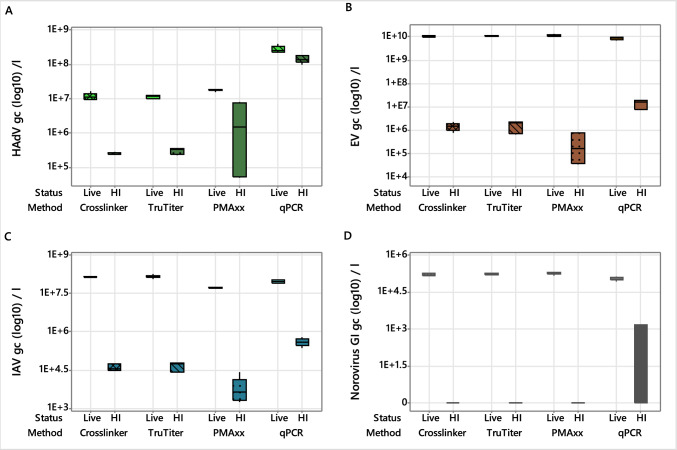
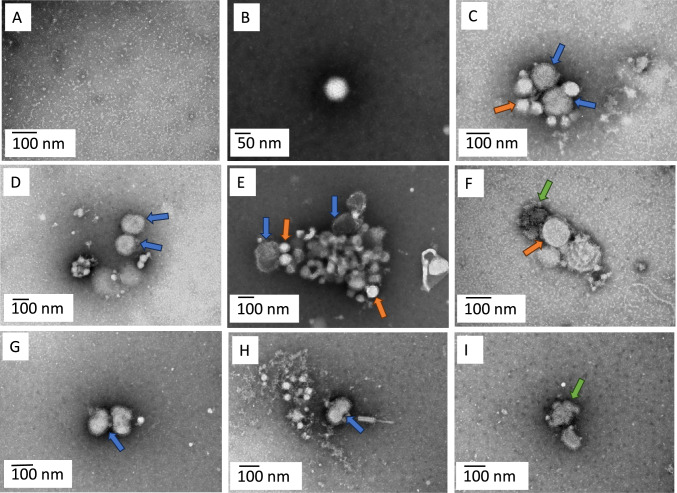
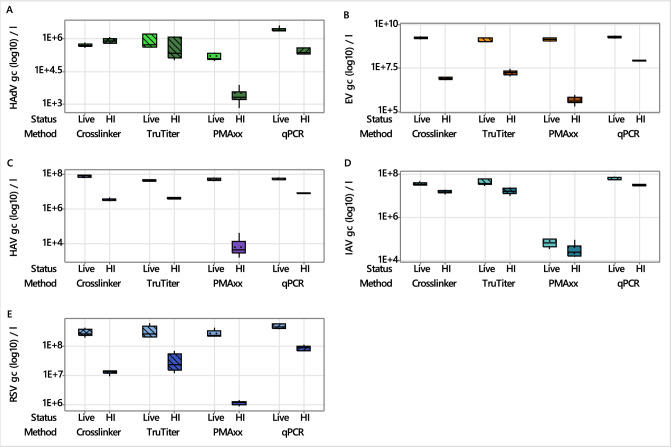
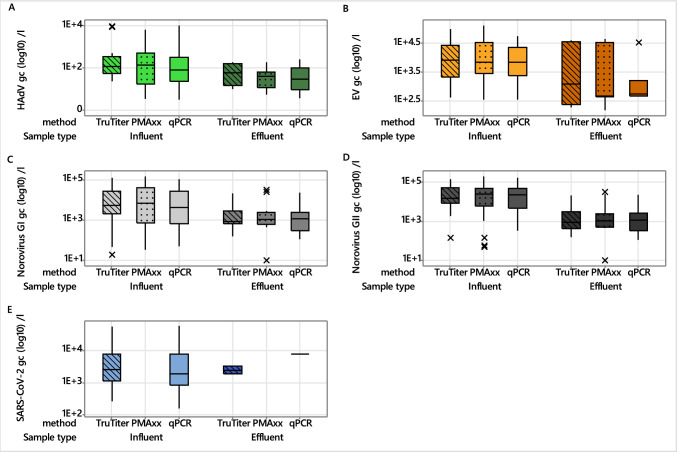
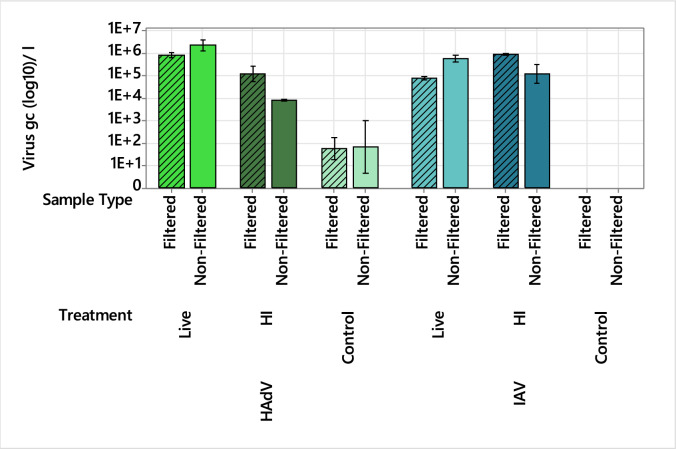
Capsid Integrity qPCR (CI-qPCR) assays offer a promising alternative to cell culture-based infectivity assays for assessing pathogenic human virus viability in wastewater. This study compared three CI-qPCR methods: two novel (Crosslinker, TruTiter) and one established (PMAxx dye). These methods were evaluated on heat-inactivated and non-heat-inactivated 'live' viruses spiked into phosphate-buffered saline (PBS) and wastewater, as well as on viruses naturally present in wastewater samples. The viral panel included Human adenovirus 5 (HAdV), enterovirus A71 (EV), hepatitis-A virus (HAV), influenza-A H3N2 (IAV), respiratory syncytial virus A2 (RSV), norovirus GI, norovirus GII, and SARS-CoV-2. All three methods successfully differentiated between degraded, heat-inactivated, and live viruses in PBS. While all three methods were comparable for HAdV and norovirus GI, PMAxx detected significantly lower gene copies for EV and IAV. In spiked wastewater, PMAxx yielded significantly lower gene copies for all heat-inactivated viruses (HAdV, EV, HAV, IAV, and RSV) compared to the Crosslinker and TruTiter methods. For viruses naturally present in wastewater (un-spiked), no significant difference was observed between PMAxx and TruTiter methods. Intact, potentially infectious viruses were detected using both PMAxx and TruTiter on untreated and treated wastewater samples. A comparative analysis of qPCR data and TEM images revealed that viral flocculation of IAV may interfere with capsid integrity assays using intercalating dyes. In summary, our findings not only advance the development of more effective methods for assessing viral viability in wastewater, but also highlight the potential of CI-qPCR techniques to enhance early warning systems for emerging pathogens, thereby strengthening public health preparedness and response strategies.
衣壳完整性定量聚合酶链反应(CI-qPCR)检测方法为评估废水中致病性人类病毒的活力提供了一种有前景的替代基于细胞培养的感染性检测方法。本研究比较了三种CI-qPCR方法:两种新方法(交联剂法、TruTiter法)和一种已确立的方法(PMAxx染料法)。这些方法在添加到磷酸盐缓冲盐水(PBS)和废水中的热灭活和非热灭活“活”病毒以及废水样品中天然存在的病毒上进行了评估。病毒组包括人腺病毒5型(HAdV)、肠道病毒A71型(EV)、甲型肝炎病毒(HAV)、甲型流感病毒H3N2(IAV)、呼吸道合胞病毒A2型(RSV)、诺如病毒GI、诺如病毒GII和严重急性呼吸综合征冠状病毒2(SARS-CoV-2)。所有三种方法都成功地区分了PBS中降解的、热灭活的和活的病毒。虽然对于HAdV和诺如病毒GI,所有三种方法相当,但PMAxx检测到的EV和IAV基因拷贝数明显较低。在添加病毒的废水中,与交联剂法和TruTiter法相比,PMAxx检测到的所有热灭活病毒(HAdV、EV、HAV、IAV和RSV)的基因拷贝数明显较低。对于废水中天然存在的(未添加病毒的)病毒,PMAxx法和TruTiter法之间未观察到显著差异。在未经处理和处理过的废水样品中,使用PMAxx法和TruTiter法都检测到了完整的、可能具有传染性的病毒。对qPCR数据和透射电子显微镜图像的比较分析表明,IAV的病毒絮凝可能会干扰使用嵌入染料进行的衣壳完整性检测。总之,我们的研究结果不仅推动了更有效评估废水中病毒活力方法的发展,还突出了CI-qPCR技术在加强新兴病原体早期预警系统方面的潜力,从而强化公共卫生防范和应对策略。