Research Institute for Medicines (iMed.ULisboa), Faculty of Pharmacy, Universidade de Lisboa, Lisbon, Portugal.
Sorbonne Université, Inserm, Centre de Recherche Saint-Antoine (CRSA), Paris, France.
Gut. 2021 Dec;70(12):2359-2372. doi: 10.1136/gutjnl-2020-321767. Epub 2020 Dec 24.
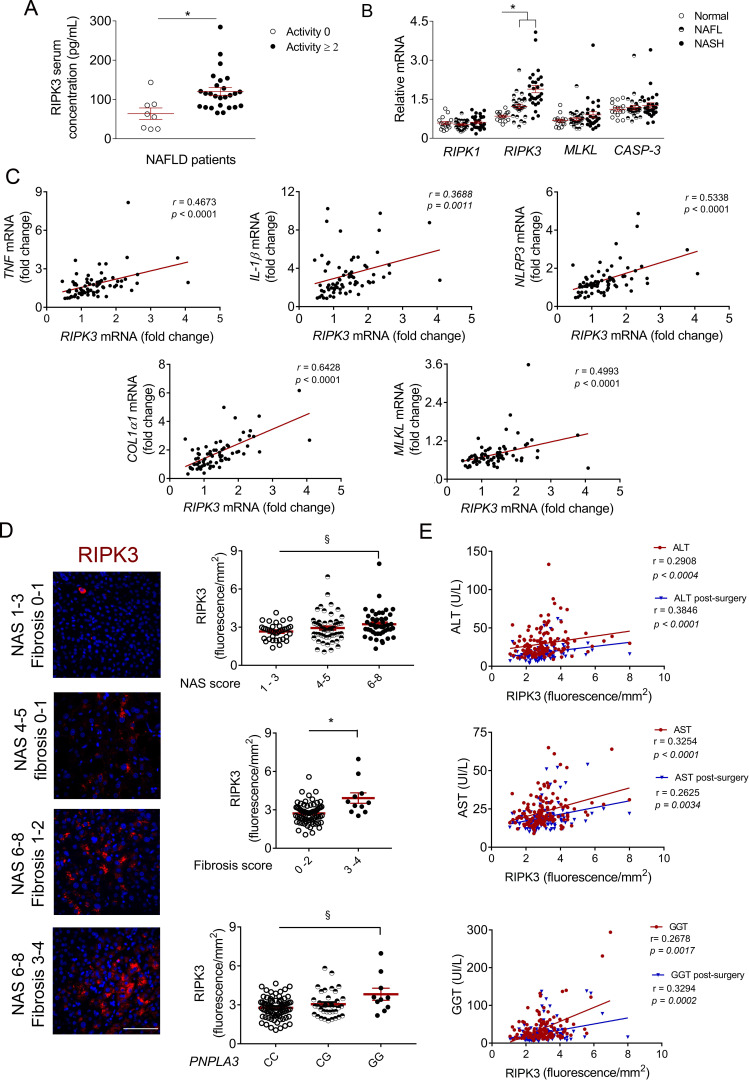
Receptor-interacting protein kinase 3 (RIPK3) is a key player in necroptosis execution and an emerging metabolic regulator, whose contribution to non-alcoholic fatty liver disease (NAFLD) is controversial. We aimed to clarify the impact of RIPK3 signalling in the pathogenesis of human and experimental NAFLD.
RIPK3 levels were evaluated in two large independent cohorts of patients with biopsy proven NAFLD diagnosis and correlated with clinical and biochemical parameters. Wild-type (WT) or -deficient () mice were fed a choline-deficient L-amino acid-defined diet (CDAA) or an isocaloric control diet for 32 and 66 weeks.
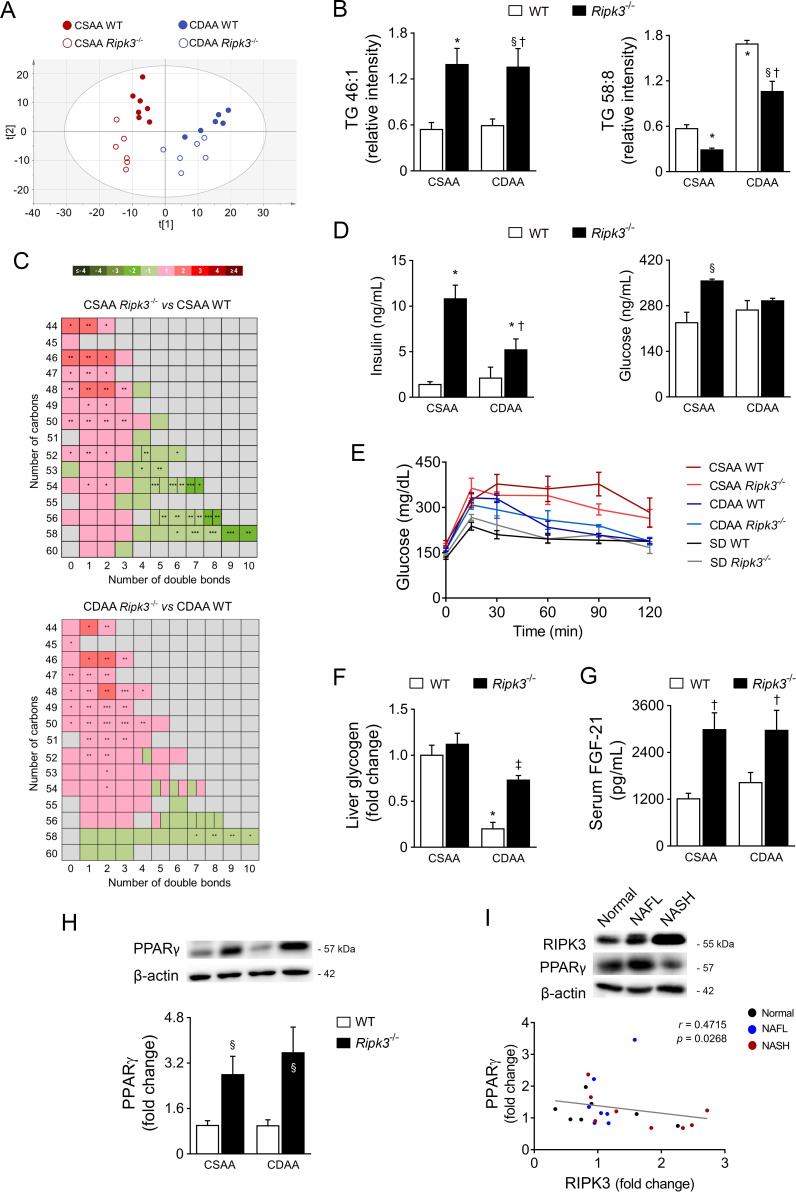
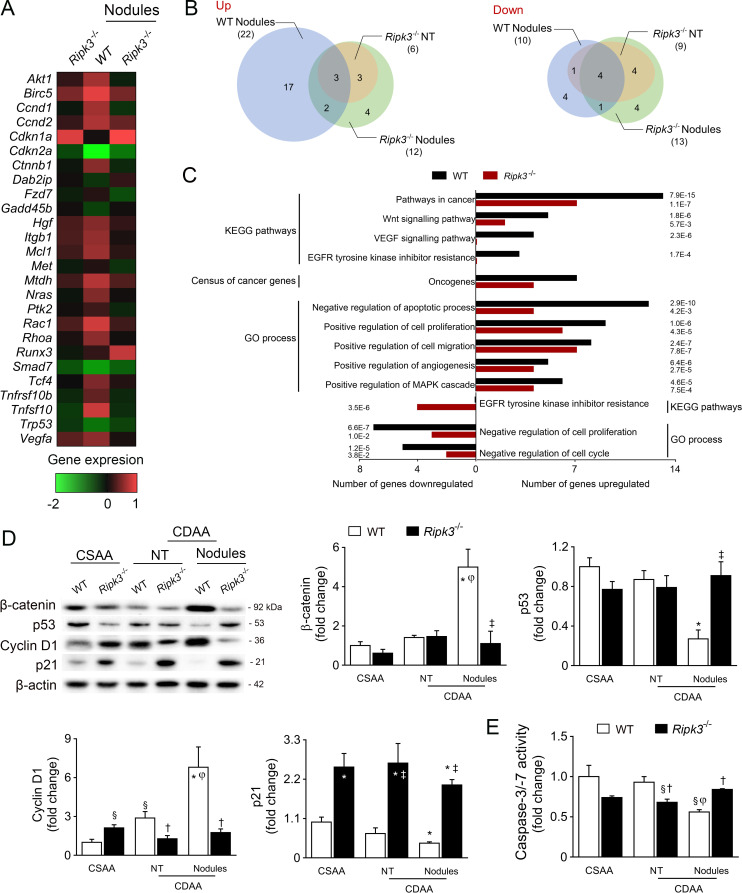
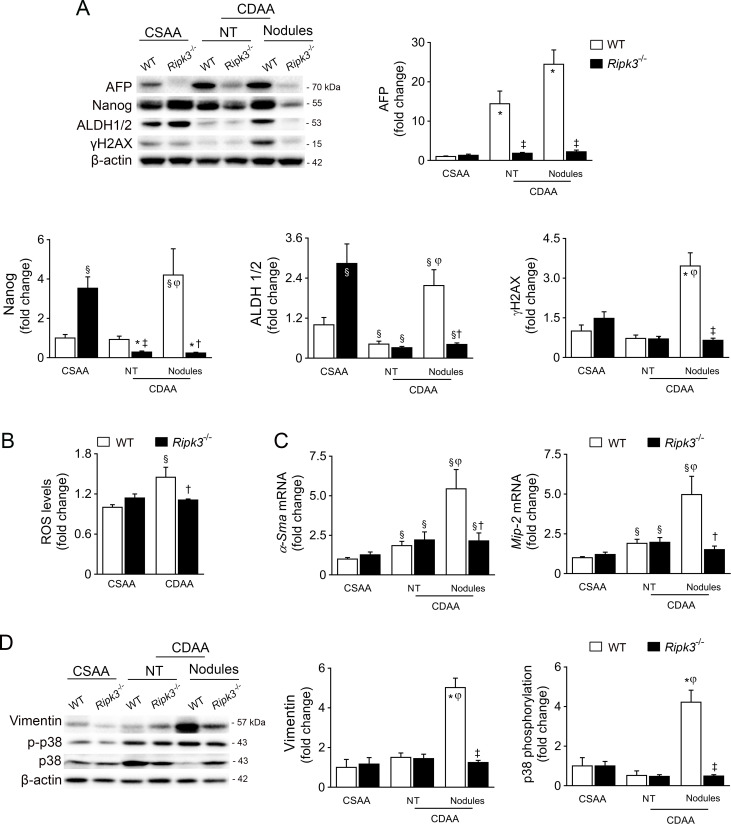
RIPK3 increased in patients with non-alcoholic steatohepatitis (NASH) in both cohorts, correlating with hepatic inflammation and fibrosis. Accordingly, deficiency ameliorated CDAA-induced inflammation and fibrosis in mice at both 32 and 66 weeks. WT mice on the CDAA diet for 66 weeks developed preneoplastic nodules and displayed increased hepatocellular proliferation, which were reduced in mice. Furthermore, 3 deficiency hampered tumourigenesis. Intriguingly, mice displayed increased body weight gain, while lipidomics showed that deletion of shifted hepatic lipid profiles. Peroxisome proliferator-activated receptor γ (PPARγ) was increased in mice and negatively correlated with hepatic RIPK3 in patients with NAFLD. Mechanistic studies established a functional link between RIPK3 and PPARγ in controlling fat deposition and fibrosis.
Hepatic RIPK3 correlates with NAFLD severity in humans and mice, playing a key role in managing liver metabolism, damage, inflammation, fibrosis and carcinogenesis. Targeting RIPK3 and its intricate signalling arises as a novel promising approach to treat NASH and arrest disease progression.
受体相互作用蛋白激酶 3(RIPK3)是细胞坏死执行的关键分子,也是新兴的代谢调控因子,其在非酒精性脂肪性肝病(NAFLD)中的作用存在争议。本研究旨在阐明 RIPK3 信号在人类和实验性 NAFLD 发病机制中的作用。
在两个具有独立验证的经活检证实的 NAFLD 患者队列中评估 RIPK3 水平,并与临床和生化参数相关联。野生型(WT)或-缺陷()小鼠分别用胆碱缺乏 L-氨基酸定义饮食(CDAA)或等热量对照饮食喂养 32 或 66 周。
在两个队列中,非酒精性脂肪性肝炎(NASH)患者的 RIPK3 均增加,与肝炎症和纤维化相关。相应地,在 32 和 66 周时,-缺陷均改善了 CDAA 诱导的炎症和纤维化。在 CDAA 饮食喂养 66 周的 WT 小鼠中发生了前肿瘤结节,并显示出增加的肝细胞增殖,而在 小鼠中则减少。此外,-缺陷阻碍了肿瘤发生。有趣的是,-缺陷小鼠体重增加,而脂质组学显示-缺失改变了肝脏脂质谱。过氧化物酶体增殖物激活受体γ(PPARγ)在-缺陷小鼠中增加,与 NAFLD 患者的肝 RIPK3 呈负相关。机制研究确立了 RIPK3 和 PPARγ 在控制脂肪沉积和纤维化方面的功能联系。
肝 RIPK3 与人及小鼠的 NAFLD 严重程度相关,在调节肝脏代谢、损伤、炎症、纤维化和癌变中起关键作用。靶向 RIPK3 及其复杂信号可能成为治疗 NASH 和阻止疾病进展的新方法。