Yuan Yu, Fan Simiao, Shu Lexin, Huang Wei, Xie Lijuan, Bi Chenghao, Yu Hongxin, Wang Yuming, Li Yubo
Department of Traditional Chinese Medicine, Tianjin University of Traditional Chinese Medicine, Tianjin, China.
Front Pharmacol. 2020 Dec 10;11:600561. doi: 10.3389/fphar.2020.600561. eCollection 2020.
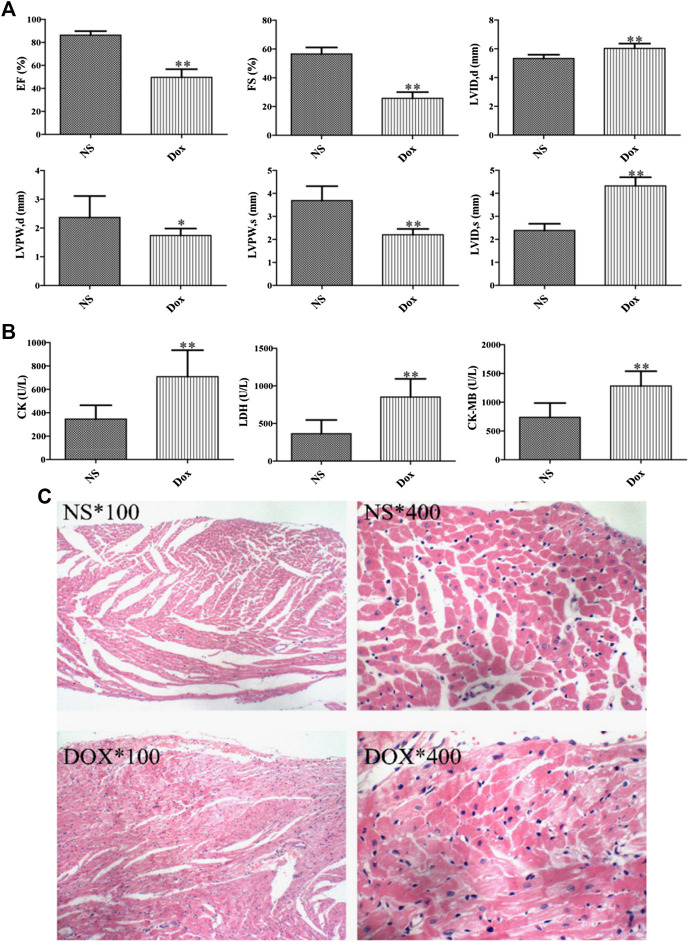
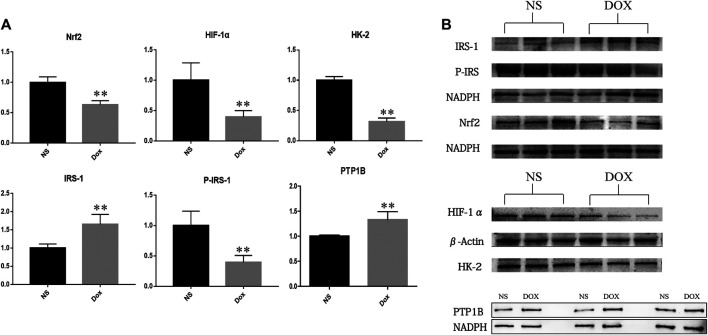
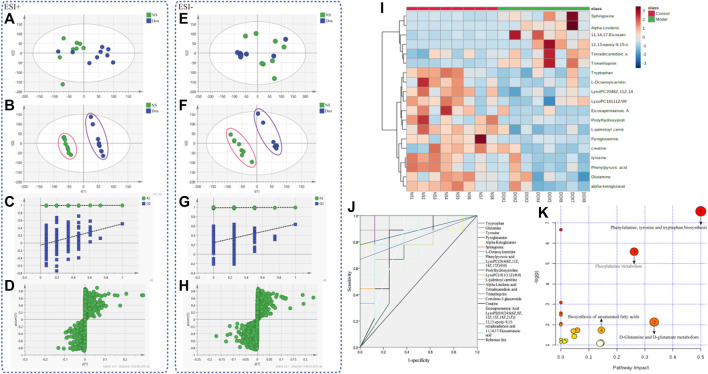
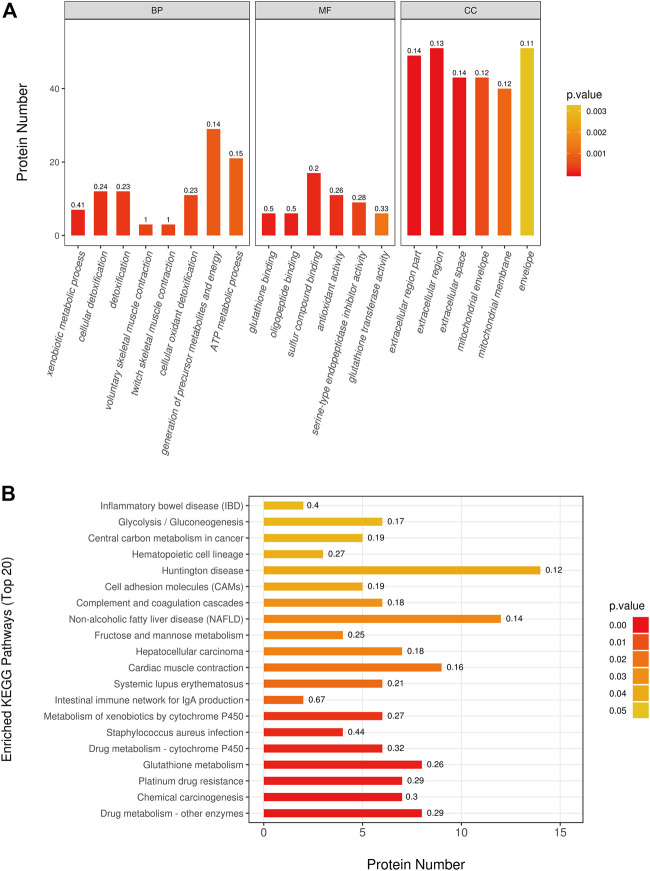
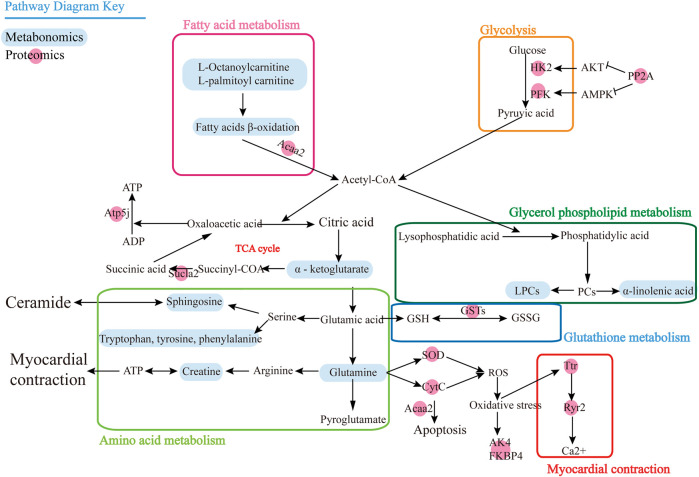
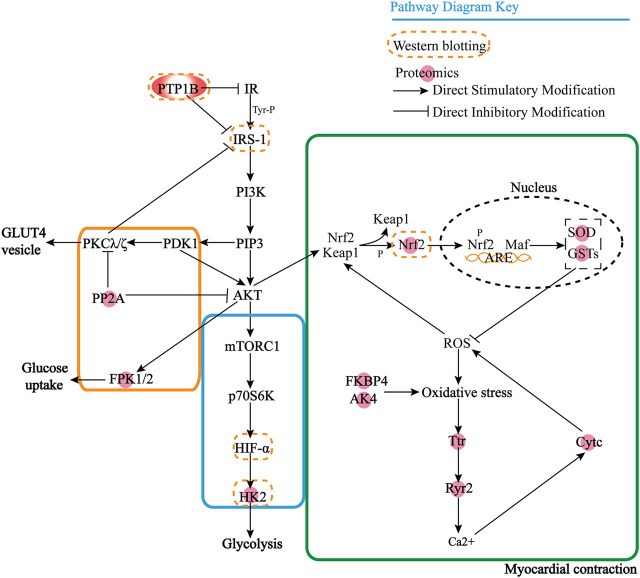
Heart failure is a common systemic disease with high morbidity and mortality worldwide. Doxorubicin (DOX) is a commonly used anthracycline broad-spectrum antitumor antibiotic with strong antitumor effect and definite curative effect. However, cardiotoxicity is the adverse reaction of drug dose cumulative toxicity, but the mechanism is still unclear. In this study, proteomics and metabonomics techniques were used to analyze the tissue and plasma of DOX-induced heart failure (HF) in rats and to clarify the molecular mechanism of the harmful effects of DOX on cardiac metabolism and function in rats from a new point of view. The results showed that a total of 278 proteins with significant changes were identified by quantitative proteomic analysis, of which 118 proteins were significantly upregulated and 160 proteins were significantly downregulated in myocardial tissue. In the metabonomic analysis, 21 biomarkers such as L-octanoylcarnitine, alpha-ketoglutarate, glutamine, creatine, and sphingosine were detected. Correlation analysis showed that DOX-induced HF mainly affected phenylalanine, tyrosine, and tryptophan biosynthesis, D-glutamine and D-glutamate metabolism, phenylalanine metabolism, biosynthesis of unsaturated fatty acids, and other metabolic pathways, suggesting abnormal amino acid metabolism, fatty acid metabolism, and glycerol phospholipid metabolism. It is worth noting that we have found the key upstream target of DOX-induced HF, PTP1B, which inhibits the expression of HIF-1α by inhibiting the phosphorylation of IRS, leading to disorders of fatty acid metabolism and glycolysis, which together with the decrease of Nrf2, SOD, Cytc, and AK4 proteins lead to oxidative stress. Therefore, we think that PTP1B may play an important role in the development of heart failure induced by doxorubicin and can be used as a potential target for the treatment of heart failure.
心力衰竭是一种在全球范围内发病率和死亡率都很高的常见全身性疾病。阿霉素(DOX)是一种常用的蒽环类广谱抗肿瘤抗生素,具有强大的抗肿瘤作用且疗效确切。然而,心脏毒性是药物剂量累积毒性的不良反应,但其机制仍不清楚。在本研究中,采用蛋白质组学和代谢组学技术分析阿霉素诱导的大鼠心力衰竭(HF)的组织和血浆,并从新的角度阐明阿霉素对大鼠心脏代谢和功能产生有害影响的分子机制。结果表明,通过定量蛋白质组分析共鉴定出278种有显著变化的蛋白质,其中心肌组织中有118种蛋白质显著上调,160种蛋白质显著下调。在代谢组学分析中,检测到1 - 辛酰肉碱、α - 酮戊二酸、谷氨酰胺、肌酸和鞘氨醇等21种生物标志物。相关性分析表明,阿霉素诱导的HF主要影响苯丙氨酸、酪氨酸和色氨酸生物合成、D - 谷氨酰胺和D - 谷氨酸代谢、苯丙氨酸代谢、不饱和脂肪酸生物合成等代谢途径,提示氨基酸代谢、脂肪酸代谢和甘油磷脂代谢异常。值得注意的是,我们发现了阿霉素诱导HF的关键上游靶点PTP1B,它通过抑制IRS的磷酸化来抑制HIF - 1α的表达,导致脂肪酸代谢和糖酵解紊乱,同时Nrf2、SOD、Cytc和AK4蛋白减少导致氧化应激。因此,我们认为PTP1B可能在阿霉素诱导的心力衰竭发展中起重要作用,可作为治疗心力衰竭的潜在靶点。