Yuen Ka Y, Fraser Natalie S, Henning Joerg, Halpin Kim, Gibson Justine S, Betzien Lily, Stewart Allison J
School of Veterinary Science, The University of Queensland, Gatton, QLD 4343, Australia.
Australian Centre for Disease Preparedness, Commonwealth Science and Industry Research Organization (CSIRO), Geelong, VIC 3219, Australia.
One Health. 2021 Jun;12:100207. doi: 10.1016/j.onehlt.2020.100207. Epub 2020 Dec 21.
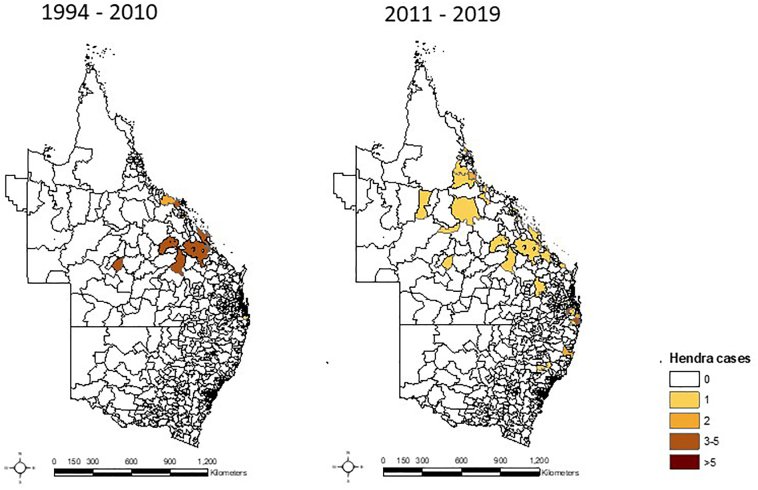
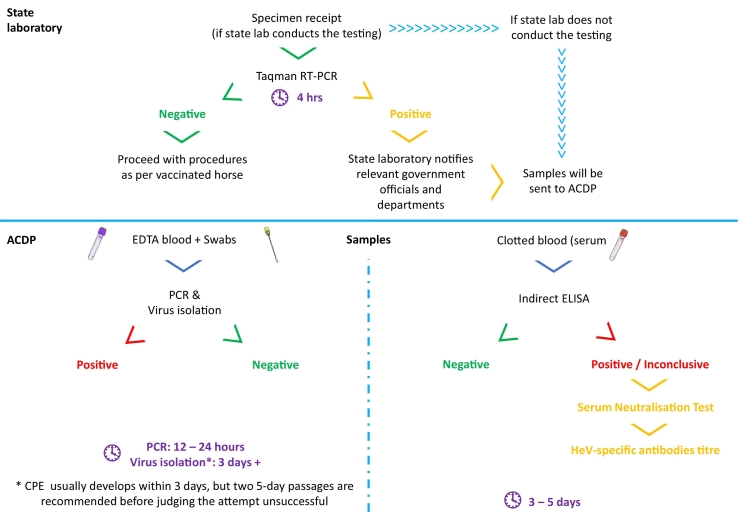
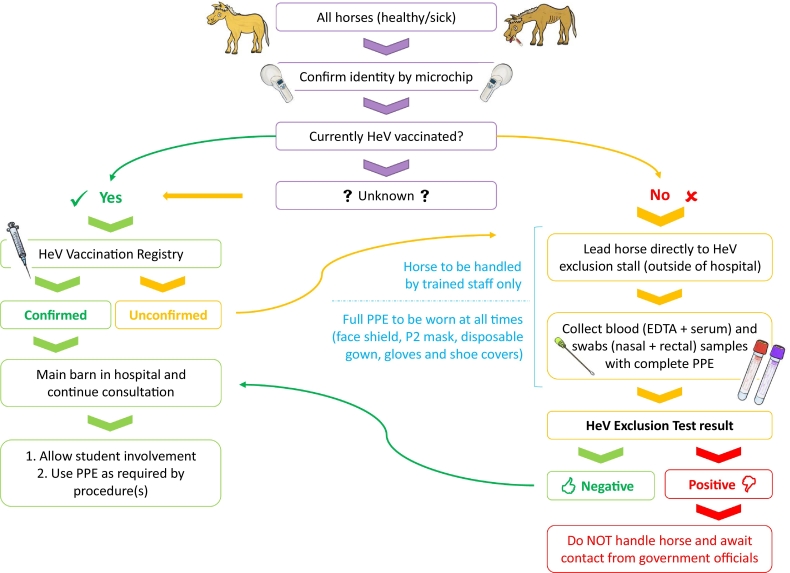
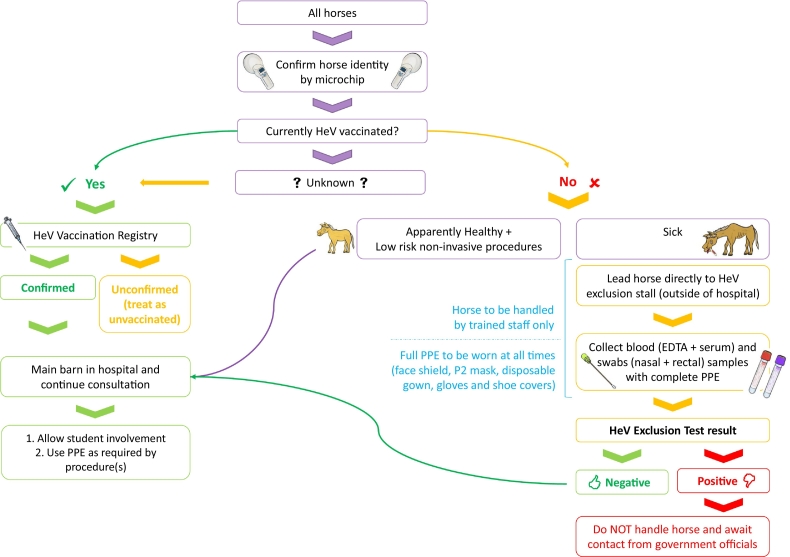
Hendra virus (HeV) continues to pose a serious public health concern as spillover events occur sporadically. Terminally ill horses can exhibit a range of clinical signs including frothy nasal discharge, ataxia or forebrain signs. Early signs, if detected, can include depression, inappetence, colic or mild respiratory signs. All unvaccinated ill horses in areas where flying foxes exist, may potentially be infected with HeV, posing a significant risk to the veterinary community. Equivac® HeV vaccine has been fully registered in Australia since 2015 (and under an Australian Pesticides and Veterinary Medicines Authority special permit since 2012) for immunization of horses against HeV and is the most effective and direct solution to prevent disease transmission to horses and protect humans. No HeV vaccinated horse has tested positive for HeV infection. There is no registered vaccine to prevent, or therapeutics to treat, HeV infection in humans. Previous equine HeV outbreaks tended to cluster in winter overlapping with the foaling season (August to December), when veterinarians and horse owners have frequent close contact with horses and their bodily fluids, increasing the chance of zoonotic disease transmission. The most southerly case was detected in 2019 in the Upper Hunter region in New South Wales, which is Australia's Thoroughbred horse breeding capital. Future spillover events are predicted to move further south and inland in Queensland and New South Wales, aligning with the moving distribution of the main reservoir hosts. Here we (1) review HeV epidemiology and climate change predicted infection dynamics, (2) present a biosecurity protocol for veterinary clinics and hospitals to adopt, and (3) describe diagnostic tests currently available and those under development. Major knowledge and research gaps have been identified, including evaluation of vaccine efficacy in foals to assess current vaccination protocol recommendations.
亨德拉病毒(HeV)仍对公共卫生构成严重威胁,因为病毒外溢事件时有发生。患绝症的马匹可能会出现一系列临床症状,包括泡沫状鼻液、共济失调或前脑症状。早期症状如果被发现,可能包括抑郁、食欲不振、绞痛或轻微呼吸道症状。在有狐蝠存在的地区,所有未接种疫苗的患病马匹都有可能感染HeV,这对兽医群体构成了重大风险。自2015年以来,Equivac® HeV疫苗已在澳大利亚全面注册(自2012年起根据澳大利亚农药和兽药管理局的特别许可),用于马匹预防HeV免疫,是预防疾病传播给马匹和保护人类的最有效、最直接的解决方案。没有接种过HeV疫苗的马匹检测出HeV感染呈阳性。目前尚无用于预防或治疗人类HeV感染的注册疫苗。以往马群的HeV疫情往往集中在冬季,与产驹季节(8月至12月)重叠,此时兽医和马主会频繁密切接触马匹及其体液,增加了人畜共患病传播的几率。最南端的病例于2019年在新南威尔士州的上亨特地区被发现,该地区是澳大利亚的纯种马繁育之都。预计未来的病毒外溢事件将在昆士兰州和新南威尔士州进一步向南和内陆蔓延,这与主要宿主的分布变化相一致。在此,我们(1)回顾HeV的流行病学和气候变化预测的感染动态,(2)提出兽医诊所和医院应采用的生物安全协议,(3)描述目前可用的诊断测试以及正在研发的测试。已确定了主要的知识和研究空白,包括评估幼驹的疫苗效力以评估当前的疫苗接种方案建议。