Chen Shihao, Wang Dedong, Liu Yinyin, Zhao Ruihan, Wu Ting, Hu Xuming, Pan Zhiming, Cui Hengmi
Institute of Epigenetics and Epigenomics and College of Animal Science and Technology, Yangzhou University, Yangzhou, China.
Jiangsu Key Laboratory of Zoonosis, Yangzhou University, Yangzhou, China.
Front Microbiol. 2020 Dec 8;11:603131. doi: 10.3389/fmicb.2020.603131. eCollection 2020.
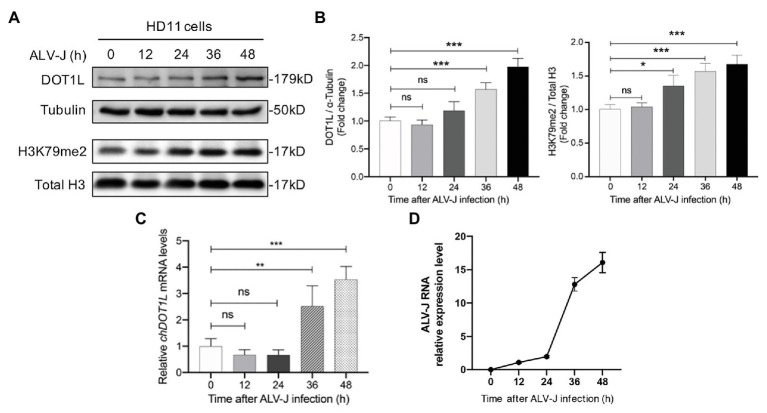
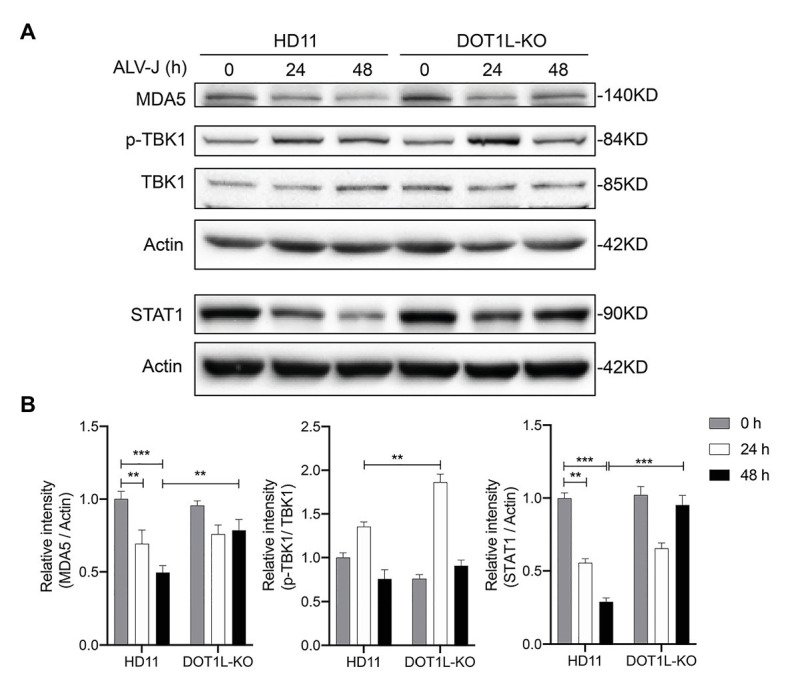
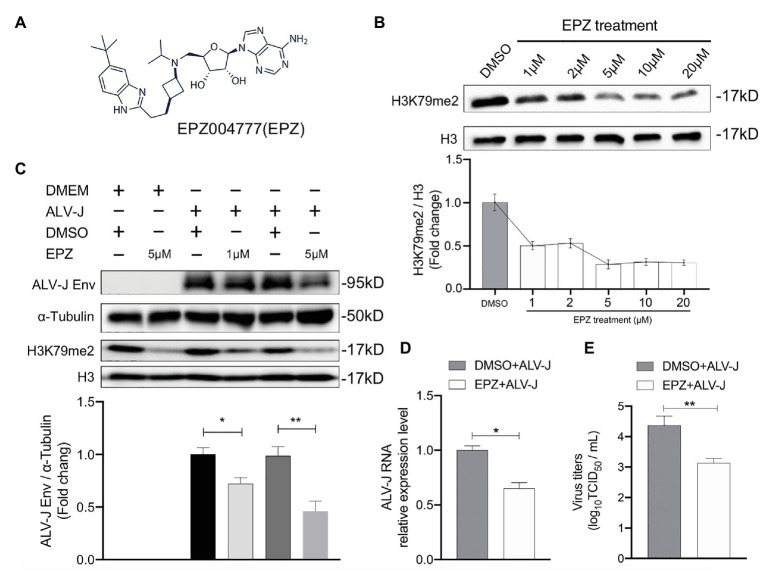
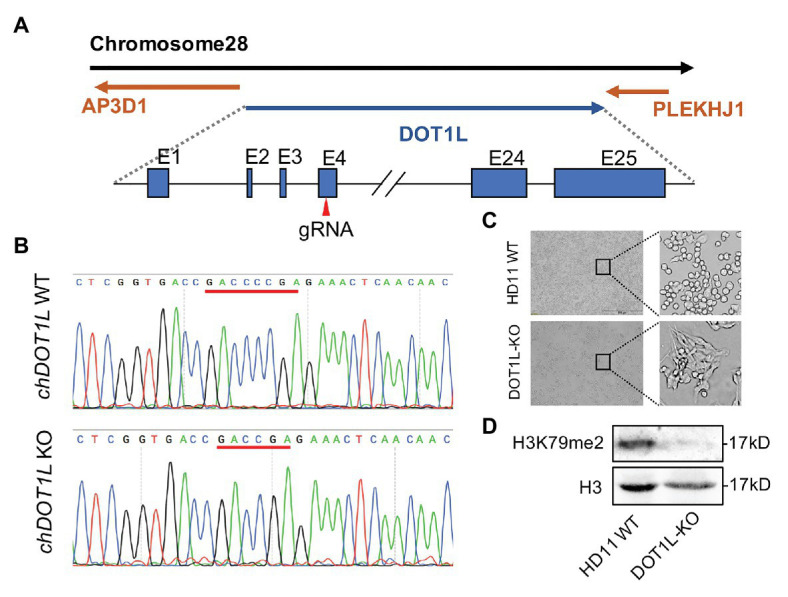
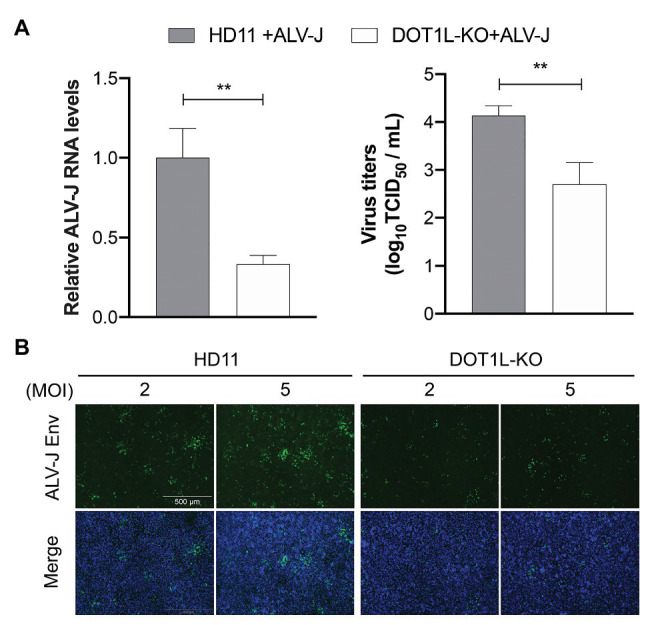
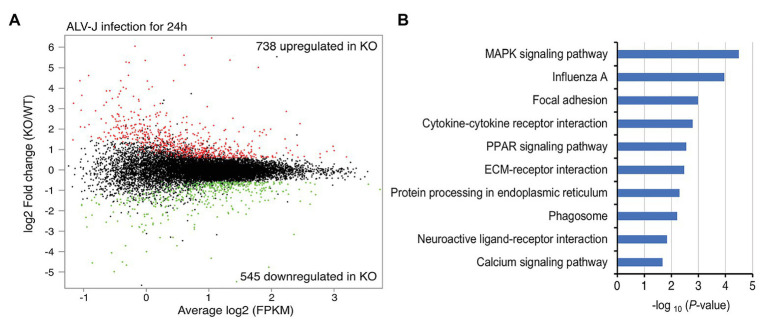
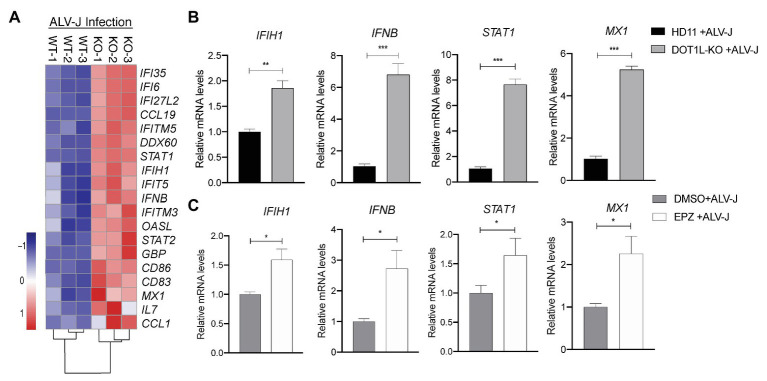
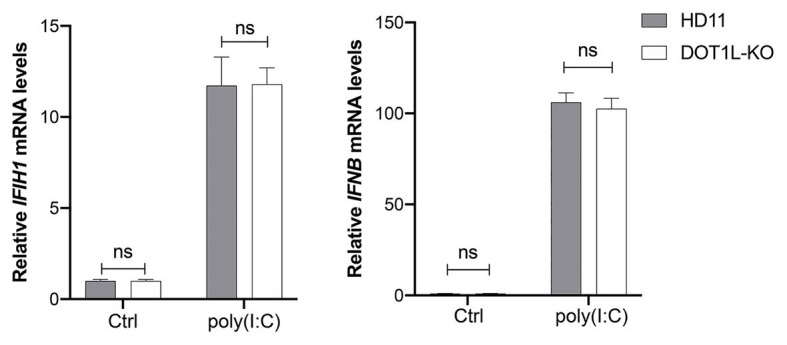
Avian leukosis virus subgroup J (ALV-J), an oncogenic retrovirus, is known to cause immunosuppression and various types of cancer in chickens. Recent reports have shown that epigenetic changes in DNA and chromatin are widely implicated in the life cycle of diverse viruses, and reversal of these changes in host cells can lead to alterations in the propagation of viruses. In the present study, we found that disruptor of telomeric silencing 1-like (DOT1L), a histone H3 lysine79 (H3K79) methyltransferase, was upregulated during ALV-J infection in chicken macrophage HD11 cells. Subsequently, we show that targeting DOT1L with a specific inhibitor can significantly decrease the ALV-J replication and viral production. By generating of DOT1L-knockout (KO) HD11 cells using the CRISPR/Cas9 system, we show that deletion of the DOT1L led to an increase in the induction of and interferon-stimulated genes (ISGs) in HD11 cells in response to ALV-J infection. Importantly, we confirmed that ALV-J infection impaired the activation of the melanoma differentiation-associated protein 5 (MDA5)-mediated-IFN pathway by suppressing the MDA5 expression, and knockout DOT1L rescued the expression of MDA5 and signal transducer and activator of transcription 1 (STAT1), both of which tightly control the antiviral innate immunity. Collectively, it can be deduced from the current data that blocking DOT1L activity or deletion of DOT1L can lead to ALV-J replication inhibition and restoration of the virally suppressed host innate immunity. Thus, we suggest that DOT1L might be a potential drug target for modulating host innate immune responses to combat ALV-J infection.
禽白血病病毒J亚群(ALV-J)是一种致癌逆转录病毒,已知可导致鸡的免疫抑制和各种类型的癌症。最近的报道表明,DNA和染色质的表观遗传变化广泛参与了多种病毒的生命周期,宿主细胞中这些变化的逆转可导致病毒繁殖的改变。在本研究中,我们发现端粒沉默破坏因子1样蛋白(DOT1L),一种组蛋白H3赖氨酸79(H3K79)甲基转移酶,在鸡巨噬细胞HD11细胞感染ALV-J期间上调。随后,我们表明用特异性抑制剂靶向DOT1L可显著降低ALV-J的复制和病毒产生。通过使用CRISPR/Cas9系统产生DOT1L基因敲除(KO)的HD11细胞,我们发现删除DOT1L导致HD11细胞在感染ALV-J时诱导I型干扰素和干扰素刺激基因(ISG)增加。重要的是,我们证实ALV-J感染通过抑制黑色素瘤分化相关蛋白5(MDA5)的表达损害了MDA5介导的干扰素途径的激活,而敲除DOT1L可挽救MDA5以及信号转导和转录激活因子1(STAT1)的表达,这两者都严格控制抗病毒先天免疫。总的来说,从目前的数据可以推断,阻断DOT1L活性或删除DOT1L可导致ALV-J复制受到抑制,并恢复被病毒抑制的宿主先天免疫。因此,我们认为DOT1L可能是调节宿主先天免疫反应以对抗ALV-J感染的潜在药物靶点。