Çakmak Başer Özgün, Ay Saime, Evcik Deniz
Department of Physical Medicine and Rehabilitation, Ufuk University Medical School, Ankara, Turkey.
Turk J Phys Med Rehabil. 2020 Nov 9;66(4):413-422. doi: 10.5606/tftrd.2020.4174. eCollection 2020 Dec.
This study aims to evaluate and compare the cost-effectiveness of inpatient physical therapy, outpatient physical therapy applications, and back school education in low back pain (LBP) treatment.
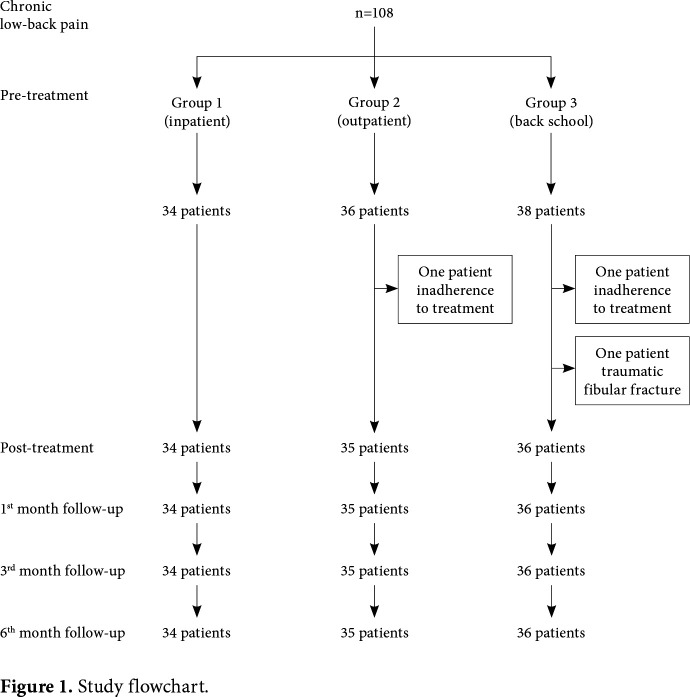
Between March 2011 and September 2011, a total of 105 patients (43 males, 62 females; mean age 44.8±12.7 years; range, 27 to 58 years) who were treated for chronic LBP were included in this prospective study. Of the patients, 34 received inpatient physical therapy consisting of electrotherapy, superficial-deep heat application, and basic back exercise program, 35 received the same treatment in the outpatient setting, and 36 received back school education. Each patient was evaluated five times during the study using pain intensity Visual Analog Scale (VAS), spinal mobility measurements (inclinometer), general evaluation (VAS), functional disability measurement (Roland-Morris Disability Questionnaire [RMDQ]), and quality of life (Short Form-36 [SF-36]). All expenses and costs for treatment of LBP were estimated.
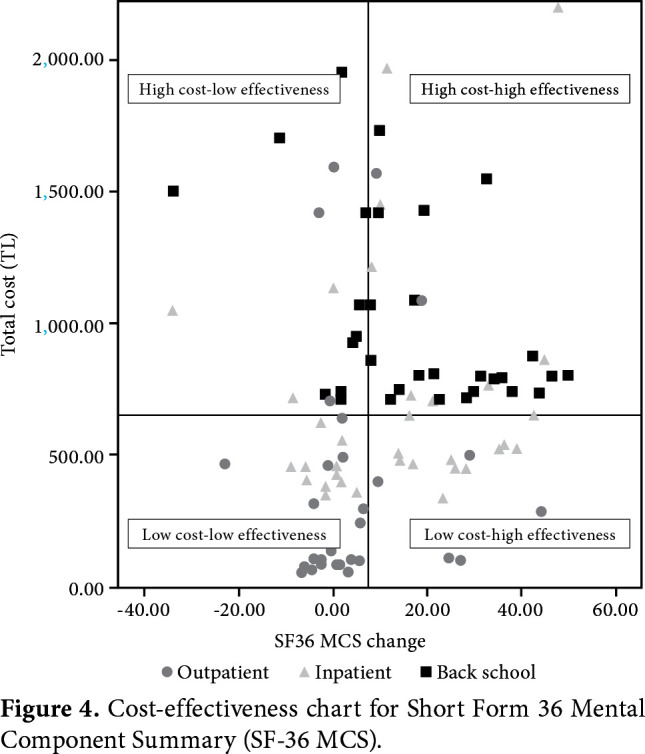
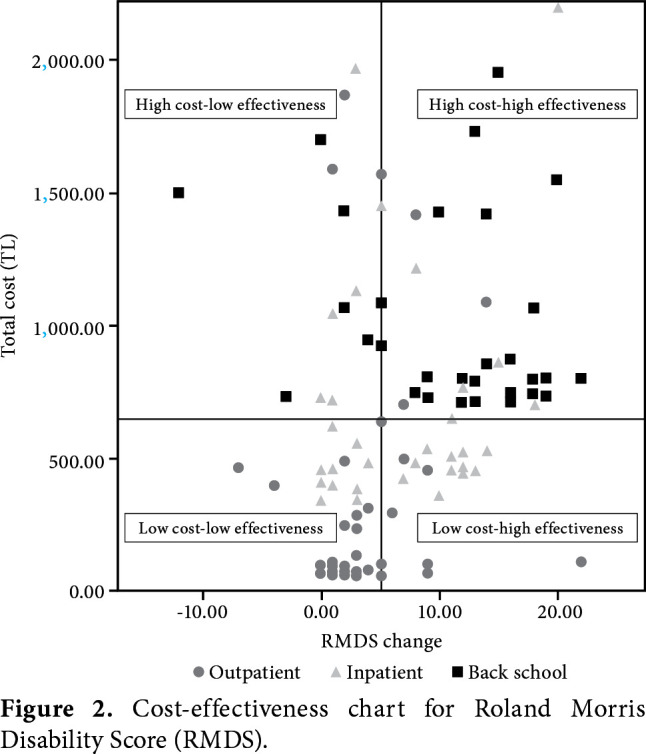
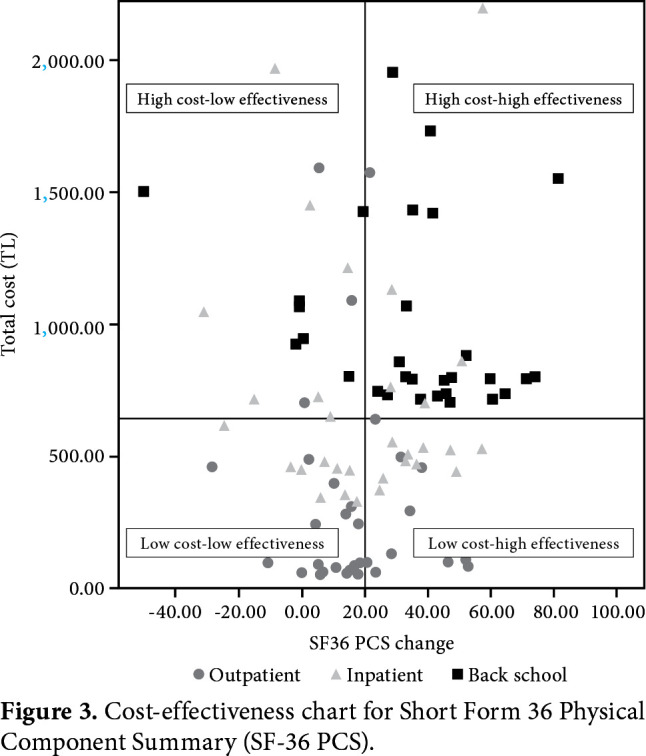
At the end of six months of follow-up, all study groups had a statistically significant improvement in all variables. Improvements in spinal mobility, RMDQ, and SF-36 scores were significantly higher in the inpatient physical therapy group (p<0.001). Direct and total costs were the highest in the inpatient treatment group and were the lowest in the back school education group (p<0.001). No statistically significant differences were observed in terms of additional cost of one-unit improvement in these variables among the study groups.
Our study results suggest that all three treatment modalities are effective in chronic LBP. In patients with LBP-related impairment in functional status and quality of life, inpatient physical therapy and rehabilitation should be preferred.
本研究旨在评估和比较住院物理治疗、门诊物理治疗以及腰痛(LBP)治疗中的腰背学校教育的成本效益。
在2011年3月至2011年9月期间,本前瞻性研究纳入了共105例接受慢性腰痛治疗的患者(43例男性,62例女性;平均年龄44.8±12.7岁;范围为27至58岁)。其中,34例接受了包括电疗法、深浅层热疗以及基本背部锻炼计划的住院物理治疗,35例在门诊接受了相同的治疗,36例接受了腰背学校教育。在研究期间,使用疼痛强度视觉模拟量表(VAS)、脊柱活动度测量(倾角仪)、总体评估(VAS)、功能障碍测量(罗兰-莫里斯残疾问卷[RMDQ])以及生活质量(简明健康状况调查简表[SF-36])对每位患者进行了五次评估。估算了所有腰痛治疗的费用和成本。
在六个月的随访结束时,所有研究组在所有变量上均有统计学上的显著改善。住院物理治疗组的脊柱活动度、RMDQ和SF-36评分的改善显著更高(p<0.001)。住院治疗组的直接成本和总成本最高,而腰背学校教育组的成本最低(p<0.001)。在这些变量上,研究组之间每单位改善的额外成本方面未观察到统计学上的显著差异。
我们的研究结果表明,所有三种治疗方式对慢性腰痛均有效。对于功能状态和生活质量与腰痛相关受损的患者,应首选住院物理治疗和康复。