Schlüter Klaus-Dieter, Wolf Annemarie, Schreckenberg Rolf
Institute of Physiology, Justus-Liebig-University, Gießen, Germany.
Front Physiol. 2020 Dec 7;11:598649. doi: 10.3389/fphys.2020.598649. eCollection 2020.
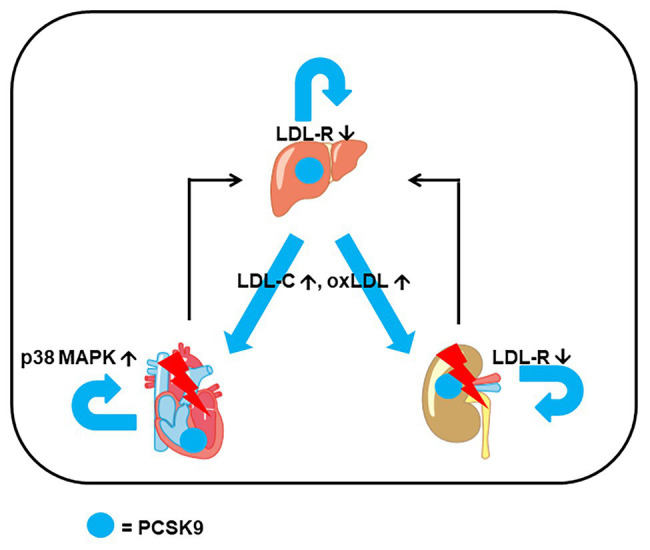
Neuronal apoptosis regulated convertase-1 (NARC-1), now mostly known as proprotein convertase subtilisin/kexin type 9 (PCSK9), has received a lot of attention due to the fact that it is a key regulator of the low-density lipoprotein (LDL) receptor (LDL-R) and is therefore involved in hepatic LDL clearance. Within a few years, therapies targeting PCSK9 have reached clinical practice and they offer an additional tool to reduce blood cholesterol concentrations. However, PCSK9 is almost ubiquitously expressed in the body but has less well-understood functions and target proteins in extra hepatic tissues. As such, PCSK9 is involved in the regulation of neuronal survival and protein degradation, it affects the expression of the epithelial sodium channel (ENaC) in the kidney, it interacts with white blood cells and with cells of the vascular wall, and it modifies contractile activity of cardiomyocytes, and contributes to the regulation of cholesterol uptake in the intestine. Moreover, under stress conditions, signals from the kidney and heart can affect hepatic expression and thereby the plasma concentration of PCSK9 which then in turn can affect other target organs. Therefore, there is an intense relationship between the local (autocrine) and systemic (endocrine) effects of PCSK9. Although, PCSK9 has been recognized as a ubiquitously expressed modifier of cellular function and signaling molecules, its physiological role in different organs is not well-understood. The current review summarizes these findings.
神经元凋亡调节转化酶-1(NARC-1),现在大多称为前蛋白转化酶枯草杆菌蛋白酶/kexin 9型(PCSK9),因其是低密度脂蛋白(LDL)受体(LDL-R)的关键调节因子,因此参与肝脏LDL清除,而备受关注。在短短几年内,针对PCSK9的疗法已进入临床实践,它们为降低血液胆固醇浓度提供了一种额外的工具。然而,PCSK9在体内几乎普遍表达,但在肝外组织中的功能和靶蛋白了解较少。因此,PCSK9参与神经元存活和蛋白质降解的调节,影响肾脏中上皮钠通道(ENaC)的表达,与白细胞和血管壁细胞相互作用,改变心肌细胞的收缩活性,并有助于调节肠道中的胆固醇摄取。此外,在应激条件下,来自肾脏和心脏的信号可影响肝脏表达,进而影响PCSK9的血浆浓度,而PCSK9继而又可影响其他靶器官。因此,PCSK9的局部(自分泌)和全身(内分泌)作用之间存在密切关系。尽管PCSK9已被认为是细胞功能和信号分子的普遍表达修饰因子,但其在不同器官中的生理作用仍未得到充分了解。本综述总结了这些发现。