Teng Chiao-Fang, Li Tsai-Chung, Wang Ting, Wu Tzu-Hua, Wang John, Wu Han-Chieh, Shyu Woei-Cherng, Su Ih-Jen, Jeng Long-Bin
Graduate Institute of Biomedical Sciences, China Medical University, Taichung, Taiwan.
Organ Transplantation Center, China Medical University Hospital, Taichung, Taiwan.
J Hepatocell Carcinoma. 2020 Dec 17;7:385-401. doi: 10.2147/JHC.S282818. eCollection 2020.
Chronic hepatitis B virus (HBV) infection is a major risk factor for hepatocellular carcinoma (HCC), a leading cause of cancer-related death worldwide. The HCC patients who harbor HBV pre-S2 mutant, an oncoprotein that plays key roles in HCC development, have been closely associated with a worse prognosis after curative surgical resection, suggesting an urgent need for alternative therapeutic options to improve their survival. In this study, we aimed to evaluate the expression profiles of programmed death 1 (PD-1) and programmed death ligand 1 (PD-L1), two of the most well-studied immune checkpoint molecules that promote tumor immune evasion, in tumor of the pre-S2 mutant-positive/high HCC patients.
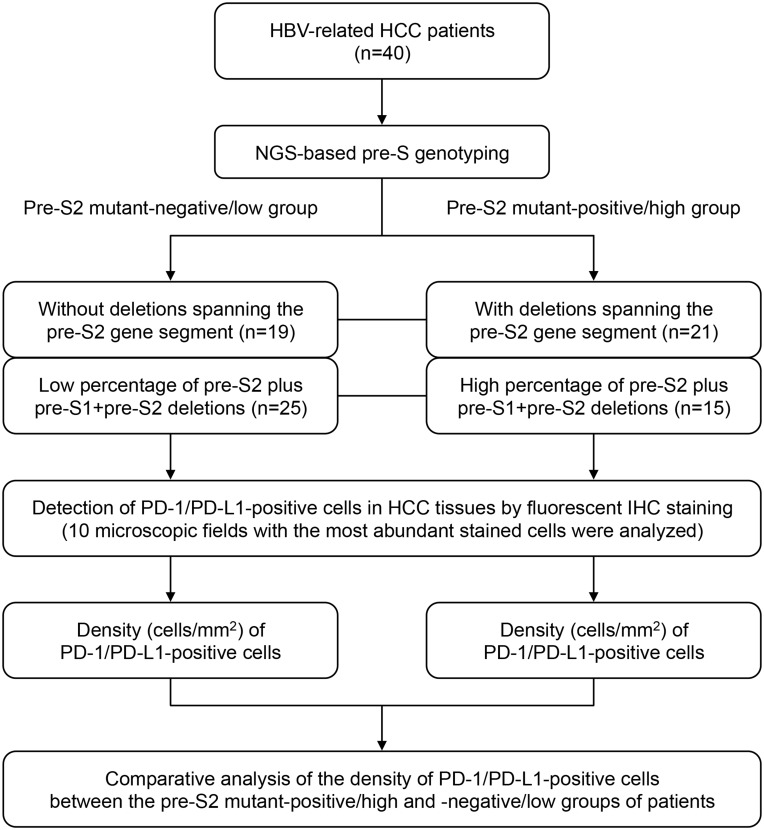
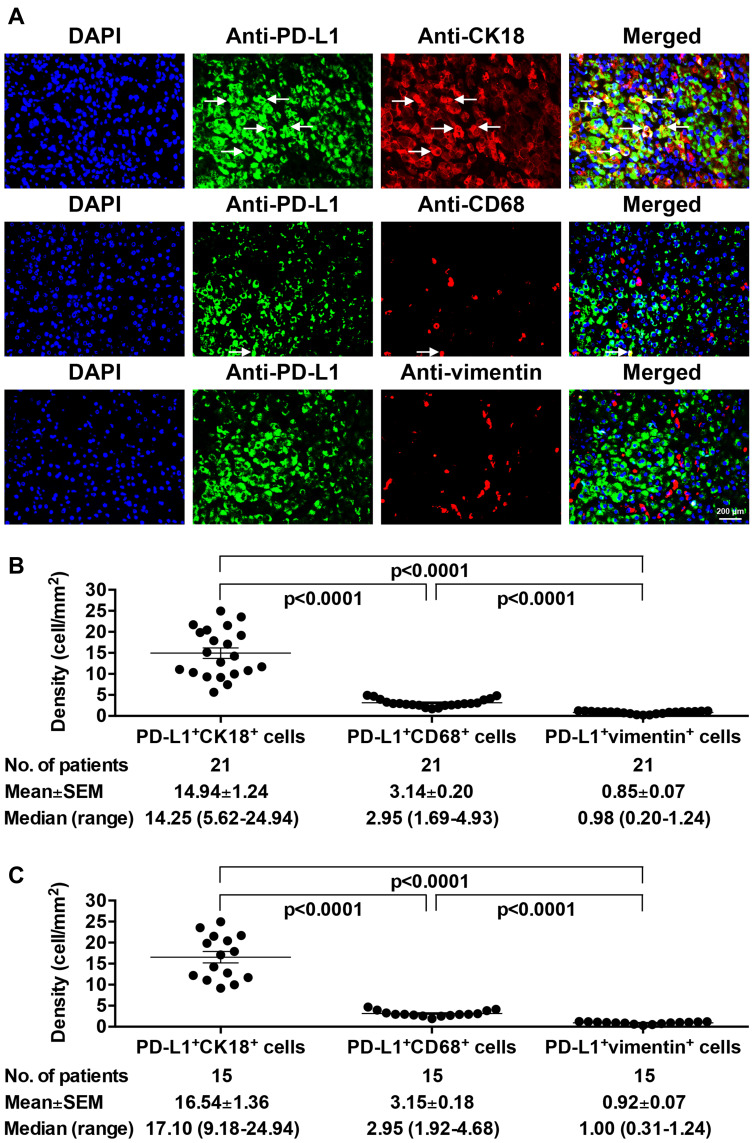
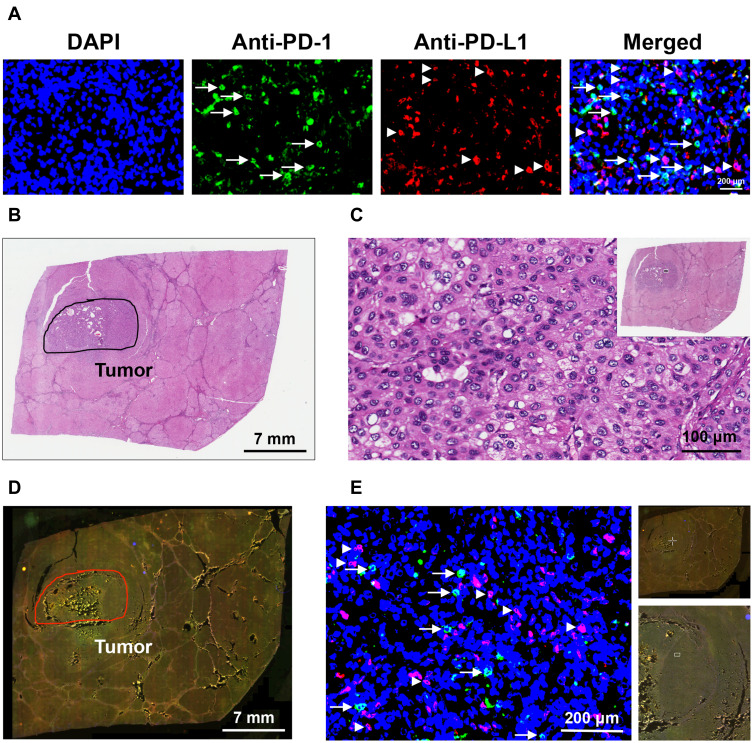
We classified 40 HBV-related HCC patients into the pre-S2-positive/high and -negative/low groups by a next-generation sequencing-based approach. The fluorescent immunohistochemistry staining was performed to detect the expression of PD-1 and PD-L1 in HCC tissues of patients.
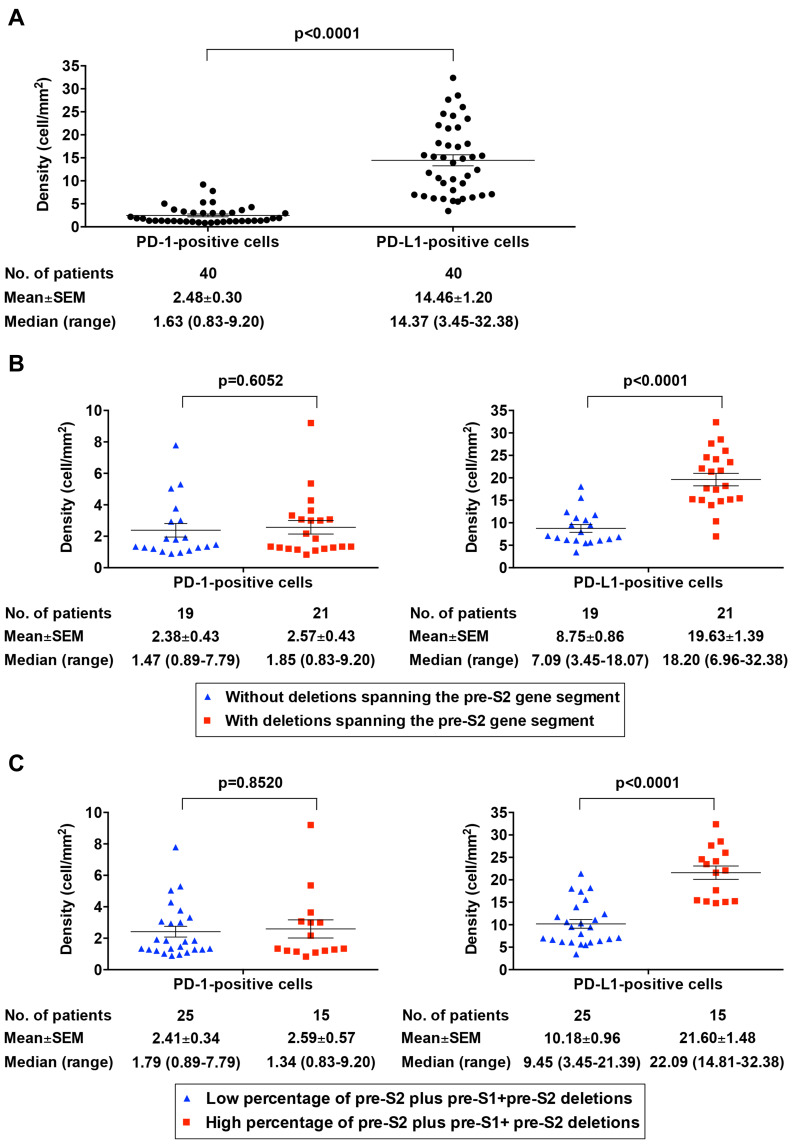
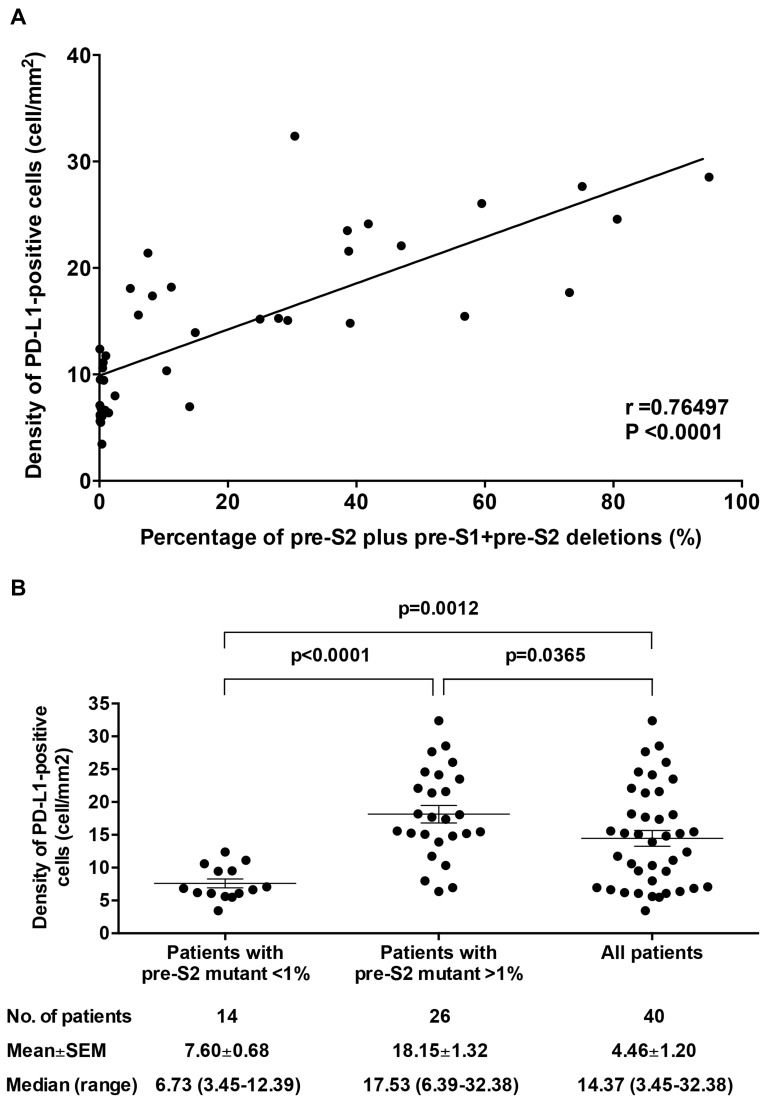
We showed that patients with either deletion spanning pre-S2 gene segment or high percentage of pre-S2 plus pre-S1+pre-S2 deletion (the pre-S2 mutant-positive/high group) exhibited a significantly higher density of PD-L1-positive cells in HCC tissues than those without. Moreover, the percentage of pre-S2 plus pre-S1+pre-S2 deletion displayed a high positive correlation with the density of PD-L1-positive cells in HCC tissues.
The increased expression of PD-L1 in tumor tissues of the pre-S2 mutant-positive HCC patients suggest that pre-S2 mutant may play a potential role in dysregulation of tumor immune microenvironment in the progression of HBV-related HCC, implicating for the development of future therapeutic strategies.
慢性乙型肝炎病毒(HBV)感染是肝细胞癌(HCC)的主要危险因素,HCC是全球癌症相关死亡的主要原因。携带HBV前S2突变体(一种在HCC发生发展中起关键作用的癌蛋白)的HCC患者,与根治性手术切除后较差的预后密切相关,这表明迫切需要替代治疗方案来提高其生存率。在本研究中,我们旨在评估程序性死亡1(PD-1)和程序性死亡配体1(PD-L1)这两种研究最为深入的促进肿瘤免疫逃逸的免疫检查点分子,在HBV前S2突变体阳性/高表达HCC患者肿瘤中的表达谱。
我们采用基于二代测序的方法,将40例HBV相关HCC患者分为前S2阳性/高表达组和阴性/低表达组。采用荧光免疫组织化学染色法检测患者HCC组织中PD-1和PD-L1的表达。
我们发现,前S2基因片段存在缺失或前S2加前S1+前S2缺失比例较高(前S2突变体阳性/高表达组)的患者,其HCC组织中PD-L1阳性细胞密度显著高于无上述情况的患者。此外,前S2加前S1+前S2缺失比例与HCC组织中PD-L1阳性细胞密度呈高度正相关。
前S2突变体阳性HCC患者肿瘤组织中PD-L1表达增加,提示前S2突变体可能在HBV相关HCC进展过程中肿瘤免疫微环境失调中发挥潜在作用,这为未来治疗策略的开发提供了线索。