Center for Health Systems Research, Sutter Health, Walnut Creek, CA, USA.
Montefiore Headache Center, Albert Einstein College of Medicine, Bronx, NY, USA.
Headache. 2021 Mar;61(3):462-484. doi: 10.1111/head.14033. Epub 2020 Dec 23.
To characterize patients who utilize services for migraine in a large integrated health care network, and describe patterns of care and utilization.
Within health care systems, migraine is a common reason for seeking primary and neurology care, but relatively little is documented about who seeks care and the factors that explain variation in utilization.
We conducted a retrospective cohort study using electronic health record (EHR) data from Sutter Health primary care (PC) patients who had at least one office visit to a PC clinic between 2013 and 2017. Migraine status was ascertained from diagnosis codes and medication orders. Control status was assigned to those with no evidence of care for any type of headache. We divided the primary care migraine cohort into two groups: those who received all their care for migraine from PC (denoted PC-M) and those who had ≥1 encounter with a neurologist for migraine (denoted N-M). Migraine cases were also designated as having preexisting migraine if they had an encounter with a migraine diagnosis within (±) 6 months of their first study period PC visit and, otherwise, designated as first migraine consult. Two levels of contrasts included: patients with migraine and controls; and within the group of patients with migraine, PC-M and N-M groups. Comorbid conditions were determined from EHR encounter diagnosis codes.
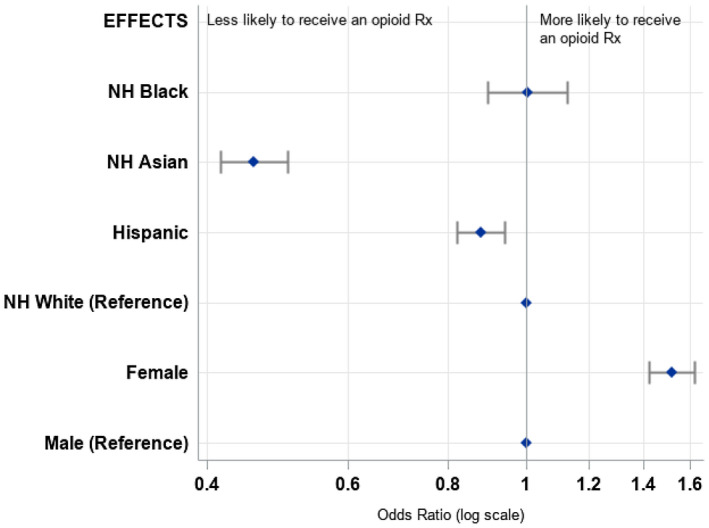
We identified 94,149 patients with migraine (including 21,525 N-M and 72,624 PC-M) and 1,248,763 controls. Comorbidities: Proportions of psychiatric [29.8% (n = 28,054) vs. 11.8% (n = 147,043)], autoimmune [(4.4% (n = 4162) vs. 2.6% (n = 31,981)], pain [13.2% (n = 12,439) vs. 5.8% (n = 72,049)], respiratory [24.6% (n = 23,186) vs. 12.3% (n = 153,692)], neurologic [2.9% (n = 2688) vs. 0.9% (n = 11,321)], and cerebrovascular [1.0% (n = 945) vs. 0.6% (n = 7500)] conditions were higher in the migraine group compared to controls, all p < 0.001. Among patients with migraine, the N-M group was similar to the PC-M group in sex, age, ethnicity, and marital status, but were more likely to have preexisting migraine (49.9% (n = 10,734) vs. 36.2% (n = 26,317), p < 0.001). Proportions of comorbid conditions were higher among the N-M group than the PC-M group {psychiatric [38.5% (n = 8291) vs. 27.2% (n = 19,763)], autoimmune [6.3% (n = 1365) vs. 3.9% (n = 2797)], pain [19.6% (n = 4218) vs. 11.3% (n = 8211)], respiratory [30.3% (n = 6516) vs. 23.0% (n = 16,670)], neurologic [6.0% (n = 1288) vs. 1.9% (n = 1400)], cardiovascular [9.7% (n = 2091) vs. 7.0% (n = 5076)], and cerebrovascular [2.3% (n = 500) vs. 0.6% (n = 445)], all p < 0.001}. Medications: During the study period, 82.6% (n = 77,762) of patients with migraine received ≥1 prescription order for an acute migraine medication [89.4% (n = 19,250) of N-M vs. 80.6% (n = 58,512) of PC]. Opioids were prescribed to 52.9% (n = 49,837) of patients with migraine [63.5% (n = 13,669) for N-M and 49.8% (n = 36,168) for PC-M patients). During the study period, 61.4% (n = 57,810) of patients received ≥1 prescription for a migraine preventive medication [81.4% (n = 17,521) of N-M and 55.5% (n = 40,289) of PC-M patients]. The most commonly prescribed classes of preventive medications were antidepressants.
Among patients with migraine in a large health system, those who were also cared for in neurology were more likely to receive both acute and preventive medication migraine orders than those patients who did not see a neurologist, with triptans and antidepressants the most commonly prescribed classes of acute and preventive pharmacotherapies, respectively. Opioids were prescribed to approximately half of the total sample and more common in the N-M group. Adjusting for demographics, patients with migraine had higher rates of nearly every comorbidity we assessed and were more likely to utilize services compared to those without migraine. Overall, patients with migraine also cared for in neurology practices used more of all health care resource types under consideration and had more medical issues, which may be due in some part to a more severe, frequent and disabling disease state compared to those who sought care exclusively from PC practices.
在大型综合医疗保健网络中描述偏头痛患者的特征,并描述其就诊模式和利用情况。
在医疗保健系统中,偏头痛是寻求初级保健和神经科就诊的常见原因,但相对较少记录谁在寻求护理以及哪些因素解释了利用情况的差异。
我们使用 Sutter Health 初级保健(PC)患者的电子健康记录(EHR)数据进行了一项回顾性队列研究,这些患者在 2013 年至 2017 年期间至少有一次到 PC 诊所就诊。偏头痛状态是通过诊断代码和药物医嘱确定的。对照组被分配给那些没有任何类型头痛护理记录的患者。我们将初级保健偏头痛队列分为两组:那些只在 PC 接受偏头痛治疗的患者(表示为 PC-M)和那些至少有一次因偏头痛就诊于神经科的患者(表示为 N-M)。偏头痛病例也被指定为有偏头痛就诊记录,如果他们在首次研究期 PC 就诊前(±)6 个月内有偏头痛的就诊记录,否则被指定为首次偏头痛就诊。包括两个水平的对比:偏头痛患者和对照组;以及在偏头痛患者中,PC-M 和 N-M 组。合并症是根据 EHR 就诊诊断代码确定的。
我们确定了 94149 名偏头痛患者(包括 21525 名 N-M 和 72624 名 PC-M)和 1248763 名对照组。合并症:精神科(29.8%(n=28054)与 11.8%(n=147043))、自身免疫性疾病(4.4%(n=4162)与 2.6%(n=31981))、疼痛(13.2%(n=12439)与 5.8%(n=72049))、呼吸系统(24.6%(n=23186)与 12.3%(n=153692))、神经系统(2.9%(n=2688)与 0.9%(n=11321))和脑血管疾病(1.0%(n=945)与 0.6%(n=7500))的比例在偏头痛组中更高,均为 p<0.001。在偏头痛患者中,N-M 组与 PC-M 组在性别、年龄、种族和婚姻状况方面相似,但更有可能患有先前存在的偏头痛(49.9%(n=10734)与 36.2%(n=26317),p<0.001)。N-M 组的合并症比例高于 PC-M 组,包括精神科(38.5%(n=8291)与 27.2%(n=19763))、自身免疫性疾病(6.3%(n=1365)与 3.9%(n=2797))、疼痛(19.6%(n=4218)与 11.3%(n=8211))、呼吸系统(30.3%(n=6516)与 23.0%(n=16670))、神经病学(6.0%(n=1288)与 1.9%(n=1400))、心血管疾病(9.7%(n=2091)与 7.0%(n=5076))和脑血管疾病(2.3%(n=500)与 0.6%(n=445)),均为 p<0.001。药物治疗:在研究期间,82.6%(n=77762)的偏头痛患者至少接受了一种急性偏头痛药物的处方[9.4%(n=19250)的 N-M 和 80.6%(n=58512)的 PC-M]。52.9%(n=49837)的偏头痛患者开了阿片类药物[63.5%(n=13669)的 N-M 和 49.8%(n=36168)的 PC-M 患者]。在研究期间,61.4%(n=57810)的患者至少接受了一种偏头痛预防药物的处方[81.4%(n=17521)的 N-M 和 55.5%(n=40289)的 PC-M 患者]。最常开的预防药物类别是抗抑郁药。
在大型医疗系统中,患有偏头痛的患者中,那些同时在神经科就诊的患者比那些没有看神经科的患者更有可能接受急性和预防偏头痛的药物治疗,曲坦类药物和抗抑郁药是最常开的急性和预防药物治疗类别。阿片类药物约占总样本的一半,在 N-M 组中更为常见。调整人口统计学因素后,偏头痛患者的合并症发生率更高,与无偏头痛患者相比,偏头痛患者更有可能利用医疗资源。总体而言,同时在神经科和初级保健机构就诊的偏头痛患者使用了更多类型的医疗资源,且他们有更多的医疗问题,这可能部分是由于与仅在初级保健机构就诊的患者相比,他们的病情更严重、更频繁、更致残。