Faculty of Health & Life Sciences, University of Liverpool, Liverpool, United Kingdom.
SQU4RE, Lokeren, Belgium.
PLoS One. 2020 Dec 28;15(12):e0244369. doi: 10.1371/journal.pone.0244369. eCollection 2020.
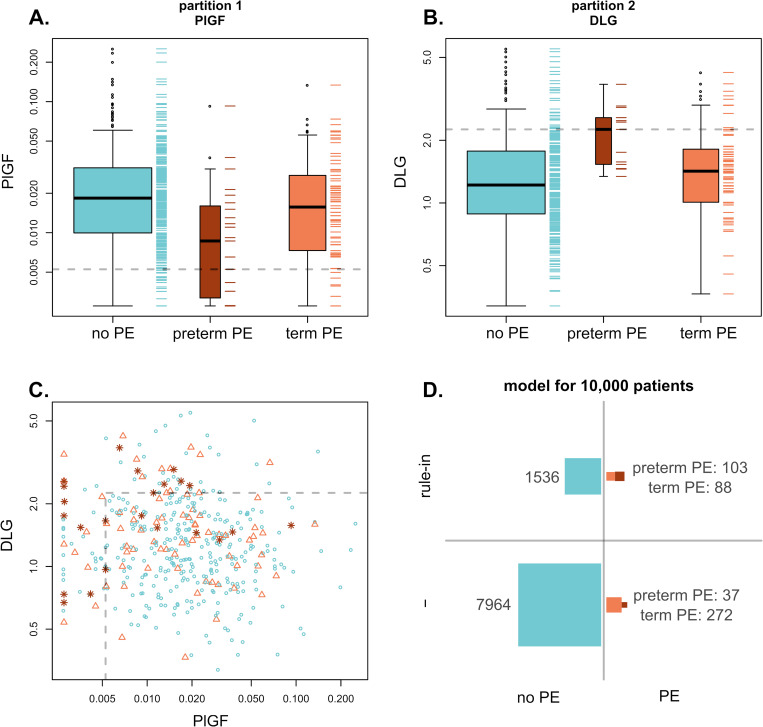
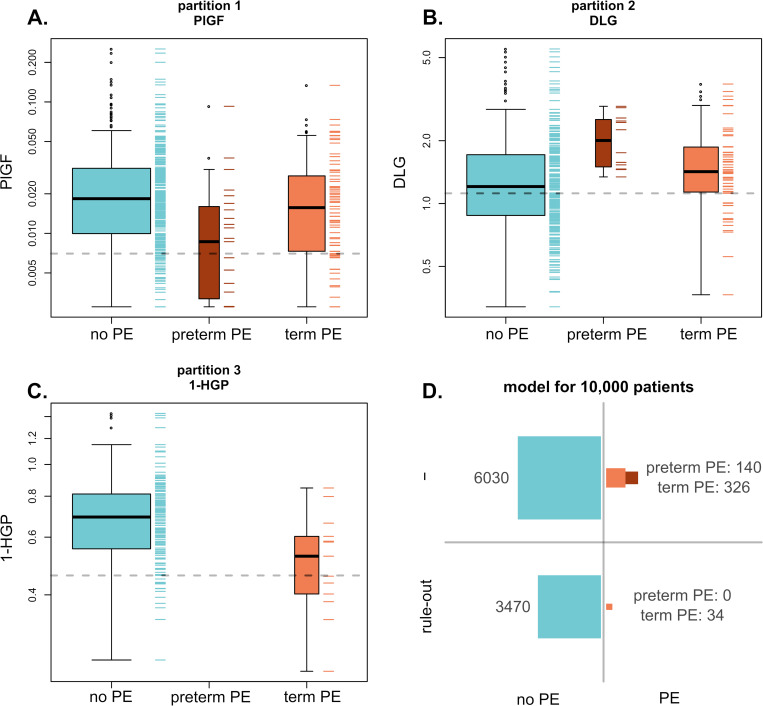
Preeclampsia remains a leading cause of maternal and perinatal morbidity and mortality. Accurate prediction of preeclampsia risk would enable more effective, risk-based prenatal care pathways. Current risk assessment algorithms depend on clinical risk factors largely unavailable for first-time pregnant women. Delivering accurate preeclampsia risk assessment to this cohort of women, therefore requires for novel biomarkers. Here, we evaluated the relevance of metabolite biomarker candidates for their selection into a prototype rapid, quantitative Liquid Chromatography-tandem Mass Spectrometry (LC-MS/MS) based clinical screening assay. First, a library of targeted LC-MS/MS assays for metabolite biomarker candidates was developed, using a medium-throughput translational metabolomics workflow, to verify biomarker potential in the Screening-for-Pregnancy-Endpoints (SCOPE, European branch) study. A variable pre-selection step was followed by the development of multivariable prediction models for pre-defined clinical use cases, i.e., prediction of preterm preeclampsia risk and of any preeclampsia risk. Within a large set of metabolite biomarker candidates, we confirmed the potential of dilinoleoyl-glycerol and heptadecanoyl-2-hydroxy-sn-glycero-3-phosphocholine to effectively complement Placental Growth Factor, an established preeclampsia biomarker, for the prediction of preeclampsia risk in first-time pregnancies without overt risk factors. These metabolites will be considered for integration in a prototype rapid, quantitative LC-MS/MS assay, and subsequent validation in an independent cohort.
子痫前期仍然是孕产妇和围产儿发病率和死亡率的主要原因。准确预测子痫前期的风险将使基于风险的产前保健途径更加有效。目前的风险评估算法主要依赖于首次怀孕妇女无法获得的临床危险因素。因此,为了对这一人群进行准确的子痫前期风险评估,需要新的生物标志物。在这里,我们评估了代谢物生物标志物候选物的相关性,以将其选择到原型快速定量液相色谱-串联质谱(LC-MS/MS)基于临床的筛选测定中。首先,使用高通量转化代谢组学工作流程开发了针对代谢物生物标志物候选物的靶向 LC-MS/MS 分析试剂盒,以在 Screening-for-Pregnancy-Endpoints(SCOPE,欧洲分支)研究中验证生物标志物的潜力。在一个大型的代谢物生物标志物候选物集合中,我们证实了亚油酸甘油二酯和十七烷酰基-2-羟基-sn-甘油-3-磷酸胆碱的潜力,可以有效地补充胎盘生长因子,这是一种已建立的子痫前期生物标志物,用于预测无明显危险因素的首次妊娠的子痫前期风险。这些代谢物将被考虑整合到原型快速定量 LC-MS/MS 测定中,并在独立队列中进行验证。