Section of Endocrinology, Yale School of Medicine, New Haven, CT 06510, USA.
Nutrients. 2020 Dec 21;12(12):3906. doi: 10.3390/nu12123906.
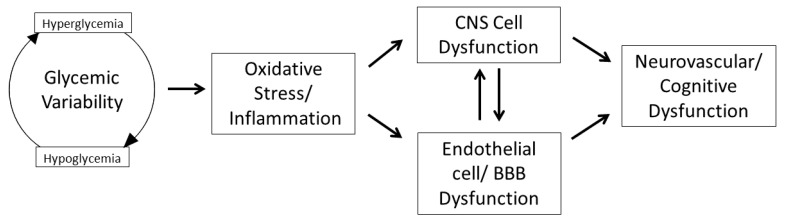
Glucose is the primary energy source for the brain, and exposure to both high and low levels of glucose has been associated with numerous adverse central nervous system (CNS) outcomes. While a large body of work has highlighted the impact of hyperglycemia on peripheral and central measures of oxidative stress, cognitive deficits, and vascular complications in Type 1 and Type 2 diabetes, there is growing evidence that glycemic variability significantly drives increased oxidative stress, leading to neuroinflammation and cognitive dysfunction. In this review, the latest data on the impact of glycemic variability on brain function and neuroinflammation will be presented. Because high levels of oxidative stress have been linked to dysfunction of the blood-brain barrier (BBB), special emphasis will be placed on studies investigating the impact of glycemic variability on endothelial and vascular inflammation. The latest clinical and preclinical/in vitro data will be reviewed, and clinical/therapeutic implications will be discussed.
葡萄糖是大脑的主要能量来源,接触高浓度和低浓度的葡萄糖都与多种不良的中枢神经系统(CNS)结果有关。虽然大量的研究强调了高血糖对 1 型和 2 型糖尿病患者外周和中枢氧化应激、认知缺陷和血管并发症的影响,但越来越多的证据表明,血糖变异性显著增加氧化应激,导致神经炎症和认知功能障碍。在这篇综述中,将介绍血糖变异性对大脑功能和神经炎症影响的最新数据。由于高水平的氧化应激与血脑屏障(BBB)功能障碍有关,因此特别强调研究血糖变异性对内皮细胞和血管炎症的影响。将回顾最新的临床和临床前/体外数据,并讨论临床/治疗意义。