Deva Anand K, Turner Suzanne D, Kadin Marshall E, Magnusson Mark R, Prince H Miles, Miranda Roberto N, Inghirami Giorgio G, Adams William P
Department of Plastic and Reconstructive Surgery, Macquarie University and the Integrated Specialist Healthcare Education and Research Foundation, Sydney, NSW 2109, Australia.
Division of Cellular and Molecular Pathology, Department of Pathology, University of Cambridge, Cambridge CB2 1TN, UK.
Cancers (Basel). 2020 Dec 21;12(12):3861. doi: 10.3390/cancers12123861.
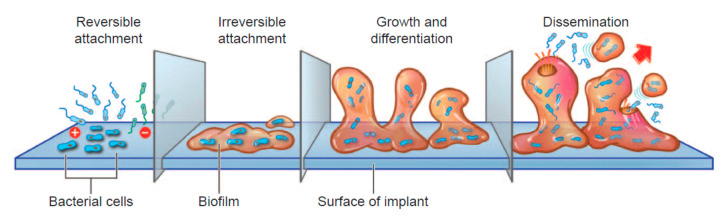
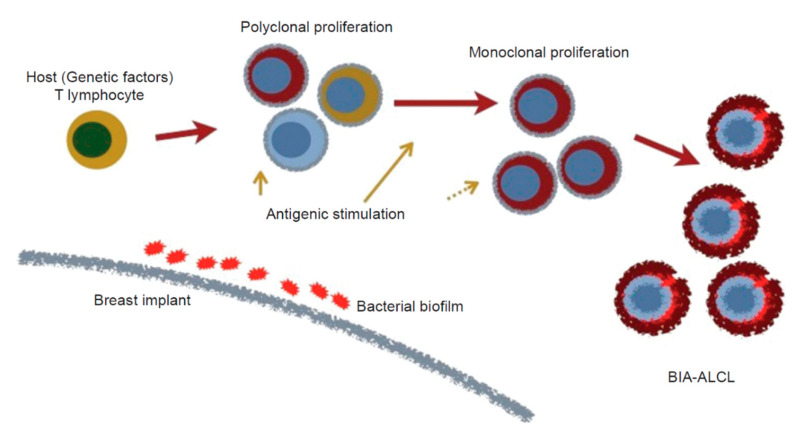
Breast implant-associated anaplastic large cell lymphoma (BIA-ALCL) is a CD30-positive, anaplastic lymphoma kinase-negative T-cell lymphoma. Where implant history is known, all confirmed cases to date have occurred in patients with exposure to textured implants. There is a spectrum of disease presentation, with the most common occurring as a seroma with an indolent course. A less common presentation occurs as locally advanced or, rarely, as metastatic disease. Here we review the immunological characteristics of BIA-ALCL and potential triggers leading to its development. BIA-ALCL occurs in an inflammatory microenvironment with significant lymphocyte and plasma cell infiltration and a prominent Th1/Th17 phenotype in advanced disease. Genetic lesions affecting the JAK/STAT signaling pathway are commonly present. Proposed triggers for the development of malignancy include mechanical friction, silicone implant shell particulates, silicone leachables, and bacteria. Of these, the bacterial hypothesis has received significant attention, supported by a plausible biologic model. In this model, bacteria form an adherent biofilm in the favorable environment of the textured implant surface, producing a bacterial load that elicits a chronic inflammatory response. Bacterial antigens, primarily of Gram-negative origin, may trigger innate immunity and induce T-cell proliferation with subsequent malignant transformation in genetically susceptible individuals. Although much remains to be elucidated regarding the multifactorial origins of BIA-ALCL, future research should focus on prevention and treatment strategies, recognizing susceptible populations, and whether decreasing the risk of BIA-ALCL is possible.
乳房植入物相关间变性大细胞淋巴瘤(BIA-ALCL)是一种CD30阳性、间变性淋巴瘤激酶阴性的T细胞淋巴瘤。在已知植入物病史的情况下,迄今为止所有确诊病例均发生在接触过有纹理植入物的患者中。该病有一系列的表现形式,最常见的是以血清肿形式出现,病程进展缓慢。较不常见的表现形式为局部进展性疾病,或很少见的转移性疾病。在此,我们综述了BIA-ALCL的免疫学特征以及导致其发生的潜在触发因素。BIA-ALCL发生于炎症微环境中,淋巴细胞和浆细胞浸润显著,在疾病晚期呈现突出的Th1/Th17表型。通常存在影响JAK/STAT信号通路的基因损伤。提出的导致恶性肿瘤发生的触发因素包括机械摩擦、硅胶植入物外壳颗粒、硅胶可渗出物和细菌。其中,细菌假说受到了广泛关注,有一个合理的生物学模型作为支撑。在这个模型中,细菌在有纹理的植入物表面的有利环境中形成附着的生物膜,产生引发慢性炎症反应的细菌负荷。细菌抗原主要来源于革兰氏阴性菌,可能触发固有免疫并诱导T细胞增殖,随后在基因易感个体中发生恶性转化。尽管关于BIA-ALCL的多因素起源仍有许多有待阐明之处,但未来的研究应聚焦于预防和治疗策略、识别易感人群以及是否有可能降低BIA-ALCL的发病风险。