Department of Pharmacy, Health and Nutrition Sciences, University of Calabria, 87036 Rende, Italy.
Int J Mol Sci. 2020 Dec 24;22(1):98. doi: 10.3390/ijms22010098.
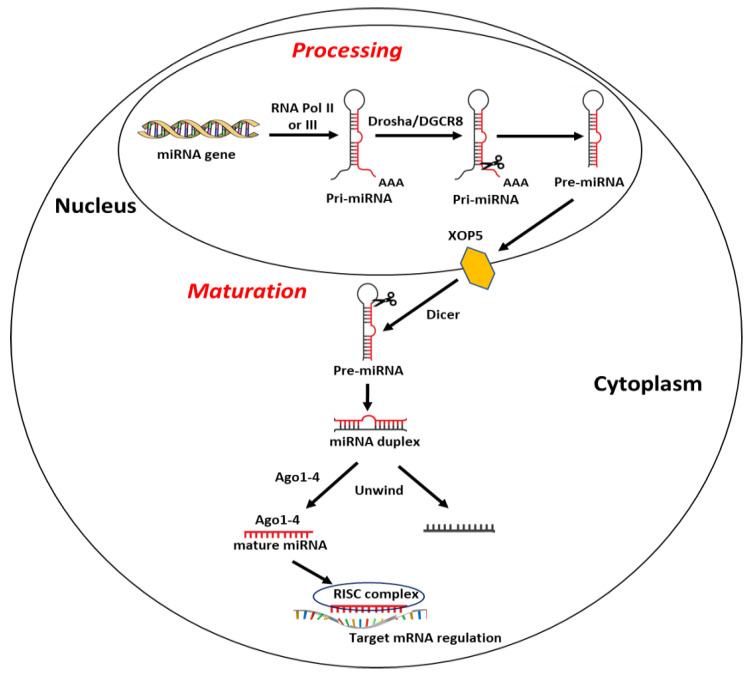
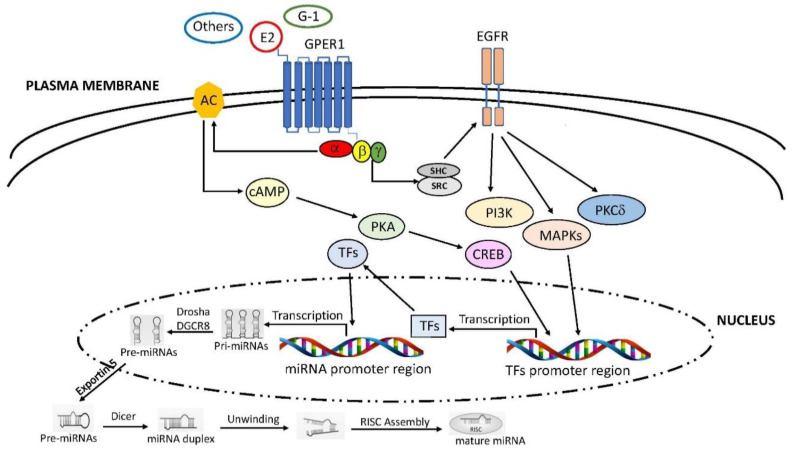
Breast cancer is the main cause of morbidity and mortality in women worldwide. However, the molecular pathogenesis of breast cancer remains poorly defined due to its heterogeneity. Several studies have reported that G Protein-Coupled Estrogen Receptor 1 (GPER1) plays a crucial role in breast cancer progression, by binding to estrogens or synthetic agonists, like G-1, thus modulating genes involved in diverse biological events, such as cell proliferation, migration, apoptosis, and metastasis. In addition, it has been established that the dysregulation of short sequences of non-coding RNA, named microRNAs (miRNAs), is involved in various pathophysiological conditions, including breast cancer. Recent evidence has indicated that estrogens may regulate miRNA expression and therefore modulate the levels of their target genes, not only through the classical estrogen receptors (ERs), but also activating GPER1 signalling, hence suggesting an alternative molecular pathway involved in breast tumor progression. Here, the current knowledge about GPER1 and miRNA action in breast cancer is recapitulated, reporting recent evidence on the liaison of these two players in triggering breast tumorogenic effects. Elucidating the role of GPER1 and miRNAs in breast cancer might provide new tools for innovative approaches in anti-cancer therapy.
乳腺癌是全球女性发病率和死亡率的主要原因。然而,由于其异质性,乳腺癌的分子发病机制仍未得到充分阐明。有几项研究报道,G 蛋白偶联雌激素受体 1(GPER1)通过与雌激素或合成激动剂(如 G-1)结合,在乳腺癌的进展中发挥关键作用,从而调节参与多种生物学事件的基因,如细胞增殖、迁移、凋亡和转移。此外,已经确定短序列非编码 RNA,称为 microRNAs(miRNAs)的失调参与了各种病理生理状况,包括乳腺癌。最近的证据表明,雌激素可能通过调节 miRNA 的表达,从而调节其靶基因的水平,不仅通过经典的雌激素受体(ERs),还通过激活 GPER1 信号,从而提示参与乳腺癌进展的另一种分子途径。在这里,我们总结了目前关于 GPER1 和 miRNA 在乳腺癌中的作用的知识,报告了这两个因素在引发乳腺癌肿瘤发生效应方面的最新证据。阐明 GPER1 和 miRNA 在乳腺癌中的作用可能为癌症治疗的创新方法提供新的工具。