A.N. Bach Institute of Biochemistry, Research Center of Biotechnology of the Russian Academy of Sciences, Leninsky Prospect 33, 119071 Moscow, Russia.
Sensors (Basel). 2020 Dec 23;21(1):39. doi: 10.3390/s21010039.
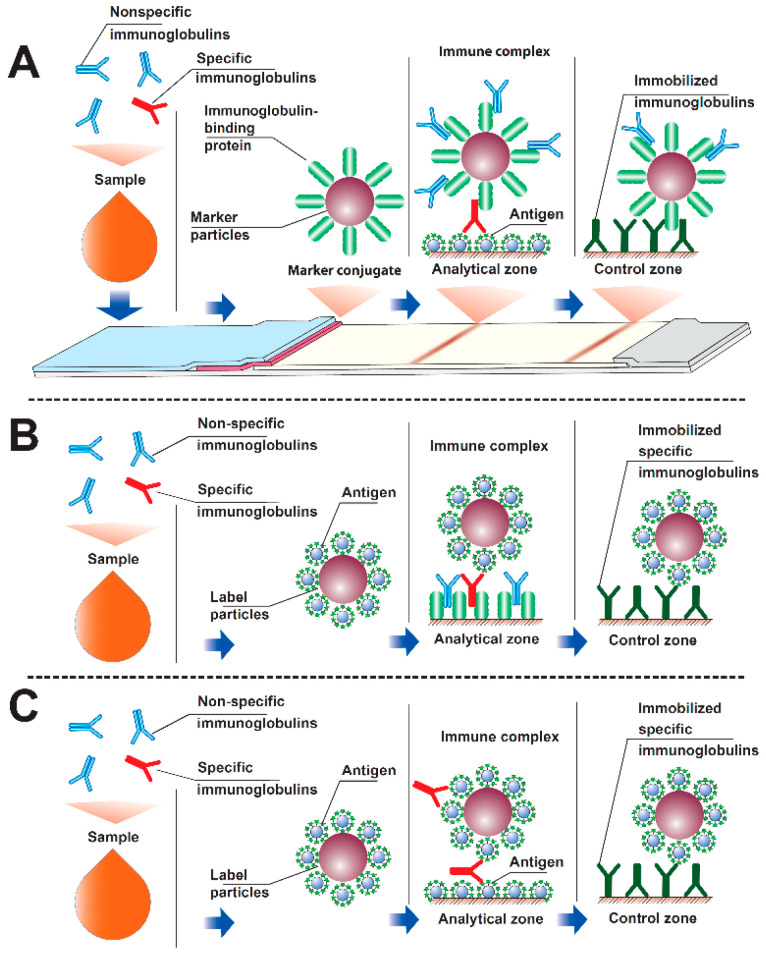
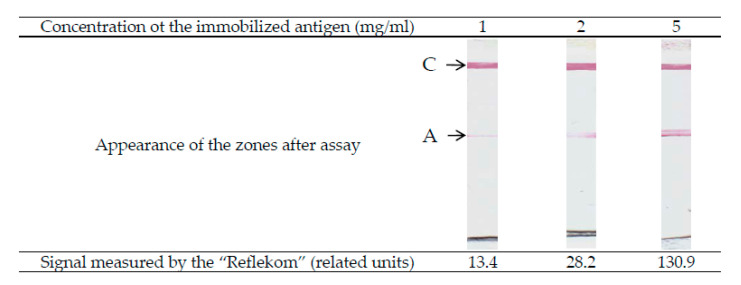
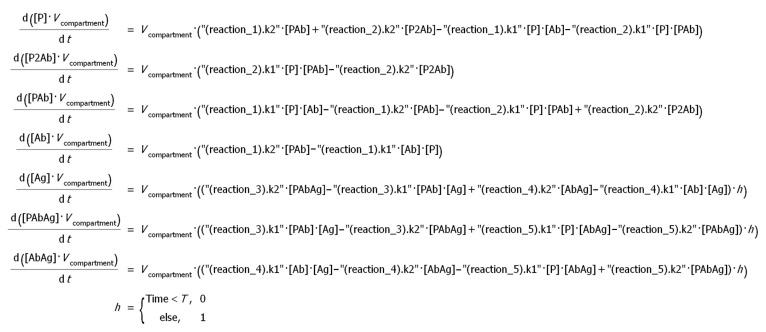
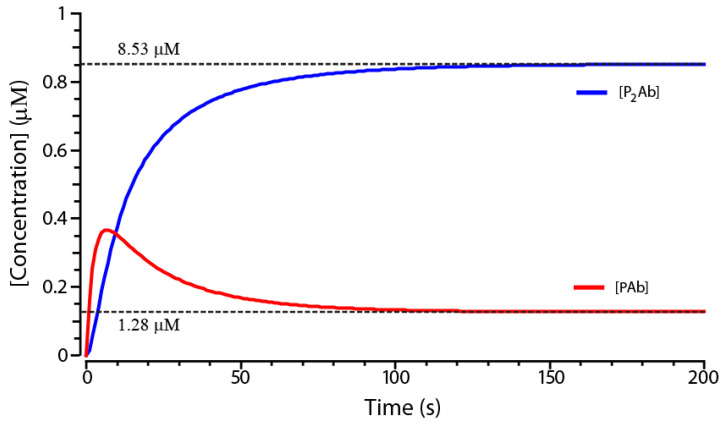
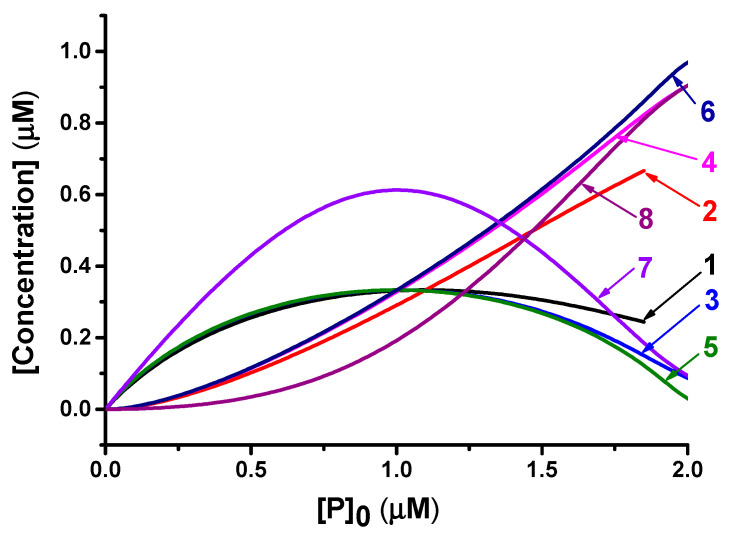
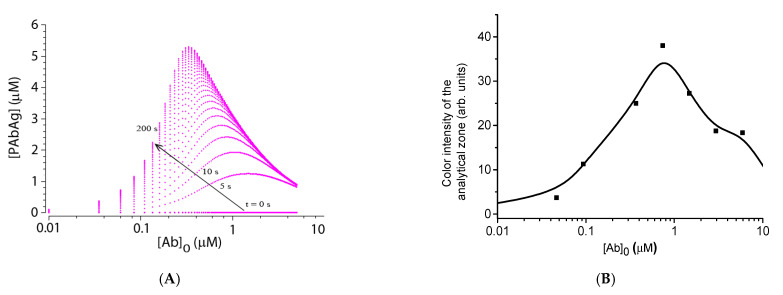
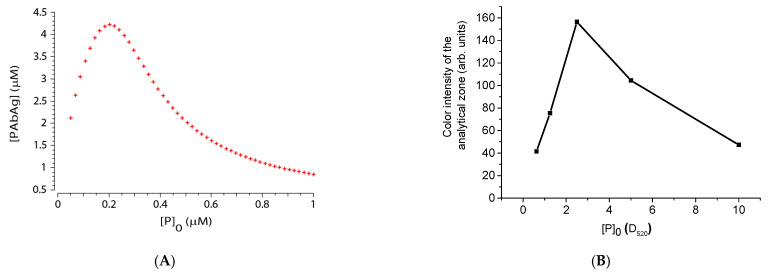
Determination of the presence in the blood of antibodies specific to the causative agent of a particular disease (serodiagnosis) is an effective approach in medical analytical chemistry. Serodiagnostics performed in the lateral flow immunoassay format (immunochromatography) meet the modern requirements for point-of-care testing and are supported by existing technologies of large-scale diagnostic tests production, thus increasing the amount of attention in a tense epidemiological situation. For traditional lateral flow serodiagnostics formats, a large number of nonspecific immunoglobulins in the sample significantly reduces the degree of detectable binding. To overcome these limitations, an assay based on the formation of immobilized antigen-specific antibody-labeled antigen complexes detection was proposed. However, the requirements for its implementation, providing maximum sensitivity, have not been established. This article describes the mathematical model for the above assay. The influence of the ratio of reagent concentrations on the analysis results is considered. It is noted that the formation of specific antibody complexes with several labeled antigens is the main limiting factor in reducing the detection limit, and methods are proposed to minimize this factor. Recommendations for the choice of the assay conditions, following from the analysis of the model, are confirmed experimentally.
在医学分析化学中,确定血液中是否存在特定疾病病原体的特异性抗体(血清诊断)是一种有效的方法。侧向流动免疫分析格式(免疫层析)进行的血清诊断符合即时检测的现代要求,并得到大规模诊断测试生产现有技术的支持,因此在紧张的流行病学情况下引起了更多关注。对于传统的侧向流动血清诊断格式,样品中大量的非特异性免疫球蛋白大大降低了可检测结合的程度。为了克服这些限制,提出了基于形成固定化抗原特异性抗体标记抗原复合物检测的测定法。然而,尚未建立其实施的要求,以提供最大的灵敏度。本文描述了上述测定的数学模型。考虑了试剂浓度比对分析结果的影响。值得注意的是,与几个标记抗原形成特异性抗体复合物是降低检测限的主要限制因素,并提出了减小该因素的方法。从模型分析得出的关于测定条件选择的建议,通过实验得到了证实。